Complete this order first, and you’ll get a special discount for your next registration!
Registering multiple animals?
Each animal requires a separate registration and profile. Please complete this order first — you’ll receive a special discount code via email to register your next pet right away!
Emotional Support Animal Letter Requirement and How to Get
Facing the threat of eviction or extortionate pet fees simply because you need your animal for mental health support is a nightmare no one should endure. Landlords constantly search for loopholes to reject pets. They want the highest possible security deposit and the path of least resistance. Do not give them an excuse to deny your housing rights.
To protect yourself, your animal, and your living situation under federal law, you need a legitimate emotional support animal letter from a doctor. This document is the only legal shield that forces housing providers to recognize your animal not as a pet, but as a medically necessary accommodation. Without it, you are entirely at the mercy of your landlord’s personal opinions and arbitrary rules.
Understanding exactly how to get an emotional support animal letter from a doctor can feel overwhelming. The internet is flooded with scams, outdated information, and bad advice. This guide will walk you through the exact, legal, step-by-step process to secure an authentic ESA prescription in 2026. We will cover who can write the letter, what it must contain, and how to defend yourself against landlord pushback.
What is an ESA Letter and Why Do You Need It?
An emotional support animal letter is a formal prescription written by a licensed mental health professional. It legally designates your animal as an essential part of your mental health treatment plan. This is not a meaningless certificate you can print off a random website. It is a legally binding document that invokes federal protections.
Under the Federal Fair Housing Act (FHA), specifically 42 U.S.C. § 3604, housing providers are strictly prohibited from discriminating against individuals with disabilities. This includes hidden or invisible disabilities like anxiety, depression, and PTSD. The FHA categorizes emotional support animals as reasonable accommodations. Because they are not considered standard pets, landlords cannot legally charge you pet rent, pet application fees, or non-refundable pet deposits.
The hidden costs of doing nothing are severe. If you choose to move your animal into a strict no-pets building without a legit esa letter, you expose yourself to daily stress, neighbor complaints, and the very real threat of an eviction notice on your door. The status quo bias might tell you to just sneak the dog in and hope for the best. That strategy always fails eventually. Once a landlord discovers an unapproved animal, the financial penalties are immediate and ruthless.
It is vital to distinguish between an ESA and a Service Dog. Service Dogs are protected under the Americans with Disabilities Act (ADA) and are specially trained to perform physical tasks. They have public access rights. Emotional support animals are protected primarily under the Fair Housing Act. They provide comfort simply through their presence. You should also note recent changes to the Air Carrier Access Act (ACAA). Emotional support animals are no longer guaranteed free cabin access on commercial flights. The core purpose of your ESA letter today is absolutely centered around securing and maintaining your housing rights.
For more specific details on how your local jurisdiction handles these federal rules, you can review our complete guide on ESA laws by state.
Who Can Legally Write an ESA Letter?
A common and dangerous misconception is that any doctor or any online form can generate a valid emotional support animal prescription. This is completely false. Landlords have become highly educated on the law, and property management companies regularly employ legal teams to scrutinize accommodation requests.
Only a Licensed Mental Health Professional (LMHP) or a certified medical doctor currently overseeing your mental health care can legally write an ESA letter. This includes a very specific group of professionals. Psychiatrists, psychologists, Licensed Clinical Social Workers (LCSWs), Licensed Professional Counselors (LPCs), and psychiatric mental health nurse practitioners all hold the required authority. Your general practitioner or family doctor can technically write the letter if they are treating you for a mental health condition, but letters from dedicated mental health specialists generally face less resistance from aggressive landlords.
According to legal experts like Daniel Butler, JD, landlords are legally permitted to verify the license of the professional who wrote your letter. If they look up the license number and find that the person is not a licensed mental health professional, or if they discover the provider’s license is suspended, your housing request will be denied instantly. Additionally, the professional must be licensed to practice in your specific state. You cannot live in Texas and submit a letter from a social worker who is only licensed in Florida.
You need the weight of true medical authority behind your request. A legitimate letter clearly outlines the professional’s credentials, their direct contact information, and their state license number. This leaves the landlord with no room to argue against your accommodation.
The Step-by-Step Process to Get an ESA Letter in 2026
Getting your documentation requires a methodical approach. The days of instantly downloading a PDF are over. States are cracking down on fraud, and you must follow the correct procedures to ensure your letter stands up to federal housing standards.
Step 1: Recognize Your Need (Eligible Conditions)
Before you begin the process, you must genuinely suffer from a qualifying mental health condition. The FHA defines a disability as a physical or mental impairment that substantially limits one or more major life activities. You do not need to be completely incapacitated, but your condition must have a real impact on your daily functioning.
Common eligible conditions include severe generalized anxiety, major depressive disorder, post-traumatic stress disorder (PTSD), bipolar disorder, agoraphobia, and certain learning disabilities. The animal must provide a specific therapeutic benefit that directly alleviates symptoms of your condition. For instance, if you suffer from severe anxiety that prevents you from sleeping, the calming physical presence of your dog that allows you to rest is a direct therapeutic benefit.
If you have multiple animals providing different types of support, you must discuss this specifically. You can read more about the complexities of owning more than one emotional support animal to prepare for that conversation.
Step 2: Connect with a Licensed Professional (The 30-Day Rule)
This is the most critical step in 2026. You cannot bypass the requirement for a legitimate doctor-patient relationship. Recent legislative changes have completely altered how an online esa doctor must operate. California AB 468, alongside similar laws sweeping across the nation, strictly mandates a minimum 30-day established client-provider relationship before an LMHP can legally issue an ESA letter.
What does this mean for you? It means you must actively engage in therapy or consultation with a professional for at least a month. You will have an initial intake session, followed by subsequent evaluations. Immediate, pay-for-letter websites that promise a document in five minutes are operating illegally in many jurisdictions. If a landlord discovers you used one of these services, they will reject your letter under the premise that no valid medical evaluation took place.
You can use telehealth services to connect with an online LMHP, provided they follow the 30-day rule and conduct thorough, face-to-face video evaluations. Convenience is perfectly acceptable; skipping the legal medical process is not.
Step 3: The Evaluation Process
During your sessions, be entirely honest with your therapist. Discuss your symptoms openly. Explain how your condition affects your ability to sleep, work, socialize, or manage daily stress. Then, detail exactly how the presence of your animal mitigates these symptoms.
The therapist is not just checking boxes. They are conducting a thorough clinical evaluation. They need to confidently state on official letterhead that you meet the legal definition of having a disability and that the animal is a necessary component of your treatment. Answer their questions clearly and provide specific examples of your animal’s positive impact on your well-being.
Step 4: Receiving Your Prescription
Once your therapist completes the evaluation period and determines you qualify, they will draft the FHA housing letter. A legally sound ESA letter must contain specific elements to be valid. It must be written on the professional’s official letterhead. It must include their exact licensing information, including the state of issue, the date the license was issued, and the license number.
The letter should explicitly state that you have a mental health condition that substantially limits a major life activity, and that the animal is recommended to alleviate symptoms of that condition. It must be signed and dated. A letter lacking any of these components is a weak letter, and property managers will tear it apart.
Once you have successfully navigated this process and obtained your legal letter from your doctor, your next immediate step is securing your privacy and reducing daily friction. You already got your letter from your doctor. Now register your animal with us for professional visual identification.
Presenting a unified, professional appearance stops intrusive questions before they start. When neighbors and maintenance staff see a clear, official-looking ID and vest, they assume you have completed all necessary legal channels—which you have. This protects you from harassment and forced explanations in the hallway.
The internet preys on desperate people who need housing accommodations quickly. If you are facing an impending move-in date and your landlord is demanding a massive pet deposit, the promise of a cheap, instant ESA letter is incredibly tempting. You must resist this urge. Submitting a fraudulent document to a landlord is a fast track to eviction, lease termination, and potential legal action for fraud.
Spotting a fake ESA letter scam requires vigilance. The first and most glaring red flag is the promise of instant approval. As established, state laws mandate a 30-day evaluation period. Any website offering a letter in minutes without a live video consultation with a licensed professional is selling you a worthless piece of paper.
Another massive red flag is a website that guarantees approval before you even speak to a doctor. Medical professionals cannot guarantee a diagnosis or a prescription before evaluating a patient. If you are paying a flat fee for a guaranteed letter rather than paying for a medical consultation, you are engaging with a scam.
Look closely at the credentials provided on the letter. Scammers often use expired licenses, fake license numbers, or the names of doctors who have absolutely no idea their credentials are being used. Landlords will check the state registry. If the registry shows the license is invalid, you will lose your housing request immediately.
Finally, watch out for services that try to sell you “registration” as a substitute for a doctor’s letter. Let us be crystal clear: registration and accessories provide visual identification and peace of mind, but they do NOT replace the medical letter. You must get the medical letter from your doctor first. Only after you possess that legal document should you invest in visual identification to smooth your daily interactions.
What to Do If Your Landlord Rejects Your Letter
Even with a perfectly legal, meticulously drafted emotional support animal prescription, you might still face a stubborn landlord. Many property managers rely on intimidation, hoping you will simply back down and pay the pet fee. You must know your rights under the HUD guidelines 2026.
First, remain calm and professional. Do not engage in shouting matches. Request the rejection in writing. Ask the landlord to clearly specify exactly why the letter is being rejected. Under HUD rules, landlords cannot arbitrarily deny a reasonable accommodation request unless the specific animal poses a direct threat to the health and safety of others, or if it would cause substantial physical damage to the property that cannot be mitigated.
Landlords cannot reject your letter simply because they have a strict no-pets policy. They cannot reject your letter because they demand you use their specific, custom-made medical release forms. HUD clearly states that housing providers cannot require health care professionals to use specific forms or provide notarized statements. They also cannot demand access to your detailed medical records or ask highly invasive questions about your specific diagnosis.
If the landlord claims the animal is a breed they do not allow, remind them that breed restrictions do not apply to emotional support animals under the FHA. A landlord’s insurance policy might try to dictate breed bans, but HUD has repeatedly shown that general breed bans cannot automatically override a reasonable accommodation request.
If they refuse to budge, your next step is to file a formal discrimination complaint directly with the Department of Housing and Urban Development (HUD). Informing your landlord that you are preparing to file a federal discrimination complaint is often enough to make them instantly reconsider their position. No property management company wants the federal government investigating their housing practices.
While you fight for your housing rights behind closed doors, you need to ensure your daily life remains peaceful. Walking through your lobby should not be a gauntlet of suspicious stares. Ensure your animal is clearly marked. Learn the difference between a real service dog vest vs fake presentation, and equip your ESA with the proper, clear visual identifiers that signal your professional compliance.
When defending your rights, you must rely on established federal guidelines. Do not let property managers bluff you with made-up building rules. Building rules never supersede federal law.
Fair Housing Act (FHA): 42 U.S.C. § 3604 clearly outlines the illegality of discriminating against individuals with disabilities in housing.
Department of Housing and Urban Development (HUD): The official HUD.gov website provides the updated guidelines on assessing a person’s request to have an animal as a reasonable accommodation under the Fair Housing Act.
State Specific Legislation: Review documents like California Assembly Bill 468, which clearly defines the 30-day client-provider relationship requirement for licensed professionals issuing ESA documentation.
Securing your housing rights takes time, but it is entirely worth the effort. Do the work, consult a licensed professional, get your legitimate medical letter, and then visually identify your animal to guarantee long-term peace of mind.
Disclaimer
The content on this website is for informational purposes only and does not constitute professional medical advice, diagnosis, treatment, or legal counsel.
Eligibility Check
Still Unsure If You Qualify?
Skip the confusion. Take a 3-minute assessment to see what your animal legally needs.
Under the Fair Housing Act (FHA), landlords are generally required to provide “reasonable accommodation” for person with disabilities. This means they cannot deny your ESA even in buildings with a “no-pet” policy, nor can they charge extra pet fees. However, a request can be denied if the specific animal poses a direct threat to the health or safety of others or causes significant property damage.
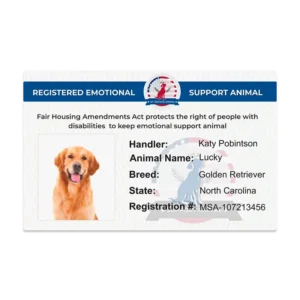
Legally, the only document required to qualify your pet as an ESA is a signed letter from a licensed mental health professional. However, many owners choose to register their animals and obtain an ESA ID card. This helps provide quick database confirmation and makes it easier to communicate your pet’s status to landlords or building managers.
No, they are different. A Psychiatric Service Dog is trained to perform specific tasks to assist with a mental disability (like detecting a panic attack or providing deep pressure therapy) and has full public access rights under the ADA. An ESA provides comfort through companionship, does not require specific task training, and is primarily protected in housing situations under the FHA.
Yes, most ESA letters are valid for one year from the date they are issued. To ensure your legal protections under the Fair Housing Act remain active, you should consult with your mental health professional annually to renew your documentation.
Unlike service animals, which are limited to dogs (and sometimes miniature horses), almost any common household animal can be an ESA. While dogs and cats are the most popular choices, rabbits, birds, and even certain reptiles can qualify as long as they provide emotional support and do not create a nuisance in a shared living environment.



 Resolves 80% of housing disputes instantly
 Instant Digital ID
 Free Shipping
 5-Min Process