
What to Do If Your Therapist Won’t Write You an ESA Letter
Imagine sitting across from the professional you’ve trusted with your mental health. You have spent months, perhaps years, building a relationship, sharing your struggles, and explaining exactly how much your assistance animal helps you manage your daily life. You finally ask for a simple, one-page your ESA housing rights accommodation letter. The answer is a flat “No.”
It feels like a betrayal. You feel stuck, confused, and suddenly worried about your living situation. Are you going to lose your apartment? Will you be forced to rehome your best friend?
If your therapist won’t write an alternative ways to get an ESA letter, take a deep breath. You are not alone. This exact scenario happens to thousands of individuals every single month. A refusal from your mental health provider usually has absolutely nothing to do with you, your diagnosis, or the validity of your need for an emotional support animal. It almost always comes down to the complex legal, ethical, and administrative environment that therapists operate within today. Let’s break down exactly why this happens, what the federal laws actually require, and the immediate, actionable steps you can take to protect your housing rights and keep your helper animal safe.

Why Many Therapists Decline ESA Letters (Understanding Their Perspective)
When you hear a refusal, it is easy to take it personally. However, the reasons behind the “no” are usually systemic. Understanding these reasons can help you navigate the conversation and figure out your next move.
The Fear of Professional Liability and Board Discipline
Therapists work under incredibly strict state licensing boards. In recent years, these boards have started looking closely at professionals who write accommodation letters. If an assistance animal behaves poorly, damages property, or injures someone, there have been instances where landlords attempted to hold the prescribing clinician accountable. Even if a lawsuit is unlikely to succeed, the mere threat of litigation or a board complaint is enough to make many professionals adopt a strict “no letters” policy. They are protecting their license, which is their livelihood.
Strict Scope of Practice and Lack of Specialized Training
Most mental health providers spend years training in talk therapy, cognitive behavioral therapy, EMDR, or medication management. They are trained to treat mental health conditions using clinical interventions. They are generally not formally trained in disability assessments or animal-assisted interventions. Writing an accommodation letter requires a clinician to legally attest that you have a qualifying disability under the Fair Housing Act and that the animal provides a specific therapeutic benefit. Many therapists simply feel this falls far outside their professional scope of practice. They feel unqualified to make what they see as a legal determination.
Ethical Concerns and the Therapeutic Dynamic
The relationship you have with your therapist is delicate. It is built on trust, boundaries, and objective guidance. Some therapists worry that becoming your advocate for a housing accommodation creates a conflict of interest. They fear it shifts the dynamic of your relationship from clinical care to administrative advocacy. If a landlord disputes the letter, the therapist could be pulled into a messy legal argument, which could permanently damage the safe space they have tried to build for your therapy sessions.
Corporate Clinic and Hospital Policies
If your provider works for a larger healthcare network, a university hospital, or a community clinic, the decision might not even be theirs to make. Many large medical organizations have implemented blanket policies prohibiting all of their staff from writing housing or travel accommodation letters. These corporate policies are designed to avoid administrative burden and limit institutional liability. Your therapist might genuinely want to help you, but their hands are tied by their employer’s strict rules.
What the Law Actually Requires (Breaking Down HUD Guidelines)
To advocate for yourself, you need to understand the rules of the game. The federal laws governing support animals in housing are specific, and knowing them gives you power.

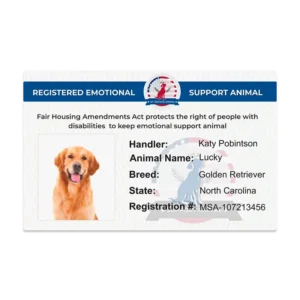
 Resolves 80% of housing disputes instantly
Emotional Support Animal Registration
 Instant Digital ID
 Free Shipping
 5-Min Process


The Fair Housing Act (FHA) Basics
The Fair Housing Act is a federal law that protects your right to live with your support animal, even in buildings that enforce strict “no animal” policies. Under this law, landlords must provide reasonable accommodations for individuals with disabilities. This means they cannot charge you extra monthly rent, demand non-refundable animal deposits, or deny you housing simply because you have a helper animal.
Who Exactly Can Write the Documentation?
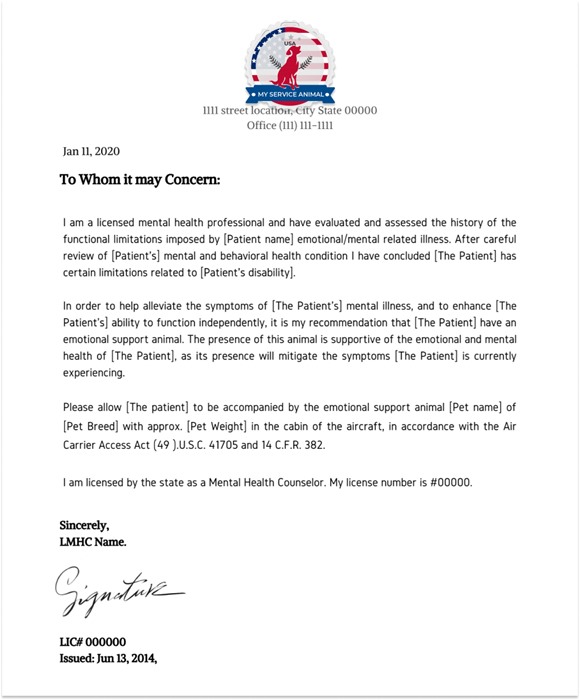
A very common myth is that only your long-term, primary therapist or a high-level psychiatrist can write the accommodation documentation. This is entirely false. According to federal guidelines, any Licensed Mental Health Professional (LMHP) who is licensed in your state and qualified to evaluate your condition can provide the letter. This broad category includes clinical social workers (LCSW), licensed professional counselors (LPC), marriage and family therapists (LMFT), psychologists, and psychiatrists.
Telehealth and Remote Evaluations: The 2020 to 2026 Shift
During the pandemic, the Department of Housing and Urban Development (HUD) issued guidance clarifying how telehealth providers could evaluate clients for support animals. While enforcement standards have shifted and tightened recently to crack down on fraudulent “certificate mills” and fake documents, legitimate telehealth evaluations remain a perfectly valid and legal pathway. You do not necessarily need to drive to a physical clinic, sit in a waiting room, and pay for weeks of talk therapy just to get an assessment. What you do need is a real, clinical consultation with a qualified professional who is licensed in your state and who genuinely assesses your mental health needs.
Your Real Options When Your Therapist Refuses
Hearing a “no” is just a roadblock, not a dead end. When your primary provider cannot or will not help, you have three primary paths forward.
Option 1: Wait for a New In-Person Therapist (The Slow Route)
You could start calling around to local clinics, asking if any therapists are willing to conduct an assessment and write the documentation. The harsh reality of the current medical system? In 2024, the national average wait time to see a new behavioral health provider was 48 days. If you are moving to a new apartment next week, or if you are facing pressure from a landlord today, waiting almost two months for a preliminary appointment is simply not a viable option.
Option 2: Have a Direct Conversation with Your Current Provider
If you have a strong relationship with your current therapist, consider having one more open conversation. Sometimes, providers are hesitant because they do not know what the letter actually needs to say. They might assume it requires complex legal jargon. Showing your provider a simple, compliant template can sometimes alleviate their fears. Let them know you are asking for a statement verifying your condition, not a guarantee of the animal’s behavior or training. If they remain firm in their refusal, ask them if they can provide a direct referral to a colleague who specializes in these evaluations.
Option 3: Connect with a Specialized Evaluation Network
When time is short and local options are closed, connecting with a licensed professional who specializes in these exact evaluations is the most practical choice. There are legitimate networks designed specifically to connect you with state-licensed LMHPs who understand the Fair Housing Act and are comfortable conducting disability assessments via telehealth. This allows you to undergo a proper clinical assessment online, ensuring you meet the legal criteria without enduring a 48-day waiting period.

Once You Have Documentation: Locking In Your Housing Rights
Securing your letter from a licensed professional is the biggest hurdle, but your work isn’t completely finished. You still need to present it correctly to ensure your housing rights are respected.
Submitting Your Letter the Right Way
Do not just slide the letter under the leasing office door or hand it to a security guard. Submit your documentation officially. It is always best to send it via email to the property manager or landlord so you have a time-stamped paper trail. Include a brief, formal request for a reasonable accommodation under the Fair Housing Act. Keep your tone polite, professional, and firm.
Navigating Pushback and Breed Restrictions
Many landlords mistakenly believe they can enforce building rules against assistance animals. Under federal law, landlords cannot deny your accommodation simply because of your dog’s breed, size, or weight. If a landlord tries to enforce a “no pitbulls” or “under 20 pounds” rule against your support animal, remind them in writing that the Fair Housing Act supersedes local building policies. The only legal exception is if the landlord can prove that your specific animal poses a direct, documented threat to the health and safety of others, or would cause substantial physical damage to the property.
Bypassing Unfair Fees and Deposits
Your assistance animal is legally considered a health necessity. Landlords cannot treat your helper animal like a standard addition to the household. They are strictly prohibited from charging you monthly animal rent, non-refundable deposits, or arbitrary application fees. If your landlord sends you an invoice that includes these charges, confidently provide them with a printed copy of the HUD guidelines and request that the fees be removed from your ledger immediately.
Frequently Asked Questions About Therapist Refusals
Can my primary care doctor write the letter instead of a therapist?
Yes. Any licensed healthcare professional who is intimately familiar with your mental health condition can write the documentation. This absolutely includes primary care physicians (PCPs). However, you might run into the exact same issue: many PCPs are equally hesitant to write these letters due to a lack of specialized psychiatric training and restrictive clinic policies.
Will my landlord call my therapist to verify the letter?
Landlords have the legal right to verify the authenticity of the documentation. They can contact the professional’s office to confirm that the letter is genuine and was indeed written by that specific provider. However, they are absolutely prohibited by HIPAA and fair housing laws from asking about your specific medical diagnosis, reviewing your medical records, or inquiring about the details of your therapy sessions.
Do I need to register my animal online to make it official?
While a formal letter from a licensed professional is the only strict legal requirement for securing housing accommodations, maintaining an active registration in a verifiable database can help you bypass landlord scrutiny and significantly reduce everyday friction. Many handlers find that presenting a tangible ID card or certificate alongside their letter stops invasive questions before they even start, making the entire move-in process smoother.
What happens if my letter expires?
Housing accommodation letters generally need to be renewed on an annual basis. Landlords have the right to request up-to-date documentation if your previous letter is more than twelve months old. It is always best to maintain a relationship with a provider so you can easily update your documentation before your lease renewal comes up.
Facing a rejection from your own healthcare provider can feel incredibly discouraging, but it is merely a detour, not a dead end. Your mental health needs are entirely valid, and federal law provides multiple legal pathways to secure the accommodations you require. By understanding your rights, exploring specialized evaluation networks when necessary, and standing firm with your landlord, you can keep your support animal right where they belong—by your side, helping you navigate life.

The content on this website is for informational purposes only and does not constitute professional medical advice, diagnosis, treatment, or legal counsel.
Still Unsure If You Qualify?
Skip the confusion. Take a 3-minute assessment to see what your animal legally needs.
U.S handlers trust MyServiceAnimal