
ESA California — Laws & ESA Letters
ESA Laws in California: What You Need to Know in 2026
California has some of the strongest emotional support animal (ESA) protections in the United States. If you live with a mental health condition—such as severe anxiety, depression, PTSD, or bipolar disorder—and rely on your animal for emotional stability, California law provides strong housing rights.
However, the legal space surrounding ESAs in California changed significantly in recent years, specifically with the introduction of new therapeutic requirements designed to combat ESA fraud. Understanding the current 2026 regulations is essential for renters and landlords alike to ensure compliance and protect disability rights. This complete guide covers everything California ESA owners need to know: housing rights, landlord obligations, recent legal changes, and how to legally protect your access.
What is an Emotional Support Animal in California?
An emotional support animal is a companion animal that provides therapeutic benefit to an individual with a mental or psychiatric disability. Unlike a service dog, which is individually trained to perform specific physical tasks (like guiding a blind person or alerting to a seizure), an ESA provides comfort simply through its presence.
Because they do not require specialized task training, ESAs can be almost any domesticated animal, including dogs, cats, rabbits, birds, and miniature pigs. In California, an animal is legally recognized as an ESA only when a licensed mental health professional (LMHP) concludes that the animal alleviates one or more identified symptoms of the handler’s disability.
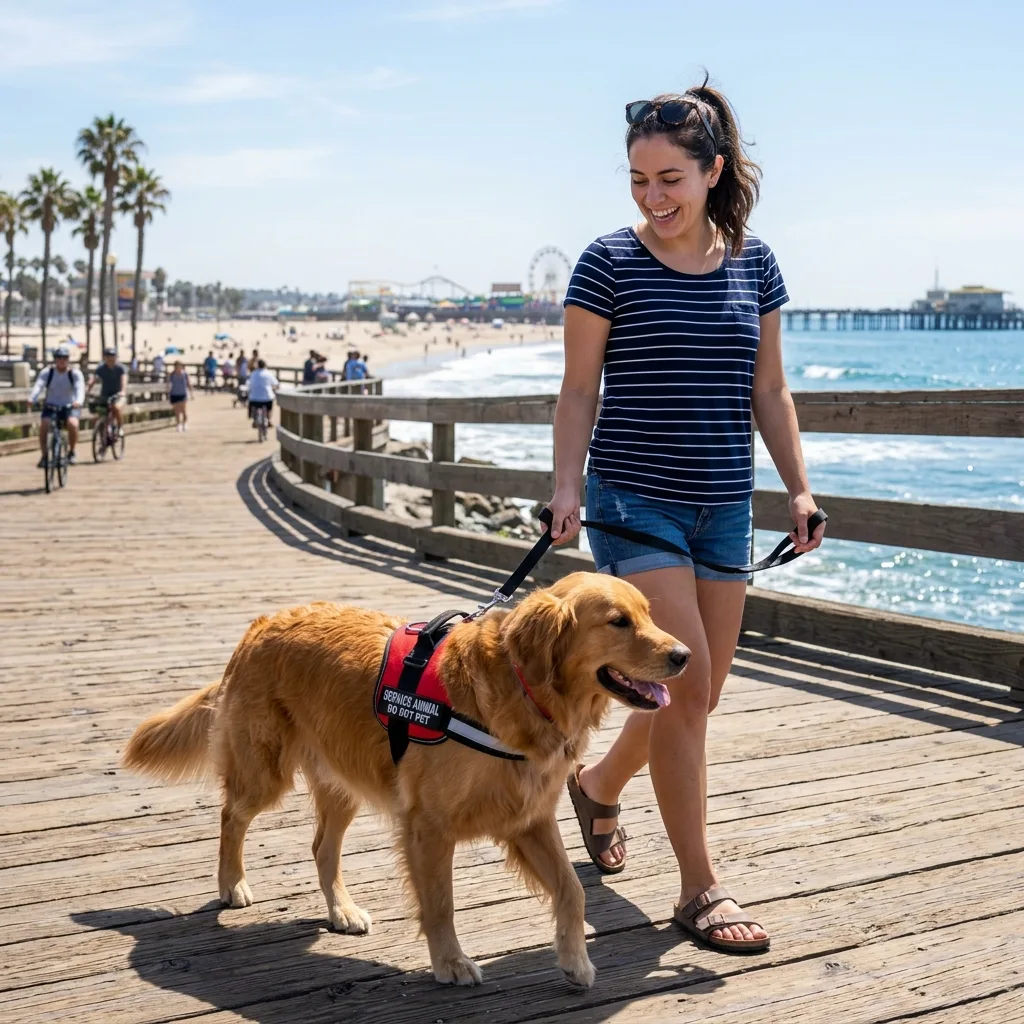
California ESA Housing Rights
Under both the federal Fair Housing Act (FHA) and California’s Fair Employment and Housing Act (FEHA), landlords are legally required to make reasonable accommodations for tenants with emotional support animals. This means housing providers must waive standard pet policies for individuals who require an ESA.
Here is how California housing laws protect ESA handlers:
- No Pet Deposits or Pet Rent: Landlords cannot charge extra monthly fees, pet deposits, or cleaning fees for your ESA. The animal is considered a medical accommodation, not a pet.
- No Breed or Size Restrictions: Even if your apartment building strictly bans “aggressive breeds” like Pit Bulls or Rottweilers, or has a 20-pound weight limit, your ESA is legally exempt from these restrictions.
- No-Pet Policies Do Not Apply: Your ESA must be accommodated even in strictly no-pet housing, including condos, single-family rentals, and university dormitories.
 Resolves 80% of housing disputes instantly
Emotional Support Animal Registration
 Instant Digital ID
 Free Shipping
 5-Min Process


The Impact of AB 468 on California ESA Laws
In January 2022, California enacted Assembly Bill 468 (AB 468), introducing significant new rules for ESA documentation to crack down on fraudulent “instant” ESA letters sold online. If you are getting an ESA letter in California today, you must ensure your provider complies with these strict regulations.
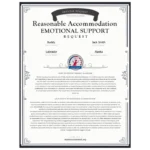
What AB 468 Requires for ESA Letters:
- California Licensure: The therapist issuing your ESA letter must hold a valid, active clinical license in the state of California (e.g., LMFT, LCSW, LPCC, psychologist, or psychiatrist).
- 30-Day Relationship Minimum: The therapist must have an established client relationship with you for at least 30 days before they are legally permitted to issue an ESA letter. You must complete a clinical evaluation and follow-up.
- Detailed Letterhead: The letter must explicitly include the therapist’s license number, license type, jurisdiction, and direct contact information.
Penalties for Fraud:
AB 468 made it a misdemeanor in California to sell fraudulent ESA letters or to sell ESA accessories (like vests or ID cards) while falsely claiming that those items alone grant legal ESA status. Businesses face fines of up to $2,500 per violation. This is why it is critical to obtain your ESA letter through a legitimate, licensed therapist who actually evaluates your mental health, rather than a website promising instant documentation without a clinical consultation.

How to Get an ESA Letter in California
Getting a legitimate ESA letter in California involves a straightforward but regulated process:
- Schedule a Consultation: Book an appointment with a California-licensed mental health professional. Telehealth appointments are fully legally valid, provided the therapist follows state guidelines.
- Undergo Evaluation: Discuss your mental health condition. The therapist will evaluate whether an ESA is clinically appropriate to mitigate your symptoms.
- Establish the Relationship: Complete the mandatory 30-day care period required by AB 468, engaging in therapy or follow-up consultations as directed.
- Receive Your Letter: Your therapist will issue an official ESA letter on their professional letterhead, which you can then submit to your landlord.
Can You Take Your ESA to Public Places in California?
No. Emotional support animals do not have public access rights in California or any other state. The Americans with Disabilities Act (ADA) only grants public access rights to highly trained Service Dogs.
You cannot legally bring an emotional support animal into grocery stores, restaurants, malls, or other public spaces where pets are prohibited. Attempting to pass off an ESA as a service dog to gain public access is illegal and actively harms the disabled community. If your animal is trained to perform specific disability-mitigating tasks, it may qualify as a service dog, which is an entirely different legal classification.
ESA Rights in California Workplaces
Unlike housing, California employers are not strictly required by default to allow emotional support animals in the workplace. Only ADA-qualified service dogs have guaranteed workplace access rights.
However, under the California Fair Employment and Housing Act, employers with five or more employees must engage in an “interactive process” if an employee requests a reasonable accommodation for a disability. Many progressive California employers will voluntarily allow an ESA as a workplace wellness benefit if you provide your medical ESA letter and demonstrate that the animal’s presence improves your productivity and mental health without causing disruption.
What Your California Landlord Can and Cannot Do
Understanding the boundaries of your landlord’s authority can prevent housing disputes.
Your Landlord CAN:
- Request formal documentation (your official ESA letter) from a licensed healthcare professional.
- Verify the therapist’s license number through public state databases.
- Deny the ESA if your letter does not meet AB 468 requirements (e.g., written by an out-of-state therapist or issued without a 30-day relationship).
- Hold you financially responsible for any actual property damage caused by your ESA (e.g., chewed baseboards or soiled carpets).
- Evict the animal if it poses a direct, documented threat to the safety of others (e.g., unprovoked biting).
Your Landlord CANNOT:
- Charge you pet deposits, pet rent, or additional security deposits.
- Deny your ESA based on its breed, size, or weight.
- Require your ESA to undergo specific obedience training or hold a certification.
- Demand access to your private medical records or ask for detailed specifics about your psychiatric diagnosis.
- Retaliate against you for requesting a reasonable accommodation.
Registering Your Emotional Support Animal
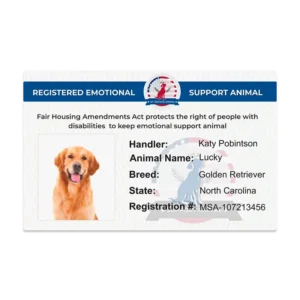
While California law only requires a medical letter for housing access, many handlers choose to register their emotional support animal to obtain a tangible ID card, certificate, and visible vest. While these accessories do not replace a medical letter, having professional, visible identification can prevent awkward confrontations with neighbors, maintenance staff, and landlords by clearly identifying your animal as a working support animal rather than a standard pet. Ensure you always follow the law and use these tools responsibly to advocate for your mental health.
Can my California landlord evict me for having an ESA?
No. Evicting a tenant for having a properly documented ESA is a violation of the Fair Housing Act and California’s FEHA. If this happens, file a complaint with HUD or the California Civil Rights Department.
How many ESAs can I have in California?
There is no legal limit, but each ESA must be individually documented in your ESA letter. Landlords can deny additional animals if they create an undue burden on the property.
Does my ESA need to be registered in California?
No registration is legally required. However, registering your ESA provides tangible documentation (certificate, ID card, database entry) that can prevent disputes with landlords and demonstrate good faith.
Can I fly with my ESA from California?
Since 2021, most airlines treat ESAs as regular pets and may charge a cabin pet fee. Only trained service dogs are guaranteed free cabin access under DOT rules.
What if my therapist is licensed in another state?
Under AB 468, the therapist should ideally hold a California license. Some landlords may accept letters from out-of-state therapists, but a California-licensed provider gives you the strongest legal position.

The content on this website is for informational purposes only and does not constitute professional medical advice, diagnosis, treatment, or legal counsel.
Still Unsure If You Qualify?
Skip the confusion. Take a 3-minute assessment to see what your animal legally needs.
U.S handlers trust MyServiceAnimal

FAQ
No. Emotional support animals do not have public access rights in California or any other state. Only service dogs trained under the ADA can enter restaurants, stores, and other public spaces. If your animal is trained to perform specific tasks for your disability, it may qualify as a service dog with full public access rights.
No. Evicting a tenant for having a properly documented ESA is a violation of the Fair Housing Act and California’s FEHA. If this happens, file a complaint with HUD or the California Civil Rights Department.
There is no legal limit, but each ESA must be individually documented in your ESA letter. Landlords can deny additional animals if they create an undue burden on the property.
No registration is legally required. However, registering your ESA provides tangible documentation (certificate, ID card, database entry) that can prevent disputes with landlords and demonstrate good faith.
Since 2021, most airlines treat ESAs as regular pets and may charge a cabin pet fee. Only trained service dogs are guaranteed free cabin access under DOT rules.