Can You Get a Service Dog for Hearing Loss?
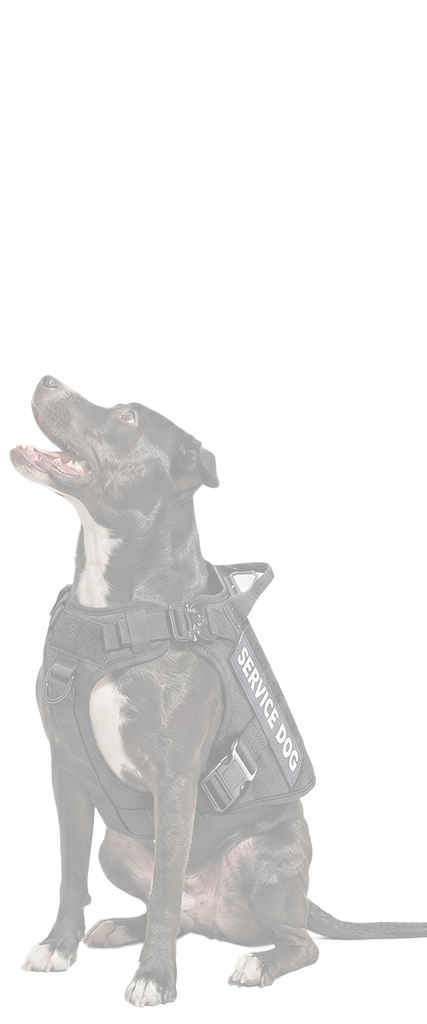
Yes — you can get a service dog for hearing loss. Under the Americans with Disabilities Act (ADA), a hearing service dog (also called a hearing alert dog or signal dog) is a legally recognized service animal trained to alert deaf or hard-of-hearing individuals to important sounds such as doorbells, smoke alarms, crying babies, and approaching vehicles.
Unlike emotional support animals, hearing service dogs perform specific trained tasks directly related to their handler’s disability — which gives them full public access rights under federal law.
What Is a Hearing Service Dog?
A hearing service dog is a type of service animal specifically trained to assist people who are deaf or hard of hearing. These dogs are trained to physically alert their handler when they detect specific sounds by making physical contact — typically nudging, pawing, or leading the person toward the sound source.

Sounds a Hearing Dog Is Trained to Detect
| Sound Category | Examples | Dog’s Response |
|---|---|---|
| Safety alerts | Smoke alarm, carbon monoxide detector, fire alarm | Alert + lead to exit |
| Household sounds | Doorbell, knock on door, oven timer, phone ringing | Nudge + lead to sound |
| People | Someone calling handler’s name, baby crying | Paw touch + lead to person |
| Outdoor hazards | Car horns, approaching vehicles, sirens | Alert + block path or redirect |
| Alarm clock | Morning alarm, timer | Jump on bed or persistent nudge |
Do You Qualify for a Hearing Service Dog?
To qualify for a hearing service dog, you must have a documented hearing impairment that substantially limits one or more major life activities. This includes:
- Profound deafness — complete or near-complete hearing loss in both ears
- Severe hearing loss — difficulty hearing sounds below 70–90 decibels
- Moderate hearing loss — when hearing aids alone are insufficient for safety awareness
- Unilateral deafness — total hearing loss in one ear, making it difficult to locate sound direction
A licensed audiologist, ENT specialist, or primary care physician can provide the documentation needed. You may also want to obtain an official service dog certificate for added convenience.
Best Dog Breeds for Hearing Service Work
While the ADA places no breed restrictions on service dogs, certain breeds excel at hearing alert work due to their temperament, intelligence, and sound sensitivity.
 Resolves 80% of housing & airline access issues instantly
Service Animal Registration
 Instant Digital ID
 Free Shipping
 5-Min Process


| Breed | Size | Why They Excel | Training Ease |
|---|---|---|---|
| Labrador Retriever | Large | Eager to please, excellent sound awareness, gentle temperament | ⭐⭐⭐⭐⭐ |
| Golden Retriever | Large | Patient, highly trainable, bonds strongly with handler | ⭐⭐⭐⭐⭐ |
| Cocker Spaniel | Medium | Naturally alert to sounds, affectionate, apartment-friendly | ⭐⭐⭐⭐ |
| Poodle (Standard) | Medium-Large | Hypoallergenic, highly intelligent, attentive | ⭐⭐⭐⭐⭐ |
| Miniature Schnauzer | Small | Extremely alert, responsive, great for smaller living spaces | ⭐⭐⭐⭐ |
| Shih Tzu | Small | Alert watchdog instinct, adaptable, low exercise needs | ⭐⭐⭐ |
How Hearing Service Dogs Are Trained
Training a hearing service dog is a structured process that typically takes 6 to 24 months, depending on the dog’s age and the complexity of the handler’s needs.
Training Timeline
| Phase | Duration | What Happens |
|---|---|---|
| Basic obedience | 2–4 months | Sit, stay, heel, recall, socialization in public |
| Sound recognition | 3–6 months | Dog learns to identify and differentiate 5–10 specific sounds |
| Alert behavior | 2–4 months | Dog practices physical alert (nudge/paw) and leading handler to source |
| Public access training | 2–4 months | Calm behavior in stores, restaurants, airports. Ignoring distractions |
| Handler bonding | 2–4 weeks | Dog and handler practice together at home and in public |
You can also train your own dog as a hearing service dog with the help of a professional trainer. The ADA does not require professional training — owner-training is fully legal.
How Much Does a Hearing Service Dog Cost?
The cost of a hearing service dog varies significantly depending on the source:
| Source | Cost Range | Wait Time | Notes |
|---|---|---|---|
| Nonprofit program | Free – $5,000 | 1–3 years | Subsidized; long waitlists. May require home visit. |
| Professional trainer | $15,000 – $30,000 | 6–12 months | Fully customized to your needs. Includes follow-up support. |
| Owner-trained | $500 – $5,000 | 6–24 months | You do the work. Cost covers classes, supplies, vet care. |
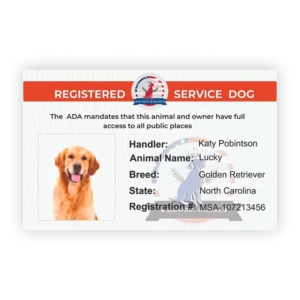
Regardless of training method, you’ll need proper identification gear. A service dog vest helps identify your hearing dog in public, and an official service dog ID card provides convenient proof of your dog’s status.
Your Legal Rights With a Hearing Service Dog
Under the ADA, hearing service dogs have the same legal protections as any other service animal:
- Public access — Your hearing dog can accompany you to restaurants, stores, hospitals, schools, and all public places. Businesses cannot deny entry or charge extra fees.
- Housing — Under the Fair Housing Act, landlords must allow service dogs even in “no pets” properties with no pet deposit or breed restrictions.
- Air travel — Under the Air Carrier Access Act, service dogs can fly in the cabin at no extra charge.
- Employment — Employers must provide reasonable accommodations for your service dog in the workplace.
Staff may only ask two questions: (1) Is this a service animal required because of a disability? (2) What task is the dog trained to perform? They cannot demand documentation, though carrying a service dog certificate can help avoid confrontations.
Hearing Service Dog vs. Emotional Support Animal
| Feature | Hearing Service Dog | Emotional Support Animal |
|---|---|---|
| Legal classification | Service animal (ADA) | Not a service animal |
| Trained tasks | Yes — sound alerts, leading to source | No specific tasks required |
| Public access | Full access (ADA) | No public access rights |
| Housing rights | Yes (FHA + ADA) | Yes (FHA only) |
| Air travel | Yes — cabin access free | No — treated as pet |
| Species | Dogs only (+ miniature horses) | Any species |
| Documentation | Not legally required, but recommended | ESA letter from LMHP required |
If you don’t qualify for a hearing service dog but could benefit from animal companionship for related anxiety or depression, an emotional support animal might be a suitable alternative.
How to Get a Hearing Service Dog: Step by Step
- Get evaluated — Visit an audiologist to document your hearing loss and confirm it qualifies as a disability.
- Choose your path — Decide between a trained program dog, a professional trainer, or owner-training.
- Select a breed — Choose a dog with natural sound alertness (see breed table above).
- Complete training — Ensure your dog masters sound recognition, alert behaviors, and public access etiquette.
- Get proper ID — Order a service dog registration kit that includes your ID card, certificate, vest, and ADA tag.
- Know your rights — Familiarize yourself with ADA, FHA, and ACAA protections before going public with your dog.
Frequently Asked Questions
A hearing service dog is a type of service animal specifically trained to assist people who are deaf or hard of hearing. These dogs are trained to physically alert their handler when they detect specific sounds by making physical contact — typically nudging, pawing, or leading the person toward the sound source.
To qualify for a hearing service dog, you must have a documented hearing impairment that substantially limits one or more major life activities. This includes: A licensed audiologist, ENT specialist, or primary care physician can provide the documentation needed. You may also want to obtain an official service dog certificate for added convenience.
The cost of a hearing service dog varies significantly depending on the source: Regardless of training method, you’ll need proper identification gear. A service dog vest helps identify your hearing dog in public, and an official service dog ID card provides convenient proof of your dog’s status.
Yes — the ADA does not restrict breeds or sizes. However, dogs with natural sound alertness, calm temperaments, and high trainability are most successful. Labrador Retrievers, Poodles, and Cocker Spaniels are top choices.
No letter is legally required under the ADA. However, having medical documentation of your hearing loss helps when applying to training programs and can be useful if your rights are questioned. Learn more about getting a service dog letter from a doctor.
The content on this website is for informational purposes only and does not constitute professional medical advice, diagnosis, treatment, or legal counsel.
Still Unsure If You Qualify?
Skip the confusion. Take a 3-minute assessment to see what your animal legally needs.
U.S handlers trust MyServiceAnimal