Emotional Support Animal Letter Requirement and How to Get
Today, animals in the United States have transitioned from being “just pets” to becoming an integral part of modern medicine. For individuals facing physical or psychological challenges, these companions are life-changers, helping them adapt to society and navigate daily life conditions that would otherwise be unmanageable.
While Service Animals often steal the spotlight, Emotional Support Animals (ESAs) play a critical role in mental healthcare. They provide essential stability for those struggling with chronic anxiety, depression, and veterans dealing with PTSD.
Helper Animals: Understanding the Key Differences

It is crucial to distinguish between a Service Animal and an ESA. A service dog is a trained professional disciplined to fulfill specific tasks, whereas an ESA provides comfort through its presence.
Service Animals vs. ESAs: At a Glance
| Feature | Service Animal (PSD/Guide) | Emotional Support Animal (ESA) |
|---|---|---|
| Primary Role | Performs specific medical tasks | Provides emotional comfort |
| Training | Specialized professional training | No specific training required |
| Legal Rights | Public access (ADA) | Housing rights (FHA) |
Service animals often act as protectors. For instance, dogs can be trained to call for help during an epileptic seizure or detect a rise in blood pressure. You can check the comparative table of each registration benefit on the My Service Animal Registrar’s home page.
What is an ESA? More Than Just a Companion
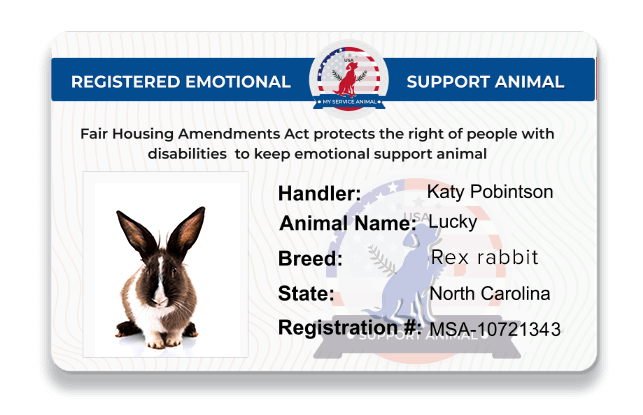
An Emotional Support Animal is a true lifeline for those suffering from depression, OCD, or PTSD. Unlike service animals, ESAs don’t need to perform “tasks” — they act as a silent psychologist, reducing anxiety and providing a sense of safety.
Key Fact: While ESAs don’t require professional training, they must be well-behaved and obedient in social settings.
Common Misconceptions
Many skeptics believe mental health issues can be managed without animal therapy. However, research shows that the constant presence of an ESA is often the key factor in a patient’s recovery, especially when combined with traditional medication.
The Importance of the ESA Letter
Without a valid ESA doctor’s letter, your pet is legally just a pet. This document, issued by a licensed mental health professional, is essential for securing rights like “no-fee” housing under the Fair Housing Act.
Emotional Support Animal Registration
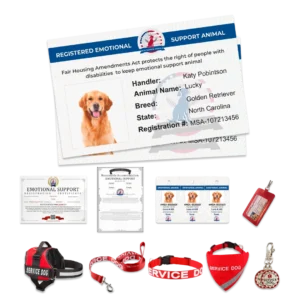
Emotional Support Animal Premium Bundle
Advantages of Emotional Support Animals
- Fight Loneliness: A loyal companion that brightens leisure time.
- Physical Health: Motivation for daily walks and activity.
- Crisis Support: Animals can sense panic attacks and help their owners stay grounded.
- Socialization: Pets often act as a “social bridge,” making owners more outgoing.
ESAs for Depression and Anxiety
Anxiety and depression are the most common psychological illnesses today. An ESA can significantly alleviate symptoms by encouraging a routine and providing emotional closeness. For those with incurable diseases, the emotional bond helps manage feelings of despair.
Who Qualifies and How to Get an ESA Letter?
Obtaining an Emotional Support Animal is a medical process, not just an administrative one. To legally qualify, you must demonstrate that an animal provides essential support for a diagnosed condition.
1. Determine Your Eligibility
If you struggle with a mental or emotional disability that limits one or more major life activities, you may qualify. Common conditions eligible for an ESA include:
- Severe Anxiety, Depression, or Bipolar Disorder
- Post-Traumatic Stress Disorder (PTSD)
- Panic Attacks and Chronic Stress
2. Consult a Licensed Professional
You cannot simply “buy” a legal status online. You must obtain a signed recommendation letter from a Licensed Mental Health Professional (LMHP)—such as a psychiatrist, therapist, or licensed clinical social worker.
Crucial Legal Requirement: According to recent U.S. regulations (specifically standards set by laws like California’s AB 468), you must have an established client-provider relationship. This typically means the professional must have been treating you for at least 30 days regarding your specific mental health condition before they can legally issue an ESA letter.
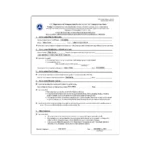
To help your doctor understand exactly what is needed, you can provide them with a standard format:
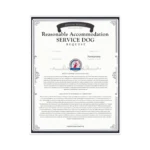
Download Service Dog Certificate Template (PDF)
Note: A valid letter must be written on the professional’s official letterhead, include their license number, date of issuance, and clearly state that the animal is a necessary part of your treatment plan.
3. Registration and Identification
While the doctor’s letter is your primary legal document for housing, carrying a physical ID card helps avoid confrontation and confusion in daily life.
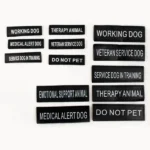
MyServiceAnimal offers legitimate ESA registration for those who have secured their letter and want database confirmation, physical ID cards, and vests.
ESAs’ Rights and Freedoms
Under the Fair Housing Act, a tenant can live with their ESA even in buildings with “no-pet” policies. Landlords cannot charge extra fees or restrict the animal’s weight. However, note that according to new federal laws, ESAs are generally not permitted to fly in the cabin for free — always check with your airline first.














The content on this website is for informational purposes only and does not constitute professional medical advice, diagnosis, treatment, or legal counsel.

U.S handlers trust MyServiceAnimal

FAQ
Under the Fair Housing Act (FHA), landlords are generally required to provide “reasonable accommodation” for person with disabilities. This means they cannot deny your ESA even in buildings with a “no-pet” policy, nor can they charge extra pet fees. However, a request can be denied if the specific animal poses a direct threat to the health or safety of others or causes significant property damage.
Legally, the only document required to qualify your pet as an ESA is a signed letter from a licensed mental health professional. However, many owners choose to register their animals and obtain an ESA ID card. This helps provide quick database confirmation and makes it easier to communicate your pet’s status to landlords or building managers.
No, they are different. A Psychiatric Service Dog is trained to perform specific tasks to assist with a mental disability (like detecting a panic attack or providing deep pressure therapy) and has full public access rights under the ADA. An ESA provides comfort through companionship, does not require specific task training, and is primarily protected in housing situations under the FHA.
Yes, most ESA letters are valid for one year from the date they are issued. To ensure your legal protections under the Fair Housing Act remain active, you should consult with your mental health professional annually to renew your documentation.
Unlike service animals, which are limited to dogs (and sometimes miniature horses), almost any common household animal can be an ESA. While dogs and cats are the most popular choices, rabbits, birds, and even certain reptiles can qualify as long as they provide emotional support and do not create a nuisance in a shared living environment.