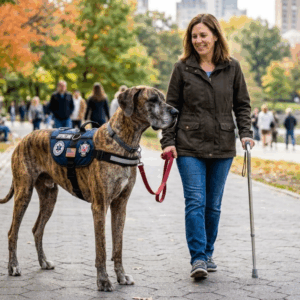
Service dogs and emotional support dogs are faithful and dedicated companions for people with various physical health problems and mental frustrations. Although many people often confuse these two concepts, they are still different species of helper animals. They differ both in the functions they perform and in their legal status.
And which of these animals you need depends on your condition, needs, and recommendations of your doctor. We will try to outline for you the difference between service animals and emotional support animals.
Classification of animal helpers

Animals have always been faithful friends and helpers of people. Initially, animals performed a protective function, warned of danger, and helped with hunting. However, today animals are often used for medical purposes to help people in need.
Today, people with inabilities have the opportunity to receive a service animal that will help them with daily activities and meet their disability-related needs. Service dogs are highly profitable for their handlers because they can carry out a huge number of functions from simple daily tasks to first aid if needed.
Another group is emotional support animals that come up with psychological endorsement and encouragement for humans with various psychic and emotional maladies. These creatures differ from service animals, yet, they are still vital for their handlers. An emotional support animal gives a man the opportunity to distract from daily routine and problems and start enjoying life.
Therapy animals are often confused with emotional support animals. But, while ESAs provide the necessary support only to their owners, the activities of therapy dogs are aimed at groups of people. Most often, they entertain and encourage people in hospitals, nursing homes, schools, and other institutions where people may feel depressed.
And another group of animals that we often forget when talking about animals that help people is working animals. As the name implies, these creatures help people in the workplace. Most often, when talking about working animals, people mean guard dogs or police dogs.
Tell me about the role of Service Dogs
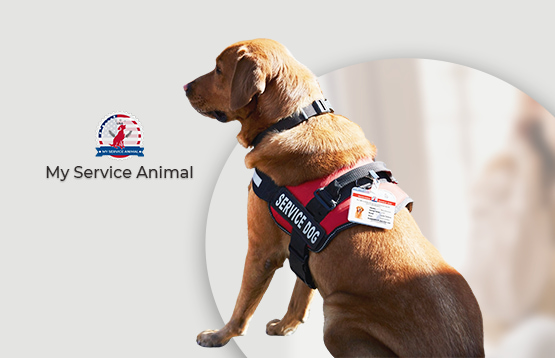
A service animal means that an animal, mostly a dog, was extremely disciplined in implementing different assignments to make life easier for humans with inabilities. According to the ADA, disability may mean a behavioral or mental disability of any kind. Service dogs’ jobs must be directly correlated to their disabilities.
Among the most widespread types of ADA animals are guide dogs that help blinds, hearing dogs, which are necessary for people with complete or partial deafness, and mobility dogs, which aid men who cannot move freely. Mobility animals, for instance, can pull a wheelchair or be a physical prop for those who are trying to regain the ability to walk.
There are also specifically trained service animals for humans with severe forms of mental disorders. Psychiatric service animals are usually prescribed by doctors for those patients who have been unsuccessfully struggling with severe forms of mental frustrations for a long time. These animals are especially needed for those who have vivid physical manifestations of psychological malady. For those who have milder forms of disorders, there are emotional support animals.
Tell me about the role of Emotional Support Animals
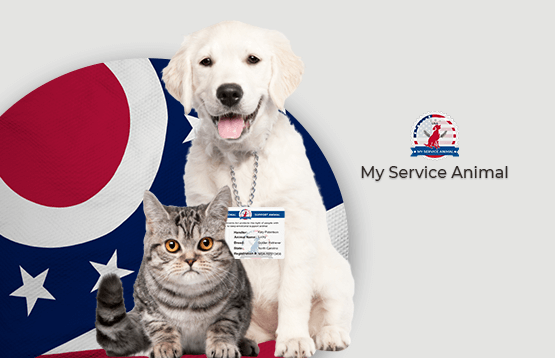
So, what is an emotional support animal, or an ESA? These animals don’t undergo specific disciplining and their main task is to be companion animals and provide emotional support.
It does not diminish the support these animals can offer people who are suffering from mental problems. An emotional support dog can ease anxiety, drowsiness, fear, post-traumatic stress disorder, and depression. The dog is required to be given supervised treatment for patients undergoing mental maladies.
These animals also help to improve the mood and general well-being of the owner. People get rid of feelings of loneliness and abandonment, and daily care and caring for the animal raises feelings of self-importance for humans. Learn more: How Emotional Support Animals Help People
What is a working dog?
A working dog is an animal that performs specific tasks, most often to help the owner at work or in running the farm. For example, a fairly common type of working dog is the sniffer dog, which “works” with the police and at airports. These animals also help in the search and rescue of people, as well as cooperate with the military, for example as sappers.
Besides, working dogs can be useful for people who live in villages. These animals are excellent protectors and guards, and may even be shepherds for herds of cattle.
Therapy Animals
If you want your pet to please not only you but also to be useful to other people, you can register him as a therapy dog. These animals spend time with people in hospitals, nursing homes, schools, retirement homes, etc, entertain and encourage people in these institutions and supply them with emotional support.
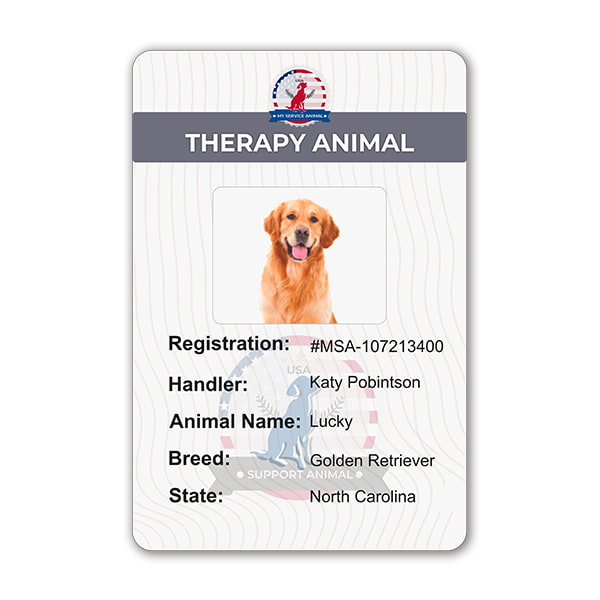
Special training for therapy dogs is not required, but the animal must be calm and kind, even surrounded by strangers. Usually, the preparation and registration of therapeutic animals are special organizations, one of which is the American Kennel Club.
Before a dog can visit hospitals or schools and interact with people there, it must take a special obedience test. After that, he will become part of the club of therapy dogs. For example, the AKC encourages animals and their owners by giving dogs status by the number of visits.
Tell me the difference between Service Dogs and Support Dogs
A service dog is taught to perform an activity that his owner is unable to perform by himself as a result of physical or emotional impairment. They can offer emotional comfort, however, are trained specifically to offer other soothing services. Emotional support dogs provide therapeutic benefits to individuals with mental maladies. The supporting animal doesn’t need to have been trained, but it is necessary to have medical evidence for such certifications.
There are also some differences at the legal level. For example, service animals must be registered. This is usually done at a service dog training center. At the same time, the registration of animals with emotional support is not mandatory and depends only on the wishes of the owner of the animal.
The Americans with Disabilities Act doesn’t consider emotional support animals to be assistance animals, since because they are not as vital to humans as service dogs are. That’s why the rights and freedoms of ESAs significantly limited compared to the rights of service animals. This is often the cause of controversy and violations of the law by ESA owners who pass their animals as service ones.
Species and breeds
Among service animals, the most common species are dogs. This seems quite logical since the service animal has to perform many physical tasks to help its owners. Dogs are considered one of the hardiest and strong pets. In addition, there is a stereotype that dogs are the easiest to train.

If we talk about dog breeds that are best suited for the role of service animals, people often choose Labradors, Retrievers, Staffordshire Terriers, and Spaniels. These breeds are often described as one of the most intelligent, kind, and with mild temperaments.
Other species are also often used as psychiatric service animals and emotional support animals. In second place in popularity are cats. These creatures are especially popular among people who do not have much time to care for and play with their pets, but still need someone else in the house.
Animals education
Training service dogs begins at an early age and takes several months. First, the animal is taught obedience, then taught to perform a basic set of commands. After the meeting with the future owner, the service dog is taught to perform specific tasks required for this particular person with disabilities.
An emotional support animal doesn’t need special education, since it is not supposed to perform specific tasks. However, ESA owners often express a desire to teach their pets basic commands. Such exercises with an animal and time spent together also have a positive effect on a person’s psychological state.
Emotional Support Animal Registration
Registration is not mandatory for an emotional support animal. Though ESA handlers can choose to purchase registrations from private companies to obtain formal documents, these documents do not guarantee any extra rights under the law.
At the same time to obtain emotional support dogs officially, people must get an ESA letter from any qualified specialist. In order for you to receive this paper, your doctor must confirm that you have a mental disorder and recommend an emotional support animal as therapy. This document is especially important for those who rent a home and require reasonable accommodation for the animal.
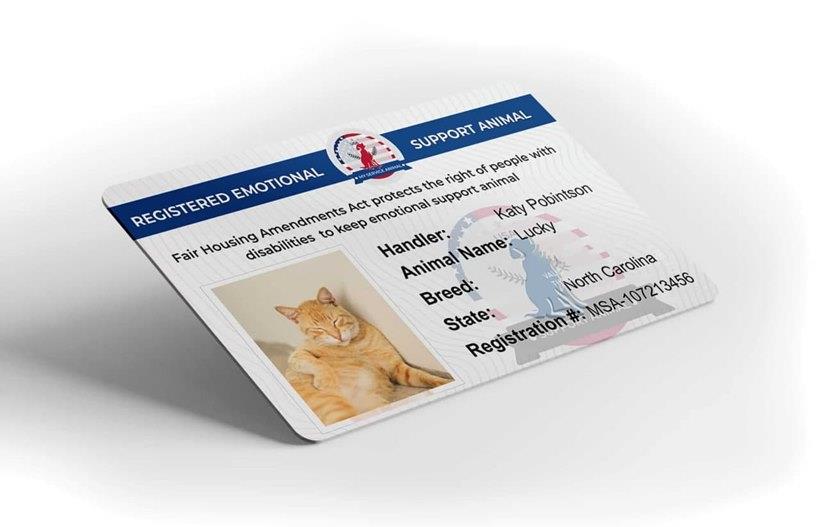
If you already have a therapist letter you can register your ESA pet in MyServiceAnimal Database and get an ID card of his status.
Who May Have a Service Animal?
A service animal is a specialized animal that helps people with disabilities. It can perform many different functions that may not be available to a person due to his disability. The animal ensures that the basic daily needs of its owner are met. For example, guide dogs replace their owners’ eyes and help them safely reach their destination. And hearing dogs give signals to their owners in case of extraneous sounds and can even save their lives, for example, in the event of a fire.
In addition, service animals can greatly simplify a person’s life. These pets can be trained to bring items, open and close windows and doors, press the elevator button, and do many other functions. Service animals are extremely disciplined and easy to train even at home. Therefore, their owners can train their pets to perform specific tasks necessary for this particular person and situation.
What rights do Service Dog owners have?
The ADA requires that service dogs receive full public accessibility rights, so they are permitted to go places where animals are not allowed. This list includes various public places, for instance, restaurants, bookstores, or libraries. You can also live with a service animal without paying an extra fee.
Besides, in accordance with the Air Carrier Access Act service dogs are permitted on planes. The airlines have their own rules on service dog usage. Usually, dogs must sit on a person’s lap or their backs. You do not have to pay extra for transporting the service animal.
If you already have a therapist letter you can Register your Service Dog in MyServiceAnimal Database and get an ID card of his status.
What rights do Emotional Support Animals have?
Unlike service dog owners, ESA owners are limited in their judicial rights and typically must provide an official diagnosis. Due to the fact that the ADA does not recognize emotional support animals, these creatures at first glance are a little different from pets. Generally speaking, the Fair Housing Act is the only state law that provides certain privileges for ESAs.
Until recently an emotional support animal also was able to accompany its handler to the plane cabin. However, according to recent changes in the law, these privileges have been revised. In most states, ESAs must be transported in the luggage compartment along with other pets.
We also recommend paying special attention to the local laws of each state. In addition to general laws, each state government has the right to extend the rights of emotional support animals at its own discretion based on the needs of the population.
Air travel

For a long time, service animals and animals of emotional support had the same rights and could accompany their owners during the flight, being with them in the cabin. However, due to the fact that ESAs do not have special training, it is believed that these animals can show aggression in stressful situations, including in flight, and pose a threat to other passengers.
That’s why last year the authorities banned emotional support animals from being in the cockpit. You can carry the ESA in the luggage compartment as a pet. Or you also have the opportunity to use the services of pet-friendly airlines.
In order to be able to fly close to the owner, any animal must meet the requirements set by the airline. In addition, you must independently and in advance take care of the comfort of your pet during the flight. We have an ultimate guide on how to fly with your service dog where you can find all the steps from booking tickets to pet comfort during the flight.
Housing

The Fair Housing Act (FAH) protects disabled people and their families from discrimination. Under this law, an individual or business must offer pet reasonable accommodations for the occupant to enjoy the property and use it.
Animals that are emotionally supported but do not meet the ADA criteria are also the objects of the FHA. That means that a landlord cannot forbid an emotional support animal to live with its owner. In the case of disabled persons having service animals or supporting animals in their homes, the appropriate accommodation could include removing pet restrictions.
These animals cannot be considered pets. As a result, these animals are not subject to the policy of pets in the house. Owners of service animals and emotional support animals should not pay extra for the pet’s stay or provide a deposit for possible damage. In this case, in case of damage to the owner of the apartment, the animal handler must take responsibility and reimburse the loss.
Read more about Housing Rights for Service Animals
Public facilities and accommodation
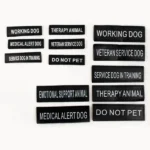
Public access for service animals is almost unlimited, so no one can forbid you to be with your pet where you want. Owners of service animals often buy special clothes for their animals, which allows them to recognize a four-legged helper. This avoids arguing with other people in public.
Nevertheless, the law does not oblige the institution to accommodate emotional support animals. That’s why ESA handlers are often forced to use the services of pet-friendly establishments.
Employment
Law prohibits discrimination on the job for disabilities. Employable personnel must provide adequate accommodations. Having the assistance animals accompany the person in a situation where there is unable or unsatisfactory work can be considered a reasonable option in this case.

The law does not require employers to allow their employees into the office accompanied by service animals or emotional support animals. However, many companies make concessions to their employees, considering that the presence of an animal can significantly improve the quality of work and productivity.
If you would like to be able to visit the workplace with your pet, you should talk to the company’s management and try to find a compromise. Do not forget to explain that the presence of an animal in the workplace is not just your whim, but a necessity caused by the state of your health.













Is Emotional Support better than Service Dog?
What to choose – a service animal or an animal of emotional support – depends entirely on the state of your physical and psychological health, as well as the recommendations of your therapist. If you need someone to help you cope with daily tasks and carry out your small tasks, it is better to stop your choice of a service animal. If you feel lonely and need a companion to beautify and diversify your life, it is better to choose a dog of emotional support.
Also note that the owner of the service animal can only be a person suffering from physical, sensory, psychiatric, intellectual, or other inabilities. Your dysfunctions must be supported by a doctor’s medical opinion.
And don’t forget, if you have a valid letter from your therapist you can always register your pet with MyServiceAnimal Registrar