Who is Entitled to Having an ESA in Massachusetts?
Massachusetts residents, like other US citizens, have the legal right to use emotional support animals (ESAs) to alleviate the symptoms of mental health conditions. In order to become a recognized ESA holder in Massachusetts, you must have a qualifying psychological or emotional disability that is corroborated by a licensed mental health professional (LMHP).
The most common ailments that can be treated with the help of emotional support animals include severe anxiety, depression, learning disabilities, PTSD, ADHD, tic disorders, motor disorders, and conditions related to severe stress or trauma. In Massachusetts, emotional support animals are actively involved in the treatment plans of individuals with bipolar disorder and cognitive impairments of various degrees of severity.
For example, bipolar disorder is characterized by mood swings between phases of depression and mania. During a manic phase, an individual may feel highly energetic but easily irritated. An ESA can provide a grounding presence, helping to calm the handler and facilitate the healthy release of accumulated energy. During depressive episodes, when a person may feel despondent or isolated, an ESA provides bilateral love and attention, offering a non-judgmental source of comfort that significantly speeds up the patient’s recovery and daily functioning.

The Impact of Emotional Support Animals on Your Health
Studies consistently show that people feel more relaxed, less anxious, and less lonely when they interact with a companion animal. Animals help normalize human heart rates, lower blood pressure, and improve general psychological well-being. This therapeutic effect is noticeable even from periodic interaction, meaning that living with an ESA around the clock can have a profound, long-lasting positive impact on your emotional shape.
While animals cannot provide verbal advice, in Massachusetts, ESAs are considered full-fledged four-legged therapists. Many handlers find immense relief in interacting with their ESAs simply because the animal cannot judge them. The opportunity to talk about inner frustrations with a silent, loving companion is often a crucial first step toward a positive therapy outcome. Furthermore, caring for an animal gives individuals a sense of purpose and routine, which is an essential behavioral activation technique often prescribed by therapists for treating depression.
How Do I Get My ESA Approved in Massachusetts?
To resolve legal issues related to housing and formally recognize your animal as an ESA rather than a standard pet, you must obtain an official ESA letter.
This letter is a formal document issued by a licensed medical or mental health professional. The ESA letter contains the specialist’s professional opinion stating that you have a mental health condition that substantially limits a major life activity, and that the presence of the animal is necessary to alleviate symptoms of that condition. The letter must be issued on the official letterhead of the LMHP, contain their licensing information, the date of issue, and their signature.

 Resolves 80% of housing disputes instantly
Emotional Support Animal Registration
 Instant Digital ID
 Free Shipping
 5-Min Process
 Apple & Google Pay


If you live in Massachusetts, your letter must be written by a healthcare provider who is licensed to practice in the state of Massachusetts. Before contacting a psychologist or clinical social worker, ensure they are knowledgeable about assistance animal regulations and are willing to evaluate you for an ESA letter.
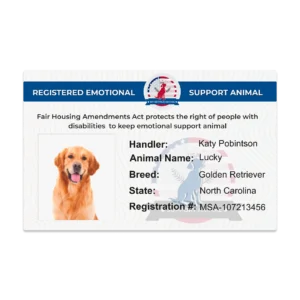
Once you have your official letter, Massachusetts authorities do not require any state-level registration. However, many handlers choose to obtain supplementary identification to make public interactions smoother. You can order an Emotional Support Animal ID card, a visible pet tag, an ESA vest, and other accessories to clearly identify your animal’s working status to landlords and building managers.
Massachusetts Companion Animal Laws: Housing and Access
It is vital to understand the difference between service dogs and emotional support animals under Massachusetts law. Because ESAs do not undergo specific task training to mitigate a disability, they do not meet the definition of “service animals” under the Americans with Disabilities Act (ADA). Consequently, Massachusetts state law does not grant ESAs the right to enter public spaces where pets are normally prohibited, such as restaurants, grocery stores, or shopping malls.
However, under the federal Fair Housing Act (FHA), which applies fully in Massachusetts, ESAs are classified as “assistance animals.” This classification grants them significant legal protections in the realm of housing.

Residing with ESAs in Massachusetts
In compliance with the FHA, housing providers must treat assistance animals differently from standard pets. The FHA gives individuals with disabilities the right to request a “reasonable accommodation” to keep their emotional support animal in their residence. This federal mandate allows ESA owners to bypass “no-pets” policies and breed or weight restrictions that a landlord might otherwise enforce.
Before moving into rented housing with an emotional support animal, you must formally request this accommodation from your landlord by submitting your ESA letter. Once the landlord verifies the letter, they are legally required to permit the animal, with a few narrow exceptions.
Crucially, a landlord in Massachusetts cannot charge you pet rent, pet deposits, or any other additional fees for keeping an emotional support animal. The animal is viewed as a medical necessity, much like a wheelchair. However, as the handler, you remain financially responsible for any actual property damage your animal causes.
When Can a Landlord Deny an ESA in Massachusetts?
While the FHA provides broad protections, a Massachusetts landlord can deny an ESA request under specific, limited circumstances:
- If the building has four or fewer units and the landlord occupies one of them.
- If it is a single-family home rented without the use of a real estate broker.
- If the specific animal poses a direct threat to the health and safety of others that cannot be mitigated.
- If the animal causes substantial physical damage to the property.
- If accommodating the animal would impose an “undue financial and administrative burden” on the housing provider.
Landlords cannot deny an ESA based solely on its breed or size. Any denial based on safety must be backed by documented evidence of the specific animal’s aggressive behavior, not generalized breed stereotypes.
Flying with an ESA from Boston Logan or Other MA Airports
Historically, the Air Carrier Access Act (ACAA) allowed emotional support animals to fly in the cabin of commercial aircraft free of charge. However, the Department of Transportation revised these rules. Currently, airlines are no longer required to recognize ESAs. If you are flying out of Massachusetts, your ESA will likely be treated as a standard pet, meaning they must fit in an airline-approved carrier under the seat and you will be subject to standard pet fees. Only fully trained psychiatric service dogs (PSDs) are guaranteed free cabin access under current airline regulations.
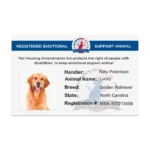
Register Your Emotional Support Animal Today
If you have secured your ESA letter and want to make housing transitions and daily life easier, supplementary identification is highly recommended. Get your ESA registration and ID card, an emotional support animal certificate, or a housing accommodation request letter to secure your housing rights professionally. The ESA premium registration bundle includes all documents, an ESA vest, and full support from the MyServiceAnimal Registry, ensuring you and your companion are always prepared.
Frequently Asked Questions
In order to be able to become an ESA holder, you must have a non-physical malady corroborated by your therapist. The most common ailments that can be treated with emotional support animals include learning disabilities, ADHD, mental retardation, tic disorders, motor disorders, gender and sexual identity issues, and disorders related to alcohol a…
To resolve legal issues related to emotional support animals, you must have documents confirming the need for an animal for your psychogenic health, that is, certifying that the animal is not a pet. This function is performed by a special letter issued by a licensed medical professional. The ESA letter contains a specialist’s opinion as to wheth…
Massachusetts follows the federal Fair Housing Act, which requires landlords to provide reasonable accommodation for tenants with valid ESA letters. Landlords cannot charge pet fees or deposits for ESAs.
You need an evaluation from a licensed mental health professional who is licensed to practice in Massachusetts. They must determine that you have a qualifying mental health condition and that an ESA would benefit your treatment.
Under the Fair Housing Act, landlords in Massachusetts cannot deny a legitimate ESA with a valid letter. Exceptions apply only to owner-occupied buildings with four or fewer units and single-family homes rented without a broker.