Emotional Support Animals for Various Mental Disorders

Pets have always been man’s true friends. They bring us joy and happiness and touch us with their appearance. Children who grow up in a home where there are pets grow up to be more friendly, sociable and inquisitive. Older people often get pets so that they have someone to take care of them. But animals can have a beneficial effect on people at any age.

One of the most important benefits of animals is their help to people with mental disorders. Emotional support animals have recently become especially popular among people of different ages and social statuses. The warmth and care that these creatures give to their owners can significantly speed up the healing process, even in the most serious cases.

That is why therapists are increasingly recommending that their patients acquire an emotional support animal that will always be there and will bring to its owners the pleasant emotions necessary to get rid of the frustration.

The general influence of animals on humans

service puppy in vet

Animals give us a lot of positive and joyful emotions. These creatures become our friends and family members. In the modern world, many pet lovers assure that pets are not only a pleasant pastime, or decoration for the home, but also a great benefit to human health. It has been scientifically proven that communication with animals has a beneficial effect on the psychological and even physical health of people.

Another proven fact is that people who keep pets, according to statistics, live longer than others. In addition, pets, especially cats and dogs, can feel the emotional state of the owner, play the role of relaxation, soothe or, on the contrary, amusement. It’s no secret that the emotional state affects the physical condition and overall health.

Emotional support animals help people relax. Cats, dogs, aquarium fish, and many others have a similar relaxing and calming effect. Funny situations that happen to our and other pets cheer up even when we see them on computers or TV screens, not to mention when it happens right in front of our eyes. The opportunity to relax and maintain a good mood allows you to dispel the stress of the day and does not allow you to sink into depression. Feathered friends are especially good at dealing with these human problems.

Growing demand for emotional support animals over the last few years

Over the past few years, when the whole world is living in a pandemic and quarantine, the demand for pets has especially grown. Having a pet in your home can alleviate the psychological stress associated with isolation. Psychological research has shown that loneliness is associated with an increased risk of developing other mental health problems such as depression and anxiety.

Animals help to lead a familiar life in self-isolation. In particular, dogs help maintain routines and stay active, thus reducing stress. People with pets were still affected by isolation, but pet ownership was associated with less deterioration in mental health and less increase in loneliness than those reported by people who did not have pets. Therefore, it is not surprising that during the quarantine, the number of people who want to get a pet has rapidly increased.

Register your animal
SERVICE DOG
registration
$49
ID card & online registration
SERVICE DOG
Online registration
$25
Only online registration
EMOTIONAL
SUPPORT ANIMAL
Registration
$49
ID card & online registration
EMOTIONAL
SUPPORT ANIMAL
Online registration
$25
Only online registration
THERAPY ANIMAL
Registration
$44
ID card & online registration
THERAPY ANIMAL
Registration
$25
Only online registration

ESAs’ purpose

Emotional support animals are pets that help their owners with various psychic frustrations reduce their symptoms and eventually get rid of the disease completely. These creatures do not need special training, as they are not required to perform any tasks. They are needed so that a person does not feel lonely and abandoned. After all, many studies in the field of psychology prove that it is loneliness that is often the catalyst for the development of mental maladies in humans.

An emotional support animal is a therapy approved by a therapist or psychiatrist. Of course, it is very difficult to completely overcome a psychological disturbance only with the help of ESA. However, when combined with physician visits and medications, ESAs show excellent results. They are especially effective in cases where the patient needs constant round-the-clock care and supervision.

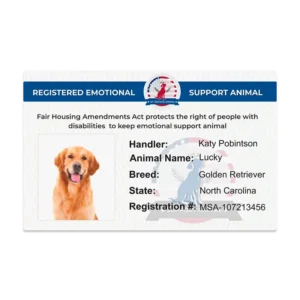
You can always order Emotional Support Animal registration with ID Card with MyServiceAnimal ADA registrar.

List of frustrations for which ESA can help

Vet doctor

We have already talked about the general impact of pets on the physical and emotional state of a person. But emotional support animals are specifically prescribed by doctors for patients suffering from severe cognitive maladies. Among the most common frustrations are:

  • Depression
  • Anxiety
  • PTSD
  • OCD
  • Social phobia
  • Bipolar disorder
  • Schizophrenia

Intellectual and learning inabilities, for example, autism or dyslexia.

This list can be continued with other less common psychogenic disorders. In any case, the first thing ESA does is remove feelings of loneliness and defenselessness. Even these two functions are enough to start the mechanism of recovery in a person suffering from a psychological disturbance.

ESA and depression

Depression is defined as a mental health disorder in which there is prolonged low mood and other symptoms that affect thoughts, feelings, behavior, and the entire body. A depressed person often experiences despondency, sadness, lethargy and irritability. Things that used to bring a good mood no longer satisfy or interest. A human constantly feels tired, loses faith in himself, cannot concentrate and be productive. A depressed person may have thoughts of death, desire for their own death, and thoughts of suicide.

In this case, ESA is a distracting element. The animal does not allow its owner to withdraw into himself, into bad events and emotions. These creatures are even able to take on some of the negativity, freeing their owner from it.

Animal care is another component of depression treatment. A person is aware of his importance to another creature and cannot neglect this. Regular walks in the fresh air help to change the situation and put your thoughts in order. In addition, the animal gradually involves the owner in various activities. Every day people become more energetic and proactive, gain faith in themselves and return to their usual healthy state.

Anxiety

If anxiety and heavy mood continue for more than six months, we can talk about a mental disorder. When experiencing general anxiety, it is not associated with specific situations. General concern is characterized by difficulty concentrating and sleep disorders, fatigue and inability to relax. Often, apprehension manifests itself in the form of excessive and prolonged excitement for any reason. Anxiety sufferers rarely seek help specifically for worry, but they often seek medical attention for other symptoms. People who suffer from anxiety often also experience physical symptoms such as headaches, stomach pains, sensation of a lump in the throat, or muscle tension.

Anxiety disorder can be effectively treated with psychotherapy and antidepressants. With the help of psychotherapy, you can try to weaken the effect of the cause of anxiety and find ways to get rid of it. Because anxiety attacks can happen unexpectedly and a specialist isn’t always there to help you deal with the situation, many therapists recommend emotional support animals to their patients. The animal reduces stress levels and aids to calm down if a man feels anxious about an upcoming event. You can find more in article: Emotional Support Animal for Anxiety.

ESA for veterans with PTSD

PTSD is a very serious condition. Symptoms of PTSD can occur in a person who has experienced a terrible traumatic event. That is why this disorder is often found in veterans returning from various military operations. With post-traumatic stress, you often have nightmares or horrific memories associated with the event. You try to stay away from anything that might remind you of the experience. You are embittered and unable to trust anyone or care for others. You are always on your guard and see a hidden threat in everything. You become uncomfortable when something happens suddenly and without warning. Depression, alcoholism and drug addiction, or other anxiety disorders usually accompany PTSD.

In this case, the ESA cares more about its owner than vice versa. The animal succors during terrible flashbacks and panic attacks, acting as a link between a person and reality. The animal also helps to distract and focus on what is happening now, not on the human’s traumatic experience. ESAs also prevent the development of concomitant mental disorders and addictions.

Separately, it is worth mentioning the improvement of sleep. Often people with PTSD, having learned to control their mind during the day, can return to the terrible events of their lives in nightmares. The animal feels change in the physiology of the handler during sleep: rapid breathing, increased heart

rate, and uneasiness. In the event of such a situation, a pet can wake up its owner from a bad dream and distract him or her in order to drive these thoughts away.

Obsessive-compulsive disorder

Vet doctor

OCD is a group of symptoms, of which the leading one is thoughts and actions obsessively arising in the mind, forcing a person to their mandatory implementation. These symptoms recur for a long time, cause considerable anxiety and distress. This disorder is also characterized by hyperbole and unreality of obsessive thoughts and actions. The most common obsessive thoughts are fear of getting dirty, getting infected, suspicion, striving for symmetry. A person may constantly be afraid of getting dirty or contracting some kind of disease. A man may also constantly think that he is capable of causing serious damage, such as a fire.

An emotional support animal helps to distract from intrusive thoughts and helps to reduce the frequency of repetition of “rituals”. The sense of protection, which the animal brings, calms the person and allows him or her to focus on something other than the thoughts caused by the malady. Nevertheless, it’s important to remember that OCD is a very complex issue and it’s not always possible to figure out the cause of your obsessions on your own. Therefore, it is important that the patient’s interaction with ESA is monitored by an expert in this field in order to avoid worsening the situation. You can lear more in our article How Emotional Support Animal helps with OCD.

Assistance for humans with social phobia

Slight social shyness, timidity and nervousness are common and normal personality traits. Fear of social situations is said to be a disorder when dread and other symptoms that arise in social situations have a significant impact on everyday life. Social phobia limits and complicates interpersonal relationships, work life and study. Situations in which particularly strong anxiety arises vary from person to person. A social phobic sufferer may become very nervous, for example, about speaking at a meeting, about an appointment with a doctor or other person of authority, talking on the phone, or quite ordinary social interactions at work or school.

The most common cause of social phobia is the fear of appearing vulnerable or being rejected. Thanks to ESA, a person feels safe. In addition, simply interacting with and talking to an animal contribute to developing social interaction skills. A person gradually learns to formulate and express his thoughts, talking to the pet. Gradually, the fear of communicating with people becomes weaker, and the person becomes more amicable and easier to make contact with. Moreover, pet owners often get to know each other and communicate with each other precisely thanks to their pet, because it is always more pleasant to talk with a person having common interests with you.

Accessories
Price range: $ 29 through $ 39
Original price was: $ 42.Current price is: $ 34.
Price range: $ 29 through $ 37
Price range: $ 60 through $ 75
Price range: $ 29 through $ 37
Price range: $ 60 through $ 75
Original price was: $ 42.Current price is: $ 34.
Price range: $ 15 through $ 26
Price range: $ 9 through $ 10

The effect of ESA on physical well-being improvement

pretty woman with service dog

Animals usually adapt to the owner’s regime, but they still have needs that you will have to satisfy. You need to walk with animals at least 2 times a day. And if at first it may seem like a rather difficult challenge, then after a few weeks you will get used to waking up earlier and love this activity.

Research has long proven the effectiveness of walking. Hiking will wake up your muscles from a long sleep, tone your body and replace sedatives. Walking contributes to the intensive movement of blood through the vessels, the enrichment of all internal organs without exception with a large amount of oxygen, which, of course, has a beneficial effect on the whole body. A morning walk with your pet will help you wake up faster and give you a boost of energy for the whole day. A walk before going to bed helps to completely relax the body, oversaturation with oxygen can even cause drowsiness.

Animals also help improve sleep. A well-balanced sleep schedule is the first step on the road to health. Like your favorite fluffy blanket, they literally lull, give a feeling of warmth and comfort. Contact with a pet reduces stress hormone levels, blood pressure and heart rate. It is much easier to overcome negative emotions and relax in this case. Other studies show that animals reduce the risk of cardiovascular disease, thereby extending the life of the owner. Pets help people with disabilities move around, predict epilepsy attacks, reduce headaches and outbursts of aggression, and speed up the healing process.

If you didn’t find your case here please check our article How Emotional Support Animals Help People

Disclaimer

The content on this website is for informational purposes only and does not constitute professional medical advice, diagnosis, treatment, or legal counsel.

Latest posts
Feb 20, 2026
Emotional Support Animal Laws In North Carolina

Finding clear answers about Emotional Support Animal (ESA) NC laws can be hard for renters and pet owners. North Carolina follows the federal Fair Housing Act (FHA), which protects people with emotional support animals from extra fees and discrimination in housing. This guide explains your legal rights, how to obtain a valid ESA letter, and […]

Feb 17, 2026
Service Dog Grants Resources: How To Find Financial Help In 2026

Obtaining a service animal is a life-changing step for those managing disabilities or mental health conditions, but the costs can be overwhelming. Prices often range from $15,000 to over $50,000. In 2026, finding reliable Service Dog Grants Resources is essential to bridge this financial gap and bring a trained companion into your life. This guide […]

Feb 9, 2026
Emotional Support Animal Utah Laws: Your Guide to Housing Rights

Navigating the intersection of rental agreements and mental health can be overwhelming for many Utah residents. Under the federal Fair Housing Act (FHA), emotional support animals (ESAs) are recognized not as pets, but as essential tools for managing psychological conditions. This comprehensive guide breaks down the legal requirements for ESA letters in Utah, ensuring you […]

Feb 4, 2026
Chaleco para perros de servicio real vs falso

¿Alguna vez has visto un perro con chaleco en la tienda y te has preguntado si es realmente un animal de servicio o sólo una mascota con equipo? Un verdadero perro de servicio está adiestrado para realizar tareas específicas para una persona con discapacidad. Según la Ley de Estadounidenses con Discapacidades, ese adiestramiento es importante. […]

Feb 4, 2026
Real Service Dog Vest Vs Fake

Ever see a dog in a vest at the store and wonder if it is really a service animal or just a pet in gear? A real service dog is trained to do specific tasks for a person with a disability. Under the Americans with Disabilities Act, that training matters. This guide shows you how […]

Jan 27, 2026
Mi Animal de Servicio Vs Mascota: ¿Cuál es mejor?

Intentar mantener a un animal de apoyo emocional (AEE) en una vivienda sin animales de compañía puede resultar agotador. Necesitas un plan concreto, no conjeturas. Sin embargo, es crucial comprender que Pettable y Mi Animal de Servicio ofrecen servicios completamente distintos. Este artículo analiza las diferencias. Respuesta breve: Si necesitas que un médico te prescriba […]

Jan 27, 2026
My Service Animal Vs Pettable: Which One is Better?

Trying to keep an emotional support animal (ESA) in no-pet housing can feel exhausting. You need a concrete plan, not guesswork. However, it is crucial to understand that Pettable and My Service Animal offer completely different services. This article breaks down the differences. Short answer: If you need a doctor to prescribe an ESA letter, […]

Jan 23, 2026
Service Dog For ADHD: Qualifications, Benefits, And How To Get One

Brain racing, focus slipping, and you feel stuck? A trained service animal can help with attention deficit hyperactivity disorder (ADHD). I’ll walk you through who qualifies, how psychiatric service dogs help, and the steps to get one with your care team. You’ll see what these dogs can do for mental health and daily life. If […]