Animal-Assisted Therapy — Programs, Benefits, and How It Works
The VA hospital ward in Phoenix was quiet except for the soft click of nails on linoleum. A golden retriever named Biscuit walked steadily beside her handler, paused at Room 14, and waited. Inside, a veteran named Marcus — three tours, a TBI, and a cortisol level nobody’s body should carry — reached out a hand without being asked. Within forty seconds, his blood pressure dropped seven points. The attending nurse had seen it dozens of times. She still watched with the same quiet amazement.
That exchange wasn’t magic. It was Animal-Assisted Therapy — a structured, clinician-directed intervention that has moved from the margins of medicine into the mainstream of American healthcare. And the science behind it is harder to argue with than most people expect.
What Animal-Assisted Therapy Is (and Isn’t)
Animal-Assisted Therapy (AAT) is a goal-directed clinical intervention delivered by a credentialed health professional — a licensed therapist, social worker, occupational therapist, or physician — who incorporates a trained, certified animal into a structured treatment plan for a specific patient.
That last part matters. AAT is not a volunteer dropping by with their friendly dog. That’s Animal-Assisted Activities (AAA) — valuable, but different. Here’s the distinction:
- Animal-Assisted Therapy (AAT): Directed by a licensed clinician. Progress is documented. Treatment goals are defined (reduce anxiety, improve motor function, increase verbalization in pediatric patients). The animal is a clinical tool, not just a comfort measure.
- Animal-Assisted Activities (AAA): Informal visits — pet therapy programs where registered volunteers bring their certified animals to brighten someone’s day. Beneficial. But not measurable clinical treatment.
The confusion between the two costs patients access to real programs. When a hospital administrator hears “therapy dogs,” they often picture AAA. The clinical rigor of AAT is something else entirely.
The distinction also matters legally and professionally. AAT sessions are billed under existing therapeutic modalities and documented in patient records. The animal is a co-therapist, not a visitor.
The Science Is Clear: What AAT Does to the Human Body
Skeptics used to frame human-animal interaction as “feel-good” with no measurable substrate. That framing is no longer defensible.
Published research — including randomized controlled trials and systematic meta-analyses from NIH-indexed journals — documents specific physiological responses to structured AAT sessions:
- Cortisol reduction: Salivary cortisol, the body’s primary stress biomarker, drops measurably within minutes of human-dog interaction in controlled settings. Multiple studies confirm this in both pediatric and adult populations.
- Oxytocin release: The same bonding hormone triggered by eye contact between a mother and newborn is released during dog-human interaction. This is not metaphor — it’s a documented neuroendocrine response.
- Blood pressure and heart rate: A 2023 NIH review of inpatient studies found consistent, statistically significant decreases in systolic blood pressure during AAT sessions among cardiovascular patients.
- Pain perception: Oncology patients undergoing painful procedures reported lower pain scores on validated scales (VAS and NRS) when a therapy animal was present during or immediately before the procedure.
- Neurological engagement: fMRI studies show activation of the caudate nucleus — a reward circuit region — during human-dog bonding. The same circuit that responds to familiar faces responds to the presence of a trusted dog.
The pet therapy market, which encompasses AAT programs and related interventions, is projected to grow from $331 million in 2024 to $477 million by 2030 — not because it’s trendy, but because hospital administrators and payers are tracking outcomes data. Effectiveness follows funding.
AAT and PTSD: The Veteran Population
The most compelling body of recent evidence concerns veterans. A 2024 Purdue University research review synthesized studies on psychiatric service dogs and AAT programs for veterans with PTSD and found clinically meaningful decreases in PTSD symptom severity across multiple validated measurement tools (PCL-5, CAPS-5).
Veterans in these programs reported:
- Reduced hypervigilance — the constant threat-scanning that makes public spaces exhausting
- Fewer nighttime episodes and flashbacks
- Increased willingness to engage in social situations
- Measurably lower cortisol at morning — a window into the body’s baseline stress regulation
The “social bridge” effect is particularly striking. Dogs don’t just reduce symptoms. They rebuild the capacity for connection — helping veterans re-enter relationships and communities that PTSD had quietly dismantled.
Where AAT Happens: Programs, Settings, and Handlers
AAT is not a single program. It’s a treatment modality deployed across a wide range of clinical settings, each with its own protocols, handler requirements, and patient populations.
Hospital and Inpatient Settings
A 2023 survey by the Infectious Disease Society of America found that 88% of infectious disease specialists worked in facilities that permitted some form of animal-assisted activity or visitation — a figure that reflects how normalized these programs have become in American hospitals. Within that, formal AAT programs (clinician-directed, documented, measurable) are growing fastest in pediatric wards, oncology units, and intensive care settings.
The “Facility Dog” model represents the cutting edge: a full-time, hospital-employed dog (typically trained by an organization like Canine Companions) who works five days a week alongside a dedicated handler-clinician. Attendance at the annual Facility Dog Summit nearly doubled between 2024 and 2025, signaling rapid professionalization of this model.
Mental Health and Behavioral Settings
Outpatient therapy practices, psychiatric hospitals, and substance abuse rehabilitation centers are increasingly incorporating AAT. The animal’s role here is typically to reduce the activation threshold for difficult sessions — patients who would otherwise resist or shut down engage more readily when a dog is present.
Pediatric and Special Needs Programs
Children with autism spectrum disorder (ASD), speech and language delays, and trauma histories respond particularly well to animal-facilitated therapy. The non-verbal communication channel a dog provides bypasses the defenses that make traditional talk therapy ineffective with certain pediatric populations.
Who Delivers AAT?
This is where AAT diverges sharply from informal pet visits. Credentialed AAT delivery requires:
- A licensed clinician — LCSW, OT, PT, LMFT, or MD — who has received specific AAT training
- A certified animal-handler team registered with a recognized organization (Pet Partners, Alliance of Therapy Dogs, Therapy Dogs International)
- Institutional approval, liability coverage, and documented veterinary health clearance for the animal
- A treatment plan with specific, measurable goals tied to the patient’s diagnosis
The handler and the clinician may be the same person (a therapist who has certified their own dog) or separate roles working in partnership. Either way, the clinical accountability runs through the licensed professional — not the dog owner.
Which Conditions Benefit Most from AAT
The research base is uneven — some conditions have strong RCT data, others have promising but preliminary evidence. Here’s an honest summary of where the science is strongest:
- PTSD and trauma-related disorders: Strong and growing evidence, particularly in veteran and survivor populations. Multiple systematic reviews with positive findings.
- Anxiety and depression: Consistent positive outcomes across inpatient, outpatient, and residential settings. Effect sizes are moderate but reliable.
- Dementia and Alzheimer’s disease: AAT sessions show measurable reduction in agitation, increase in social engagement, and temporary improvement in orientation. Effect duration is limited but clinically meaningful in a population with few pharmacological options left.
- Pediatric procedural anxiety: Strong evidence. Children undergoing blood draws, IV placements, and other procedures show significantly lower distress scores when a certified therapy dog is present.
- Autism spectrum disorder: Promising evidence for improved social interaction, reduced anxiety, and increased verbal communication. The mechanism appears to involve the non-threatening, predictable social signaling that dogs provide.
- Chronic pain: Emerging evidence. AAT may not reduce the pain signal itself but reliably changes the patient’s relationship to it — improving perceived pain management and reducing reliance on breakthrough analgesics.
- Substance use disorders: Early-stage research but consistent anecdotal reporting from rehabilitation programs. Animals appear to facilitate the emotional regulation skills that underpin successful recovery.
From AAT to Everyday: Your Own Emotional Support Animal
Clinical AAT programs are extraordinary tools — but they’re not available to everyone. You need an institutional program, geographic access, a qualifying diagnosis, and a clinician willing to integrate animal-assisted methods into your care plan.
What the research on AAT has quietly confirmed, though, is that the therapeutic mechanism isn’t exclusive to clinical settings. The oxytocin release, the cortisol drop, the neurological reward activation — these happen in your living room too. The presence of an animal you’ve bonded with produces real, measurable physiological changes that clinical programs have simply learned to harness systematically.
An Emotional Support Animal (ESA) is the personal, non-clinical version of that same human-animal bond. You don’t need a hospital program. You don’t need a credentialed handler or a certified therapy dog. You need a licensed mental health professional to document the therapeutic benefit your support animal provides — and the legal protections of the Fair Housing Act do the rest.
Can’t access a clinical AAT program? Your own emotional support animal provides daily therapeutic benefits at home — and your housing rights travel with you.
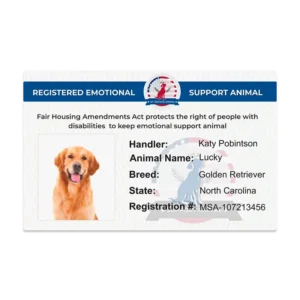
 Resolves 80% of housing disputes instantly
Emotional Support Animal Registration
 Instant Digital ID
 Free Shipping
 5-Min Process


Frequently Asked Questions About Animal-Assisted Therapy
Is animal-assisted therapy covered by insurance?
It depends on how the session is billed. AAT delivered by a licensed clinician as part of a documented treatment plan is typically billed under existing CPT codes for the clinician’s modality (psychotherapy, occupational therapy, physical therapy). The animal component is generally not separately billable. Some Medicaid plans and behavioral health carve-outs cover AAT-inclusive sessions; commercial insurance varies widely by plan.
Do I need a prescription or referral to access AAT?
Not universally — but in most clinical settings, AAT is offered within an existing treatment relationship. Your therapist, social worker, or occupational therapist would integrate it into your ongoing treatment plan. If you want to seek out an AAT provider specifically, look for licensed clinicians who list AAT as a specialty. No separate referral is typically required if you’re self-paying.
What animals are used in AAT besides dogs?
Dogs are by far the most common — their temperament, trainability, and sensitivity to human emotional states make them uniquely effective. But Pet Partners, one of the largest AAT certification organizations in the US, registers nine species: dogs, cats, equines (horses and miniature horses), rabbits, guinea pigs, domestic rats, birds, mini pigs, and llamas/alpacas. The species selection is typically matched to the patient population and clinical goals.
How is AAT different from just owning a dog?
The structure. AAT involves defined treatment goals, documented progress, a credentialed clinician directing the interaction, and a certified animal-handler team. A companion animal or emotional support animal provides genuine therapeutic benefit through presence and bonding — but that benefit isn’t organized around clinical treatment objectives. Both have value. They serve different purposes.
Can children access AAT programs?
Yes — and pediatric populations are among the best-studied for AAT outcomes. Children’s hospitals with facility dog programs, outpatient pediatric therapy practices, and school-based programs all offer AAT to minors. Parental consent and the clinical judgment of the treating provider govern access.

The content on this website is for informational purposes only and does not constitute professional medical advice, diagnosis, treatment, or legal counsel.
Still Unsure If You Qualify?
Skip the confusion. Take a 3-minute assessment to see what your animal legally needs.
U.S handlers trust MyServiceAnimal