
Emotional Support Animals for Various Mental Disorders
An emotional support animal (ESA) serves as a recognized therapeutic intervention within a comprehensive psychiatric treatment plan. Under federal guidelines, ESAs are prescribed to individuals with specific, diagnosed mental health conditions that substantially limit one or more major life activities. To qualify, patients must meet clinical criteria for a disability as defined by the Diagnostic and Statistical Manual of Mental Disorders (DSM-5) and the Fair Housing Act (FHA).
Clinical Diagnostic Criteria: Qualifying for an ESA
To establish eligibility for an ESA, a licensed mental health professional (LMHP) or a psychiatric provider must conduct a comprehensive clinical evaluation. The assessment determines whether the individual possesses a recognized psychiatric disability and whether the presence of the animal provides a targeted therapeutic benefit that mitigates specific symptoms of the disorder.

The evaluation relies on the following criteria:
- DSM-5 Diagnosis: The patient must be diagnosed with a recognized psychiatric disorder.
- Substantial Limitation: The condition must severely restrict at least one major life activity, such as working, sleeping, socializing, or learning.
- Therapeutic Nexus: The provider must articulate a clear connection between the animal’s presence and the alleviation of the patient’s psychiatric symptoms.

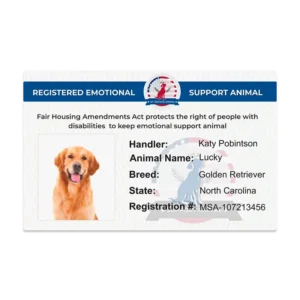
 Resolves 80% of housing disputes instantly
Emotional Support Animal Registration
 Instant Digital ID
 Free Shipping
 5-Min Process


DSM-5 Mental Disorders That May Qualify for an ESA
Not all mental health challenges meet the threshold for a disability. ESAs are typically integrated into treatment for severe, chronic, or debilitating conditions. Below are specific DSM-5 diagnoses frequently associated with ESA prescriptions:
Post-Traumatic Stress Disorder (PTSD)
For individuals with PTSD, an ESA can serve as a grounding mechanism during dissociative episodes or traumatic flashbacks. The animal’s continuous presence helps mitigate hyperarousal and hypervigilance, providing a secure focal point that aids in emotional regulation and sleep architecture normalization.
Severe Anxiety Disorders
This category includes Generalized ESAs for anxiety Disorder (GAD), Panic Disorder, and Social Anxiety Disorder. In clinical applications, ESAs help regulate autonomic nervous system arousal during panic attacks. The tactile stimulation provided by the animal acts as an immediate somatic intervention, reducing the duration and intensity of the physiological anxiety response.
Bipolar and Related Disorders
Patients managing Bipolar I or Bipolar II disorders often experience significant circadian rhythm disruptions and profound mood dysregulation. An ESA enforces a strict daily caregiving routine, which helps stabilize the patient’s internal clock and offers a consistent anchor during both depressive and hypomanic or manic phases.
Obsessive-Compulsive Disorder (OCD)
In the context of OCD, an ESA can interrupt obsessive thought loops by demanding immediate, reality-based attention. Caring for the animal requires the patient to engage in adaptive, goal-directed behaviors, which can act as a behavioral diversion from compulsive rituals.

The Psychiatric Evaluation Process for an ESA
Obtaining an ESA designation requires a formal prescription, commonly referred to as an getting an ESA letter. This document is not a generic certificate but a medical directive from an attending psychiatrist, psychologist, or licensed therapist. The provider evaluates the patient’s psychiatric history, current symptomatology, and the precise functional impairments the animal is expected to address.
Emotional Support Animals vs. Psychiatric Service Dogs
Clinical practice and legal standing require distinguishing between an ESA and a Psychiatric Service Dog (PSD):
| Feature | Emotional Support Animal (ESA) | Psychiatric Service Dog (PSD) |
|---|---|---|
| Therapeutic Function | Provides passive symptom relief through physical presence and companionship. | Actively performs specific, trained tasks to mitigate psychiatric crises. |
| Task Training | No specialized training required. | Must be individually trained to perform disability-related tasks (e.g., deep pressure therapy). |
| Legal Protections | Covered under the Fair Housing Act (FHA) for residential accommodations. | Covered under the Americans with Disabilities Act (ADA) for broad public access. |
| Species Restrictions | Can be any domesticated animal (dog, cat, rabbit, etc.). | Restricted entirely to dogs (and in specific cases, miniature horses). |
Documentation and Federal Housing Protections
Under the Fair Housing Act, an individual with a prescribed ESA is entitled to reasonable accommodations in housing. This mandate supersedes standard “no-pets” policies and prohibits landlords from imposing breed, weight, or species restrictions, as well as pet-related financial surcharges.
To invoke these protections, the patient must provide the landlord with the LMHP-issued ESA letter. The housing provider is legally prohibited from demanding access to the patient’s medical records or specific DSM-5 diagnostic details, preserving patient confidentiality.
LMHP Criteria for Specific Disorders
To obtain an ESA letter for specific disorders like PTSD, Severe Anxiety, or Depression, an LMHP must verify that your condition substantially limits one or more major life activities. The LMHP will assess whether the presence of the animal provides necessary therapeutic benefit to alleviate symptoms directly related to your diagnosis.

The content on this website is for informational purposes only and does not constitute professional medical advice, diagnosis, treatment, or legal counsel.
Still Unsure If You Qualify?
Skip the confusion. Take a 3-minute assessment to see what your animal legally needs.
U.S handlers trust MyServiceAnimal

FAQ
To qualify, a patient must be diagnosed with a mental health condition recognized in the DSM-5 that substantially limits one or more major life activities. A licensed mental health professional must also determine that the animal provides a specific therapeutic benefit that mitigates the symptoms of the disability.
In PTSD management, an ESA provides a consistent focal point to help patients ground themselves during dissociative episodes. The animal’s presence can mitigate hypervigilance, assist in normalizing sleep patterns, and reduce the intensity of autonomic arousal associated with trauma triggers.
While the FHA does not require landlords to know your specific DSM-5 diagnosis, your licensed healthcare provider must confirm through a clinical evaluation that you have a mental or emotional impairment that qualifies as a disability under federal law, and that the ESA is necessary for your continued treatment.
The primary clinical distinction lies in training and intervention. An ESA provides passive therapeutic relief through its presence. A Psychiatric Service Dog is specifically trained to execute deliberate actions, such as interrupting a panic attack or providing deep pressure therapy during a severe psychiatric episode.