
Reasonable Accommodation Request — How to Secure Housing for Your Service Animal or ESA
A reasonable accommodation request is a formal communication to a housing provider asking them to make an exception to their standard pet policy so that a person with a disability can live with their service animal or emotional support animal. Under the Fair Housing Act (FHA), landlords are legally required to consider and, in most cases, approve these requests.
Whether you have a registered service dog or an emotional support animal, understanding how to write and submit a reasonable accommodation request is essential to protecting your housing rights.
What Is a Reasonable Accommodation Request?
Under the Fair Housing Act and HUD guidelines, a reasonable accommodation is any change to rules, policies, practices, or services that allows a person with a disability equal opportunity to use and enjoy their housing. In the context of assistance animals, this typically means:
- Waiving “no pets” policies for service dogs and ESAs
- Eliminating pet fees and deposits — assistance animals are not pets under federal law
- Removing breed or weight restrictions that would otherwise prevent your animal from living with you
- Allowing the animal in common areas that may otherwise restrict animals

Who Can Make a Reasonable Accommodation Request?
Any person with a physical or mental disability who requires an assistance animal can submit a reasonable accommodation request. Qualifying conditions include:
- Physical disabilities (mobility, visual, hearing impairments)
- Mental health conditions (depression, anxiety, PTSD, bipolar disorder)
- Emotional or psychological conditions that benefit from animal companionship
- Chronic conditions that are substantially limiting (autism, seizure disorders)
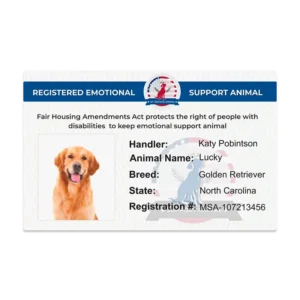
 Resolves 80% of housing disputes instantly
Emotional Support Animal Registration
 Instant Digital ID
 Free Shipping
 5-Min Process


You do not need to disclose your specific diagnosis to your landlord — only that you have a disability-related need for the animal.
How to Write a Reasonable Accommodation Request
Your request does not need to follow a specific format, but it should clearly communicate the following elements:
Essential Components
- Your name and address.
- A statement that you have a disability (you do not need to specify which one).
- A statement that your animal provides disability-related assistance — either task-trained (service dog) or emotional support (ESA).
- A clear request for an exception to the property’s pet policy.
- Supporting documentation — attach your ESA letter from a licensed mental health professional, or your service dog certificate.
Reasonable Accommodation Request Template
A typical request letter includes:
“Dear [Landlord/Property Manager], I am a current/prospective tenant at [address]. I have a disability as defined under the Fair Housing Act and require an assistance animal as a reasonable accommodation. My [service dog / emotional support animal] has been prescribed as part of my treatment plan by a licensed healthcare professional. I am requesting an exception to the property’s pet policy to allow my assistance animal to reside with me. Attached please find supporting documentation. Thank you.”
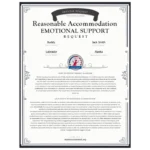
For a professionally formatted, ready-to-submit letter, use MyServiceAnimal’s housing accommodation request — a pre-formatted legal document designed to meet HUD requirements.
Reasonable Accommodation Request for Apartments
Apartment complexes are among the most common settings for accommodation requests. Key considerations:
- Submit early. Send your request before signing a lease or as soon as you acquire your assistance animal.
- Keep written records. Always submit your request in writing (email or letter) so you have documentation if a dispute arises.
- Response timeline. Landlords must respond within a reasonable timeframe — typically 10-14 business days.
- Denial is rare. Under the FHA, denials are only permitted if the animal poses a direct threat to safety or would cause substantial property damage that cannot be mitigated.
What Your Landlord Cannot Do
The Fair Housing Act strictly prohibits landlords from:
- Charging pet fees, pet deposits, or pet rent for assistance animals
- Denying accommodation based on breed, size, or weight restrictions
- Asking about the specific nature of your disability
- Requiring your animal to have specific training or certification (for ESAs)
- Retaliating against you for submitting a reasonable accommodation request
What Documentation Do You Need?
The strength of your accommodation request depends on your supporting documentation:
For Service Dogs:
- Service dog ID card — quick visual proof
- Service dog certificate — official ADA-compliant documentation
- Housing accommodation request letter
For Emotional Support Animals:
- ESA letter from a licensed mental health professional
- ESA registration and ID card
- ESA certificate
- Housing accommodation request letter
What to Do If Your Request Is Denied
If your landlord denies your reasonable accommodation request:
- Request the denial in writing with specific reasons.
- Review the reasons. Legitimate denials are extremely limited under the FHA.
- File a complaint with the U.S. Department of Housing and Urban Development (HUD) at 1-800-669-9777 or online at hud.gov.
- Consult a fair housing attorney. Many offer free initial consultations for FHA violations.
HUD typically investigates complaints within 10 business days, and penalties for landlord violations can be substantial.
Register Your Service Animal Today
MyServiceAnimal offers service dog registration, ESA registration, official certificates, housing accommodation request letters, and essential gear — all in one place. Get started with the service dog kit or ESA bundle.
Reasonable Accommodation Requests in NY, California, Florida, and Texas
The Fair Housing Act governs reasonable accommodation requests across the entire United States. However, high-density rental markets like New York City, Los Angeles (California), Miami (Florida), and Houston (Texas) often see stricter landlord scrutiny. In these states, having a professionally formatted housing accommodation request letter is especially critical to bypass aggressive “no pets” policies and secure your federal rights without delay.

Frequently Asked Questions
Under the Fair Housing Act and HUD guidelines, a reasonable renting with an ESA is any change to rules, policies, practices, or services that allows a person with a disability equal opportunity to use and enjoy their housing. In the context of assistance animals, this typically means:
Any person with a physical or mental disability who requires an assistance animal can submit a reasonable accommodation request. Qualifying conditions include: You do not need to disclose your specific diagnosis to your landlord — only that you have a disability-related need for the animal.
The strength of your accommodation request depends on your supporting documentation:
A reasonable accommodation request form is a written document submitted to a landlord requesting an exception to pet policies for an assistance animal. MyServiceAnimal offers a ready-to-submit form that meets HUD guidelines.
Only in very limited circumstances — if the animal poses a direct safety threat or if the housing has fewer than 4 units with the owner living on-site. In all other cases, the housing rights for service animals Act requires landlords to approve reasonable accommodations.
The content on this website is for informational purposes only and does not constitute professional medical advice, diagnosis, treatment, or legal counsel.
Still Unsure If You Qualify?
Skip the confusion. Take a 3-minute assessment to see what your animal legally needs.
U.S handlers trust MyServiceAnimal