
ESA in Indiana — Laws & Requirements
Yes — emotional support animals are legally protected in Indiana under the Fair Housing Act (FHA). Indiana residents with a qualifying mental health condition can live with an ESA in rental housing, even in buildings with “no pet” policies, as long as they have a valid ESA letter from a licensed mental health professional.
Are ESAs Legal in Indiana?
Indiana does not have a state-specific ESA law, but federal protections fully apply. ESA rights in Indiana are governed by:

- Fair Housing Act (FHA) — Requires landlords to make reasonable accommodations for tenants with disabilities who need an ESA
- HUD Guidelines (2020) — Clarify that landlords must accept ESA letters from licensed providers, including telehealth providers
- Indiana Civil Rights Law (IC 22-9.5) — Indiana’s fair housing statute reinforces protections against disability-based discrimination in housing
These protections cover tenants in Indianapolis, Fort Wayne, Evansville, South Bend, Bloomington, and every other Indiana city and county.
Indiana ESA Housing Rights
| Right | Protected? | Legal Basis |
|---|---|---|
| Live with ESA in “no pet” housing | ✅ Yes | FHA reasonable accommodation |
| No pet deposit or pet rent | ✅ Yes | ESA is not a pet under FHA |
| No breed or size restrictions | ✅ Yes | FHA — cannot restrict by breed |
| ESA of any species | ✅ Yes | Dogs, cats, rabbits, birds, etc. |
| ESA in college dorms | ✅ Yes | FHA applies to university housing |
| ESA in public places | ❌ No | Only service dogs have public access (ADA) |
| ESA on flights for free | ❌ No | Airlines no longer accommodate ESAs (DOT 2021) |
How to Get an ESA Letter in Indiana
- Identify your condition — ESAs are prescribed for anxiety, depression, PTSD, panic disorder, bipolar disorder, phobias, OCD, and other mental health conditions
- Connect with a licensed provider — A psychologist, psychiatrist, LCSW, or licensed counselor in Indiana (or licensed to practice in Indiana via telehealth)
- Complete an evaluation — The provider assesses whether an ESA would provide therapeutic benefit for your condition
- Receive your ESA letter — Must include provider credentials, your disability-related need, and be on professional letterhead
- Submit to your landlord — Present the letter with a formal housing accommodation request
Learn more about what to do if your therapist won’t write an ESA letter.

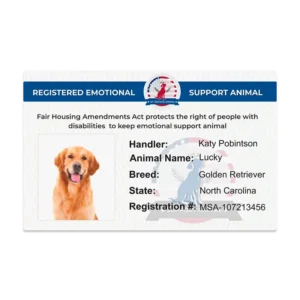
 Resolves 80% of housing disputes instantly
Emotional Support Animal Registration
 Instant Digital ID
 Free Shipping
 5-Min Process



What Indiana Landlords Can and Cannot Do
Landlords CANNOT:
- Deny an ESA request solely because of a “no pet” policy
- Charge pet deposits, pet rent, or any ESA-related fees
- Restrict ESAs by breed, size, or weight
- Demand details about your specific diagnosis
- Require the ESA to be trained or certified
Landlords CAN:
- Request a valid ESA letter from a licensed mental health professional
- Deny the ESA if it poses a documented direct threat to others’ safety
- Hold tenants responsible for property damage caused by the ESA
- Deny if the building qualifies for FHA exemptions (owner-occupied, 4 or fewer units)
ESA vs. Service Dog in Indiana
| Feature | ESA | Service Dog |
|---|---|---|
| Public access | ❌ Housing only | ✅ All public places |
| Task training | Not required | Must perform specific tasks |
| Documentation | ESA letter required | None required (ADA) |
| Housing rights | ✅ FHA | ✅ FHA + ADA |
| Species | Any animal | Dogs + miniature horses |
| Registration | Optional | Optional |
For a deeper comparison, see our guide on service animals vs. emotional support animals.
Frequently Asked Questions
Indiana does not have a state-specific ESA law, but federal protections fully apply. ESA rights in Indiana are governed by: These protections cover tenants in Indianapolis, Fort Wayne, Evansville, South Bend, Bloomington, and every other Indiana city and county.
No. The FHA explicitly prohibits pet deposits, pet rent, or any additional charges for an emotional support animal. You are, however, responsible for any property damage your ESA causes.
Yes. Indiana University, Purdue, Ball State, and other Indiana universities must accommodate ESAs in dormitories under FHA guidelines. Contact your school’s disability services office.
Any domesticated animal — dogs, cats, rabbits, birds, guinea pigs, and more. The FHA does not restrict ESA species, though some unusual animals may require additional justification.
Most ESA letters are valid for one year. Landlords can request updated documentation annually. Keep your letter current to maintain your housing protections.
The content on this website is for informational purposes only and does not constitute professional medical advice, diagnosis, treatment, or legal counsel.
Still Unsure If You Qualify?
Skip the confusion. Take a 3-minute assessment to see what your animal legally needs.
U.S handlers trust MyServiceAnimal