Emotional Support Animal Laws In North Carolina
North Carolina offers some of the strongest layered protections for emotional support animal (ESA) owners in the Southeast. Between the federal Fair Housing Act (FHA) and North Carolina’s own State Fair Housing Act (N.C.G.S. Chapter 41A), tenants with a valid ESA letter hold rights that landlords must respect — even after the recent federal enforcement shift. This guide, reviewed by Daniel Butler, JD, breaks down every emotional support animal law affecting NC residents in 2026.
Whether you rent in Charlotte, own a condo in Raleigh, or live in a dorm at UNC Chapel Hill, your ESA housing rights depend on understanding both federal and state-level protections. This page is part of our ESA laws by state resource center.
Disclaimer: This article provides general legal information and does not constitute legal advice. For specific situations, consult a licensed North Carolina attorney or contact the NC Human Relations Commission.
Critical Update: HUD’s May 2026 ESA Enforcement Memo
On May 22, 2026, the U.S. Department of Housing and Urban Development (HUD) released an enforcement memorandum that fundamentally changed how the federal government handles ESA housing complaints. Every NC tenant with an emotional support animal should understand what this memo does — and what it does not do.
What Changed Under the New HUD Guidance
HUD’s Office of Fair Housing and Equal Opportunity (FHEO) directed its enforcement staff to prioritize only complaints involving individually trained animals that perform specific disability-related tasks. In practice, this means HUD will deprioritize complaints about untrained emotional support animals.
The memo also formally rescinded two prior HUD guidance documents that previously supported ESA accommodations:
- FHEO-2013-01 — The original HUD notice on assistance animals in housing
- FHEO-2020-01 — The January 2020 Assistance Animal Guidance (formally withdrawn September 2025)
What Didn’t Change — The Fair Housing Act Is Still Federal Law
The HUD memo is an enforcement priority shift, not a law change. The Fair Housing Act (42 U.S.C. § 3604(f)(3)(B)) has not been amended or repealed. Landlords who deny a valid ESA accommodation request still violate federal law.
The difference: if you file a complaint with HUD, the agency may choose not to investigate it aggressively. That makes your state and local enforcement options more valuable than ever.
How This Affects North Carolina ESA Owners Specifically
North Carolina is better positioned than many states because of two independent enforcement layers that operate regardless of HUD’s federal stance:
- NC State Fair Housing Act (Chapter 41A) — The NC Human Relations Commission (NCHRC) can investigate and enforce housing discrimination complaints under state law, independently of HUD.
- Local human relations commissions — Charlotte, Durham, Greensboro, and Orange County each maintain local agencies that accept and investigate housing discrimination complaints.
Bottom line: If your landlord denies your ESA in North Carolina, you still have enforceable state-level complaint options even if HUD deprioritizes your federal complaint.
What Is an Emotional Support Animal Under North Carolina Law?
An emotional support animal provides comfort and therapeutic benefit to a person with a documented mental health disability. Unlike service animals, ESAs do not require specialized training to perform specific tasks. Their presence alone alleviates symptoms of conditions like anxiety, depression, PTSD, or bipolar disorder.
North Carolina does not have a standalone ESA statute. Instead, ESA protections flow from two sources: the federal Fair Housing Act and North Carolina’s State Fair Housing Act (N.C.G.S. Chapter 41A).
ESA vs. Service Animal vs. Therapy Animal in North Carolina
| Category | Training Required | NC Public Access Rights | Housing Protections | Governing NC Law |
|---|---|---|---|---|
| Service Animal | Yes — trained for specific disability tasks | Yes — all public places (N.C.G.S. § 168-4.2) | Yes — FHA + Chapter 41A | ADA + N.C.G.S. § 168-4.2 |
| Emotional Support Animal | No task training required | No — private residences only | Yes — FHA + Chapter 41A | FHA + N.C.G.S. Chapter 41A |
| Therapy Animal | Trained for therapeutic settings | Only in specific facilities | No special protections | No specific NC law |
For a detailed breakdown, see our guide on the difference between ESA and service animal.
North Carolina ESA Housing Rights Under the Fair Housing Act
Housing protections remain the core legal right for ESA owners in North Carolina. Here’s how both federal and state frameworks work together.
Federal FHA Protections (42 U.S.C. § 3604(f)(3)(B))
Under the federal Fair Housing Act, landlords, property managers, and HOAs must provide reasonable accommodations for tenants with disabilities — including allowing emotional support animals regardless of pet policies. This applies to most residential housing in North Carolina with limited exceptions.
A landlord must grant an ESA accommodation if:
- The tenant has a disability (physical or mental) as defined by the FHA
- The animal provides disability-related emotional support
- The tenant provides appropriate documentation (an ESA letter) from a licensed healthcare provider
NC State Fair Housing Act (N.C.G.S. Chapter 41A) — Your State-Level Safety Net
This is where North Carolina tenants hold a distinct advantage. The NC State Fair Housing Act (Chapter 41A) provides independent state-level fair housing protections enforced by the NC Human Relations Commission.
Why this matters after the May 2026 HUD memo: Even if HUD declines to prioritize your federal complaint, you can file a state-level complaint with NCHRC under Chapter 41A. North Carolina courts and the NCHRC are not bound by HUD’s internal enforcement priorities.
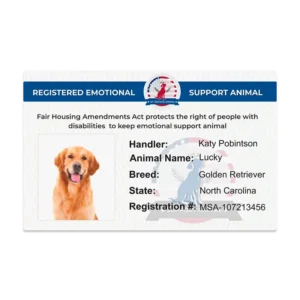
 Resolves 80% of housing disputes instantly
Emotional Support Animal Registration
 Instant Digital ID
 Free Shipping
 5-Min Process


No Pet Fees, Deposits, or Breed Restrictions for ESAs
When a landlord approves an ESA accommodation in North Carolina, they cannot:
- Charge pet deposits or pet fees for the ESA
- Charge monthly pet rent
- Apply breed, size, or weight restrictions that are part of pet policies
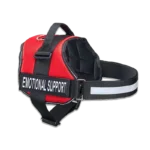
- Require the ESA to wear an identifying vest or tag (though many owners choose to)
The landlord can still hold you liable for any actual property damage your ESA causes — but they cannot require a damage deposit specifically because the animal is an ESA.
For a full breakdown of your rights when renting with an ESA, see our dedicated guide.
FHA Exemptions — When the Law Doesn’t Apply
The federal Fair Housing Act does not cover every housing situation. These exemptions also apply in North Carolina:
- Owner-occupied buildings with 4 or fewer units — The “Mrs. Murphy” exemption
- Single-family homes rented without a broker — Only if the owner owns 3 or fewer single-family homes
- Housing operated by religious organizations or private clubs — Limited to members of that organization
Even if the federal FHA exemption applies, the NC State Fair Housing Act (Chapter 41A) may still provide coverage. Consult with the NCHRC or a North Carolina attorney if your housing falls into one of these categories.
How to Get a Legitimate ESA Letter in North Carolina
A valid ESA letter is the single document that activates your housing protections. Without it, your landlord has no legal obligation to accommodate your animal. Here’s exactly what the letter must include and what it should cost.
Required Documentation from a Licensed Mental Health Professional
Your ESA letter must come from a licensed healthcare provider — a psychiatrist, psychologist, licensed clinical social worker (LCSW), licensed professional counselor (LPC), or other mental health professional licensed in North Carolina or your state of treatment.
The letter must include:
- The provider’s professional license number and state of licensure
- Confirmation that you have a recognized mental health disability
- A statement that the ESA provides therapeutic benefit related to your disability
- The provider’s signature and date (must be current — typically within the past 12 months)
- The provider’s contact information for landlord verification
For step-by-step instructions, read our guide on how to get an emotional support animal letter from a doctor.
ESA Letter Cost in North Carolina
| Provider Type | Typical Cost Range | Notes |
|---|---|---|
| In-person therapist or psychiatrist | $100–$250+ | May be covered by insurance if part of ongoing treatment |
| Telehealth ESA evaluation | $75–$200 | Must be from NC-licensed provider; faster turnaround |
| Existing mental health provider | $0–$50 | Often free if you have an established relationship |
Insurance typically does not cover ESA letter evaluations as standalone services. However, if the letter is written during a regular therapy appointment, your insurance may cover the visit.
ESA letters generally need annual renewal. Your provider should reassess your condition and confirm the ongoing therapeutic benefit each year.
Avoiding ESA Registration Scams
There is no official ESA registry in North Carolina — or anywhere in the United States. Any website selling “ESA registration,” “ESA certification,” or “official ESA ID cards” is selling a product with zero legal standing.
Red flags to watch for:
- Websites that issue a letter without any live evaluation by a licensed provider
- Claims that you need to “register” your ESA in a national database
- Instant approval promises with no clinical assessment
- Letters signed by providers not licensed in North Carolina or your state
NC-Specific Statutes: Service Animal Misrepresentation Penalties
North Carolina has specific criminal statutes addressing service animal fraud and interference. While these statutes target service animals specifically (not ESAs), they are directly relevant if someone misrepresents an ESA as a service animal to gain public access.
N.C. Gen. Stat. § 168-4.2 — Right to Be Accompanied by a Service Animal
Under N.C.G.S. § 168-4.2, persons with disabilities have the right to be accompanied by a service animal in all public places, public transportation, and leased or rented premises. This right extends to service animals in training when accompanied by a trainer.
N.C. Gen. Stat. § 168-4.5 — Class 3 Misdemeanor for Misrepresentation
N.C.G.S. § 168-4.5 makes it unlawful to:
- Disguise a pet as a service animal or service animal in training
- Deprive a disabled person of their service animal rights
- Charge pet fees or deposits for a legitimate service animal
A violation is a Class 3 misdemeanor, carrying a fine of up to $200 and possible jail time.
N.C. Gen. Stat. § 14-163.1 — Harming a Service Animal
North Carolina also criminalizes harming, killing, or intentionally distracting service animals under N.C.G.S. § 14-163.1. Penalties range from a misdemeanor to a felony depending on the severity of harm.
How NC Compares to Other States
| State | ESA-Specific Fraud Law? | Maximum Fine | Additional Penalties |
|---|---|---|---|
| North Carolina | No (service animal only) | $200 | Possible jail time (Class 3 misdemeanor) |
| Florida | Yes | $500 | 30 hours community service |
| Colorado | Yes | $500 | 36 hours community service |
| Virginia | No (service animal only) | $250 | Civil penalty |
NC’s penalties are among the milder in the Southeast. The state has not enacted ESA-specific fraud legislation as of June 2026.
When a Landlord Can Legally Deny an ESA in North Carolina
The Fair Housing Act does not create an absolute right to keep any animal. Landlords in North Carolina can deny an ESA accommodation request under specific, limited circumstances. For more detail, read can a landlord deny an ESA.
Direct Threat to Health or Safety
If the specific animal poses a direct threat to the health or safety of other tenants — based on the animal’s actual behavior, not its breed or species — the landlord can deny the accommodation. The assessment must be individualized, not based on stereotypes or breed bans.
Substantial Property Damage
If the animal has a history of causing substantial property damage that cannot be reduced or eliminated by conditions on the tenant, the landlord may deny the request. General concerns about potential damage are not sufficient.
Undue Financial or Administrative Burden
If accommodating the ESA would impose an undue financial or administrative burden on the housing provider, denial may be justified. This exception is rarely applicable to standard rental situations.
What a Landlord Cannot Ask
Your landlord can ask for documentation that you have a disability and that the ESA is related to it. They cannot:
- Ask you to disclose the specific nature of your diagnosis
- Require your medical records
- Demand the ESA be registered, certified, or wear identification
- Require proof of specific training
- Ask how long you’ve had the condition
ESAs in NC University and College Housing
Students at North Carolina’s colleges and universities have ESA housing rights, but the process differs from standard rental housing. Universities are generally covered under both Section 504 of the Rehabilitation Act and the Fair Housing Act.
Major NC universities that accept ESA accommodation requests for on-campus housing include:
- UNC Chapel Hill — Requests through Accessibility Resources and Service (ARS)
- NC State University — Disability Resource Office (DRO) handles ESA housing requests
- Duke University — Student Disability Access Office (SDAO)
- UNC Charlotte — Office of Disability Services
- NC A&T State University — Student Accessibility Services
The typical campus ESA accommodation process:
- Register with your university’s disability services office
- Submit your ESA letter from a licensed mental health professional
- Complete the university’s specific ESA accommodation request form
- The university reviews and responds (usually within 2–4 weeks)
- If approved, sign the university’s ESA housing agreement (covering vaccination records, behavior expectations, and cleanup responsibilities)
Universities can set reasonable policies — like requiring updated vaccination records and restricting ESAs to your assigned room — but they cannot deny a legitimate accommodation request solely because of a “no pets” dormitory policy.
ESAs in the Workplace in North Carolina
Unlike housing, there is no federal or North Carolina law that specifically requires employers to allow emotional support animals in the workplace. The Americans with Disabilities Act (ADA) covers service animals but does not extend to ESAs.
That said, under the ADA’s reasonable accommodation provisions, some employers may consider an ESA as a workplace accommodation on a case-by-case basis. NC employers are not required to allow ESAs, but they are required to engage in an interactive process when an employee requests a disability accommodation.
If your employer denies an ESA workplace request, options include:
- Proposing alternative accommodations (flexible scheduling, remote work, modified break schedule)
- Filing a complaint with the Equal Employment Opportunity Commission (EEOC)
- Consulting with a North Carolina employment attorney
ESAs and Air Travel from NC Airports
Since the U.S. Department of Transportation’s 2021 rule change, airlines are no longer required to accommodate emotional support animals in the cabin. Airlines may treat ESAs as pets, subject to standard pet fees and carrier requirements.
This applies to flights from all North Carolina airports, including Raleigh-Durham International (RDU), Charlotte Douglas International (CLT), and Piedmont Triad International (GSO). If you fly with a trained psychiatric service dog (not an ESA), you retain full cabin access rights under the Air Carrier Access Act.
How to File an ESA Housing Complaint in North Carolina
If your landlord denies your ESA accommodation, charges illegal pet fees, or retaliates against you, you have multiple enforcement options in North Carolina. After the May 2026 HUD memo, state and local agencies are your strongest path to resolution.
NC Human Relations Commission (NCHRC)
The NCHRC is your primary state-level enforcement agency for housing discrimination under Chapter 41A. File a complaint within one year of the discriminatory act.
| Contact Method | Details |
|---|---|
| Phone | 984-236-1850 |
| [email protected] | |
| Mailing Address | 1711 New Hope Church Road, Raleigh, NC 27609 |
| Office Hours | Monday–Friday, 8:00 AM–5:00 PM |
| Parent Agency | NC Office of Administrative Hearings (OAH) |
The NCHRC investigates complaints, mediates disputes, and can refer cases for administrative hearings. Visit the NC Human Relations Commission website for intake forms.
HUD Federal Complaint
You can still file a federal complaint with HUD’s Office of Fair Housing (1-800-669-9777), but be aware that under the May 2026 memo, HUD may deprioritize ESA-specific complaints. The complaint must be filed within one year. HUD may refer your case to the NCHRC for investigation.
Fair Housing Project of Legal Aid of NC
The Fair Housing Project of Legal Aid of North Carolina provides free legal assistance for housing discrimination victims.
- Phone: 1-855-797-FAIR (3247)
- Email: [email protected]
They can help you draft complaint letters, represent you in mediation, and advise on your specific situation at no cost.
Local Human Relations Commissions
Several NC cities and counties operate their own human relations agencies that investigate housing discrimination complaints. These agencies may offer faster resolution timelines than state or federal agencies.
- Charlotte-Mecklenburg Community Relations Committee — Serves Charlotte and Mecklenburg County
- Durham Human Relations Commission — Serves Durham and Durham County
- Greensboro Human Relations Department — Serves Greensboro and surrounding areas
- Orange County Human Relations Commission — Serves Chapel Hill, Carrboro, and Orange County
Contact your local agency if you prefer a local-level investigation or if you want to pursue both state and local complaints simultaneously.
Steps to File a Complaint (Any Agency)
- Document the denial — save all written communications (emails, texts, letters) with your landlord
- Gather your ESA letter and any accommodation request you submitted
- Note the date of the discriminatory act (you generally have one year to file)
- Contact the agency by phone or email to begin the intake process
- Submit a written complaint (most agencies provide standard complaint forms)
- Cooperate with the investigation — the agency will contact your landlord and gather evidence
- The agency attempts conciliation (mediation). If that fails, the case may proceed to an administrative hearing or referral to legal counsel
References and Sources
- NC General Statutes Chapter 168 — Persons With Disabilities (§168-4.2, §168-4.5)
- NC General Statutes Chapter 41A — State Fair Housing Act
- NC §14-163.1 — Harm to Assistance Animals
- HUD FHEO-2020-01 — Assistance Animals (Rescinded May 2026)
- NC Human Relations Commission
- HUD — File a Fair Housing Complaint Online
- 42 U.S.C. §§ 3601–3619 — Fair Housing Act
References
- 1.
- 2.
- 3.
The content on this website is for informational purposes only and does not constitute professional medical advice, diagnosis, treatment, or legal counsel.
Still Unsure If You Qualify?
Skip the confusion. Take a 3-minute assessment to see what your animal legally needs.
U.S handlers trust MyServiceAnimal

FAQ
To officially register an emotional support animal and obtain an ID card in North Carolina, you must have an ESA letter from a licensed mental health professional.
Yes. Veterans with documented psychiatric history can access mental health services and receive support animal documentation through the VA Medical Center or approved private providers.
No. If you have the correct credentials and a valid letter from a professional, eviction based on the animal’s presence is considered housing discrimination.
Falsely claiming a pet is an ESA in North Carolina can lead to a Class 3 misdemeanor, resulting in potential fines or legal investigations.