Service Dog Policies: Walmart & Costco
Bringing an Assistance Animal into a large retail store like Walmart, Target, or Costco may seem straightforward, but many shoppers misunderstand what actually matters. Some believe that vests, documentation, or the type of animal determine whether they can stay inside.
In reality, there is one key factor that employees at these retail giants are trained to focus on above everything else—and it can determine whether you continue shopping or are asked to leave.
The #1 Factor: Behavior
The most important thing employees at Walmart, Target, and Costco evaluate is behavior.
“Under the Americans with Disabilities Act (ADA), a business has the right to exclude a service animal if the animal is out of control and the handler does not take effective action to control it. Retail staff are trained to look for disruptive actions rather than proof of disability.” — Dr. Marcus Thorne, Retail ADA Compliance Consultant
It does not matter how official your Assistance Animal looks. It does not matter whether it is wearing a vest or has identification. If the animal behaves appropriately, you are unlikely to face any issues in any of these stores.
However, if the Assistance Animal becomes disruptive, employees may step in immediately.
What Proper Behavior Looks Like
A properly trained Assistance Animal should remain calm and controlled at all times. In busy store environments like Costco or Target, this includes:
- Walking quietly beside the handler
- Ignoring food, people, and distractions
- Remaining silent (no barking or whining)
- Staying focused on the handler
- Not interacting with other customers or merchandise
 Resolves 80% of housing & airline access issues instantly
Service Animal Registration
 Instant Digital ID
 Free Shipping
 5-Min Process


A well-behaved Assistance Animal should blend into the environment without drawing attention.
| Behavior Type | Real-World Example | Impact on Shopping Environment |
|---|---|---|
| Proper | Walking in a heel position next to carts | No disruption; maintains safe walkways |
| Proper | Tucking under a bench when handler stops | Blends in quietly without blocking aisles |
| Improper | Seeking attention from passing strangers | Causes crowding, distraction, and hazards |
Behaviors That Can Get You Asked to Leave
Even a legitimate Assistance Animal can be removed from Walmart, Target, or Costco if it behaves inappropriately. The most common issues include:
Disruptive Behavior
- Barking repeatedly (unless it’s a trained alert)
- Whining loudly or continuously
- Pulling on the leash or wandering
- Running away from the handler
Safety Concerns
- Growling or acting aggressively
- Lunging at people or other animals
- Blocking high-traffic aisles or creating hazards
Hygiene Issues
- Having accidents inside the store
- Jumping onto shelves, displays, or into carts
- Sniffing or licking food products in the grocery section
“Food safety regulations require grocery retailers like Walmart and Costco to maintain strict hygiene standards. An animal that jumps on carts or sniffs fresh produce poses a direct health hazard and violates FDA food code guidelines.” — Dr. Elena Rostova, Veterinary Public Health Expert
Store-Specific Differences in Policy Enforcement
While the ADA is a federal law, how it is applied can vary slightly:
- Costco: As a membership-only warehouse, door greeters often check for service animals at the entrance and may ask the two permitted ADA questions immediately.
- Target & Walmart: These stores typically have more passive monitoring. Employees or Asset Protection staff usually only intervene if they observe a behavioral issue in the aisles.
Common Misconceptions
Many shoppers misunderstand how these situations are handled at major retailers:
- Myth: A vest guarantees access.
- Reality: Behavior matters more than appearance.
- Myth: Employees cannot question you.
- Reality: Employees can ask two specific questions and can act if the animal is disruptive.
- Myth: Size or breed determines access.
- Reality: Any animal can be removed if it behaves poorly.
What Employees May Ask
If needed, employees at Walmart, Target, or Costco may ask:
- Is this an Assistance Animal required for a disability?
- What task is it trained to perform?
| Legally Permitted Questions (ADA) | Prohibited Questions |
|---|---|
| Is the animal required because of a disability? | What is your specific disability or medical condition? |
| What work or task has the animal been trained to perform? | Can you show me documentation or a certification card? |
Tips for a Stress-Free Shopping Experience
To avoid problems while shopping:
- Ensure your Assistance Animal is fully trained for high-traffic areas
- Keep it under control at all times (leashed or tethered)
- Avoid crowded situations that might stress the animal
- Respond quickly to any signs of misbehavior
Get Your Service Dog Officially Registered
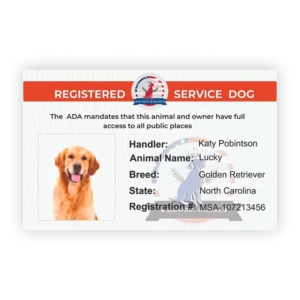
Whether you need a service dog registration and ID card, an official ADA service dog certificate, or a service dog vest for public identification — our Service Dog Registry provides everything you need. Save with the complete service dog registration kit that includes all essential documents and gear.
Conclusion
Walmart, Target, and Costco employees are not focused on appearances or assumptions. The one thing they consistently look for is behavior. If your Assistance Animal is calm, controlled, and unobtrusive, you will have no issues. But if it becomes disruptive, that alone is enough for staff to step in.
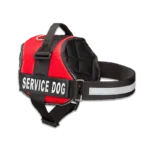

Related: service dog registration
References
- 1.
- 2.
- 3.
The content on this website is for informational purposes only and does not constitute professional medical advice, diagnosis, treatment, or legal counsel.
Still Unsure If You Qualify?
Skip the confusion. Take a 3-minute assessment to see what your animal legally needs.
U.S handlers trust MyServiceAnimal

FAQ
Yes. According to the Americans with Disabilities Act (ADA), businesses can ask a handler to remove a service animal if it is out of control and the handler does not take effective action to control it, or if it is not housebroken.
No. Walmart’s corporate policy, in alignment with the ADA, only permits trained service animals inside their stores. Emotional support animals (ESAs) are not recognized as service animals under the ADA for public access.
No. Vests, ID tags, and certifications are not legally required by the ADA. Walmart employees are trained to focus on the animal’s behavior and the two legal questions allowed by law rather than documentation.
No. For health and sanitation reasons, all service animals must remain on the floor. Allowing an animal to sit in a shopping cart violates food safety guidelines.