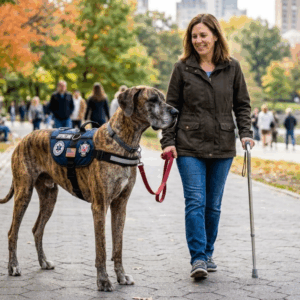
Millions of people rely on service animals for daily assistance, but the rise of fraudulent online registries has created massive confusion. Many business owners, landlords, and even handlers themselves struggle to distinguish between a real service dog ID card vs fake documentation. Understanding the difference is crucial for protecting the rights of people with disabilities and preventing service dog fraud.
Under the Americans with Disabilities Act (ADA), the concept of a mandatory service dog ID card is actually a myth. However, because many handlers choose to carry supplementary identification from legitimate training organizations to ease public access, knowing how to spot counterfeit credentials is more important than ever. This guide will help you understand legal requirements, spot fraudulent cards, and ensure you remain compliant with federal law.
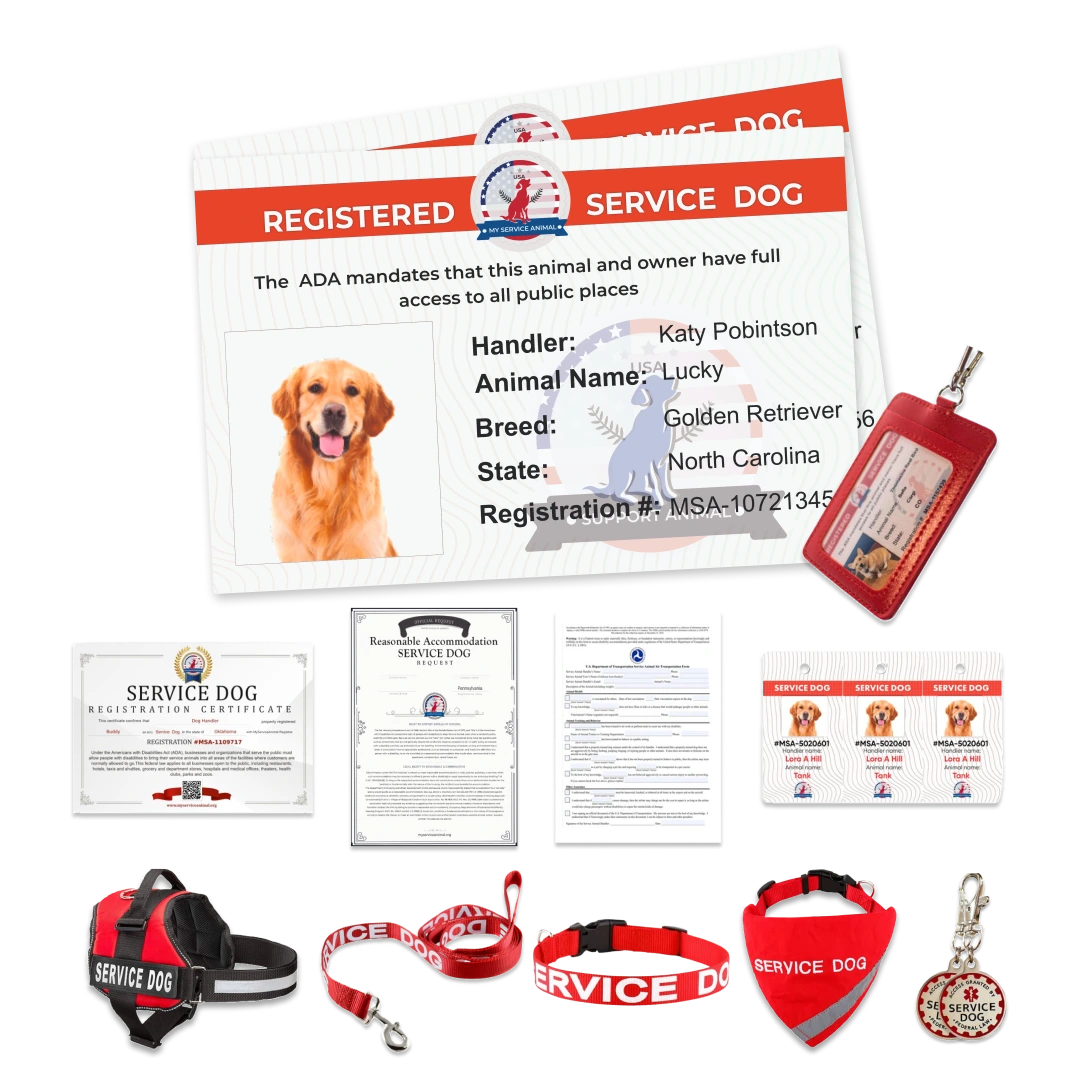
Service Dog Premium Bundle
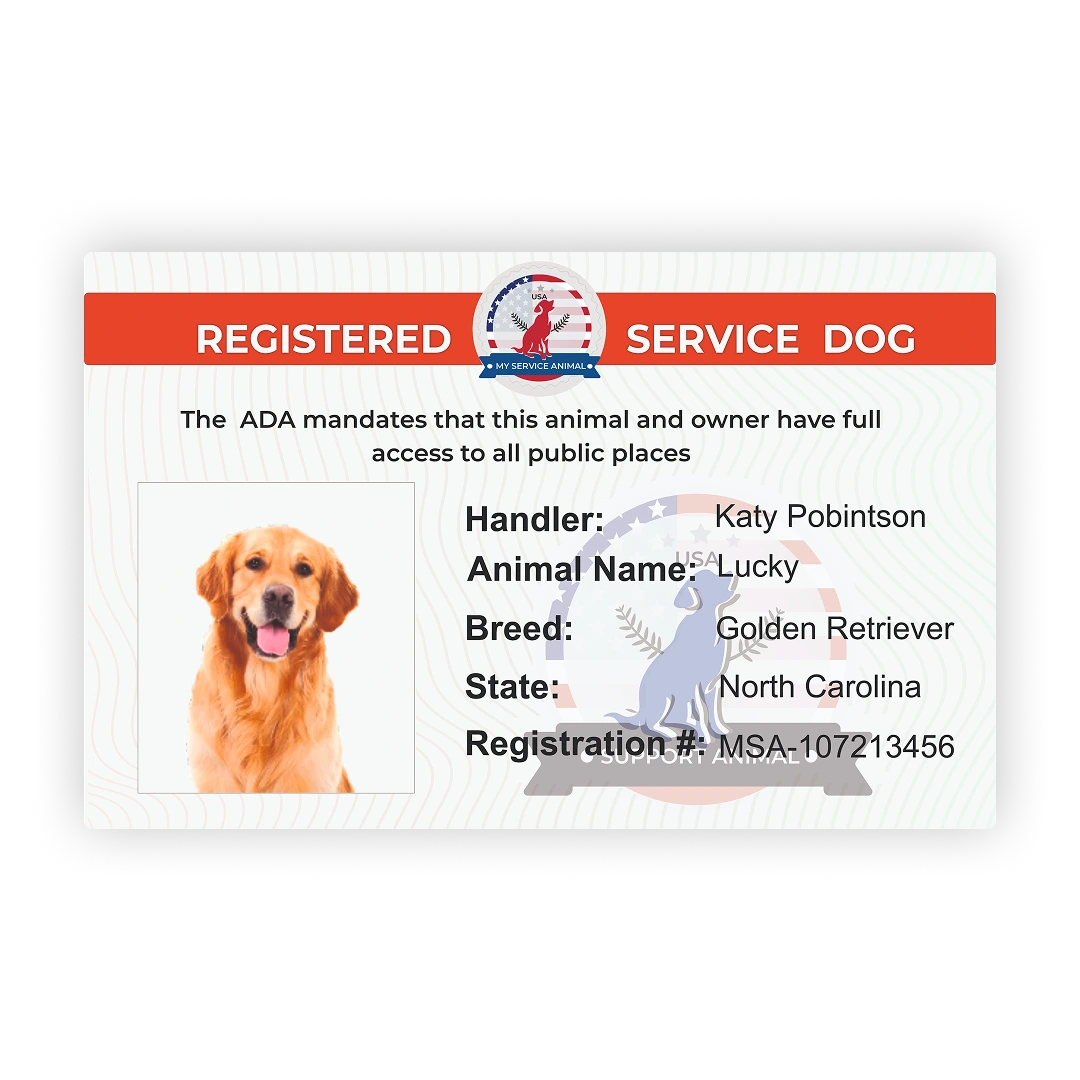
Service Animal Registration
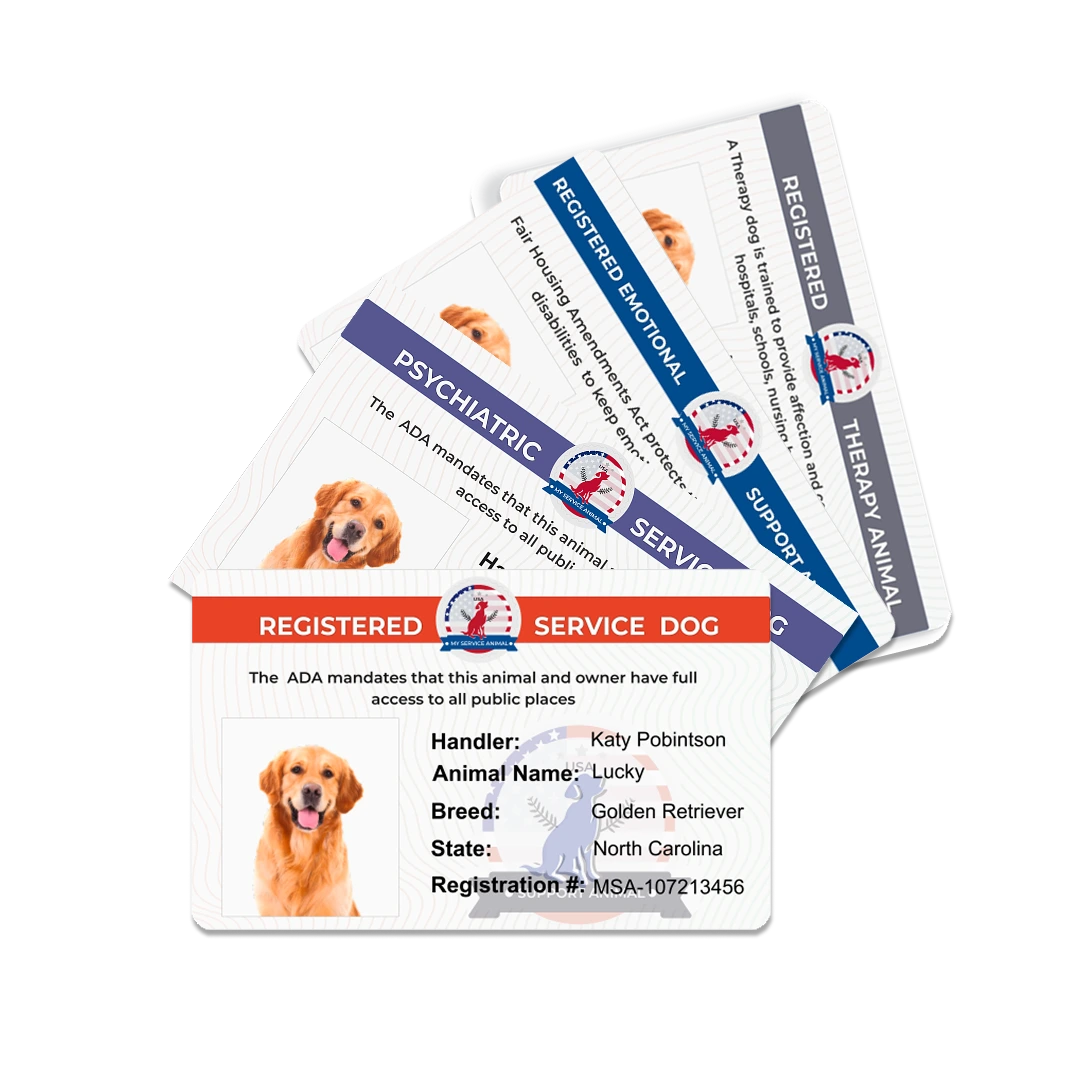
Additional ID Card
What Does the ADA Say About Service Dog Identification?
Before comparing a real service dog ID card vs fake alternatives, you must understand federal law. The United States Department of Justice, which enforces the ADA, explicitly states that service animals are not required to wear a vest, ID tag, or specific harness. Furthermore, the ADA does not recognize any online registry or certification program.
When it comes to verifying a service dog, business staff are only legally permitted to ask two specific questions if the disability is not obvious:
- Is the dog a service animal required because of a disability?
- What work or task has the dog been trained to perform?
Any organization claiming that purchasing their ID card gives your dog legal access to public spaces is selling a fake product. A legitimate ID card is simply a supplemental tool provided by accredited training schools, not a legally binding federal document.
The ADA does not require service animals to wear a vest, ID tag, or specific harness. Any website claiming you must buy an ID card for legal access is misleading the public and taking advantage of individuals with disabilities.
Owners must get a real ID card for their service dog to avoid issues with respect and access under the Americans with Disabilities Act (ADA).
Real Service Dog ID Card Vs Fake: A Detailed Comparison
While the government does not issue cards, legitimate organizations like Assistance Dogs International (ADI) accredited schools do issue graduate identification to teams that complete their rigorous training programs. Here is how you can tell the difference between these authentic school IDs and online scams.
| Feature | Real Service Dog ID (Training School) | Fake Service Dog ID |
|---|---|---|
| Source of Issuance | Accredited training facility or non-profit organization. | For-profit online websites demanding a fee. |
| Training Requirements | Requires hundreds of hours of documented task training and public access tests. | Requires zero proof of training; only requires a credit card payment. |
| Information Included | Name of the specific training school, contact info, graduation date, and task classification. | Generic official-sounding registry numbers, QR codes, and government-style seals. |
| Terminology Used | Strictly uses the term Service Dog or Assistance Animal. | Often mixes terms like Emotional Support, Therapy Dog, and Service Dog interchangeably. |
Red Flags: How to Spot a Fake Service Dog ID Card
Generic or Misleading Terminology
Fake service dog ID cards often use misleading terminology. They might list a dog as an Emotional Support Service Dog. Under the ADA, emotional support animals (ESAs) and service dogs are two entirely different legal classifications. A card combining these terms is completely fraudulent.
Purchase Without Proof of Training
If you can obtain the ID card by simply entering your dog’s name, uploading a photo, and paying a fee without any trainer evaluating the dog, the card is fake. Legitimate organizations never issue identification without verifying the animal’s behavior and medical task training.
Fake Government Seals
Many counterfeit cards attempt to look authoritative by printing fake Department of Justice or ADA logos on the plastic. The U.S. government does not endorse any registry. The presence of a federal seal on a dog ID card is a massive red flag.
A legitimate service dog is defined by its rigorous training to mitigate a disability, not by a piece of plastic bought online. True identification comes from the dog’s impeccable behavior and the handler’s deep knowledge of their rights.
The Consequences of Using Fake Service Dog ID Cards
Legal Fines and Criminal Charges
Passing off an untrained pet as a service animal is illegal in the vast majority of U.S. states. Penalties for using a fake service dog ID card can include heavy fines, community service, and even misdemeanor criminal charges depending on your local jurisdiction.
Harm to Legitimate Service Dog Teams
When people use fake ID cards for poorly trained pets, those pets often misbehave, bark, or have accidents in public places. This ruins the reputation of true service dogs. It causes businesses to become hostile toward people with severe disabilities who rely on their highly trained, well-behaved assistance animals to survive.
Best Practices for Documenting Your Service Dog
Instead of buying a fake ID card online, focus on the documentation that actually matters. If you owner-train your service dog, keep a detailed training log. Document the dates, locations, and tasks your dog has mastered. If your dog was trained by a professional, keep their graduation certificate and the trainer’s contact information in your files.
If you are renting an apartment, landlords are permitted under the Fair Housing Act to request a letter from a licensed healthcare professional stating that you have a disability and require the animal. This medical letter is the only true documentation you need for housing, completely bypassing the need for a plastic ID card.