Many veterans and first responders face significant daily challenges upon returning to civilian life, ranging from severe mobility limitations to complex mental health conditions. Navigating life after trauma requires reliable, constant support, and a Great Dane service dog can offer exactly that. Providing stability, profound comfort, and physical assistance, these gentle giants have proven to be extraordinary working animals. This comprehensive guide explores how Great Danes make life easier, safer, and more fulfilling for individuals dealing with post-traumatic stress disorder (PTSD), chronic anxiety, and debilitating physical injuries.
The Science Behind Service Dogs and Trauma Recovery
The bond between a handler and their service dog goes far beyond simple companionship. For veterans and first responders, this relationship is rooted in neurological and physiological benefits. Studies show that interacting with a highly trained service dog actively reduces cortisol levels, which is the primary hormone responsible for stress and hypervigilance.
Furthermore, the physical presence of a massive dog like a Great Dane triggers the release of oxytocin, often referred to as the bonding hormone. This chemical reaction naturally lowers blood pressure and slows a racing heart rate during moments of intense panic. By enforcing a daily routine of feeding, grooming, and walking, a Great Dane also provides a renewed sense of purpose, pulling handlers out of depressive episodes and anchoring them in the present reality.
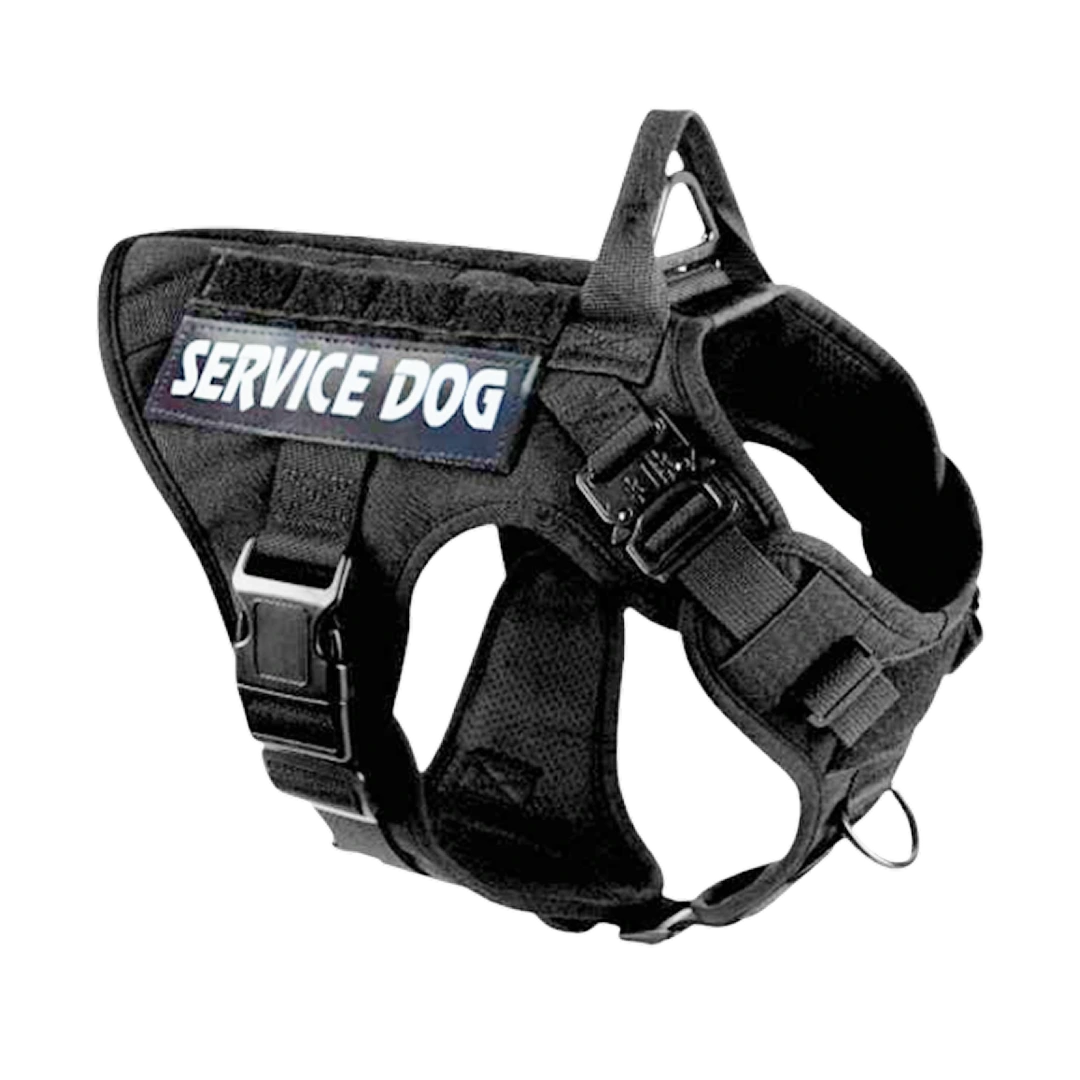
Tactical Service Dog Harness
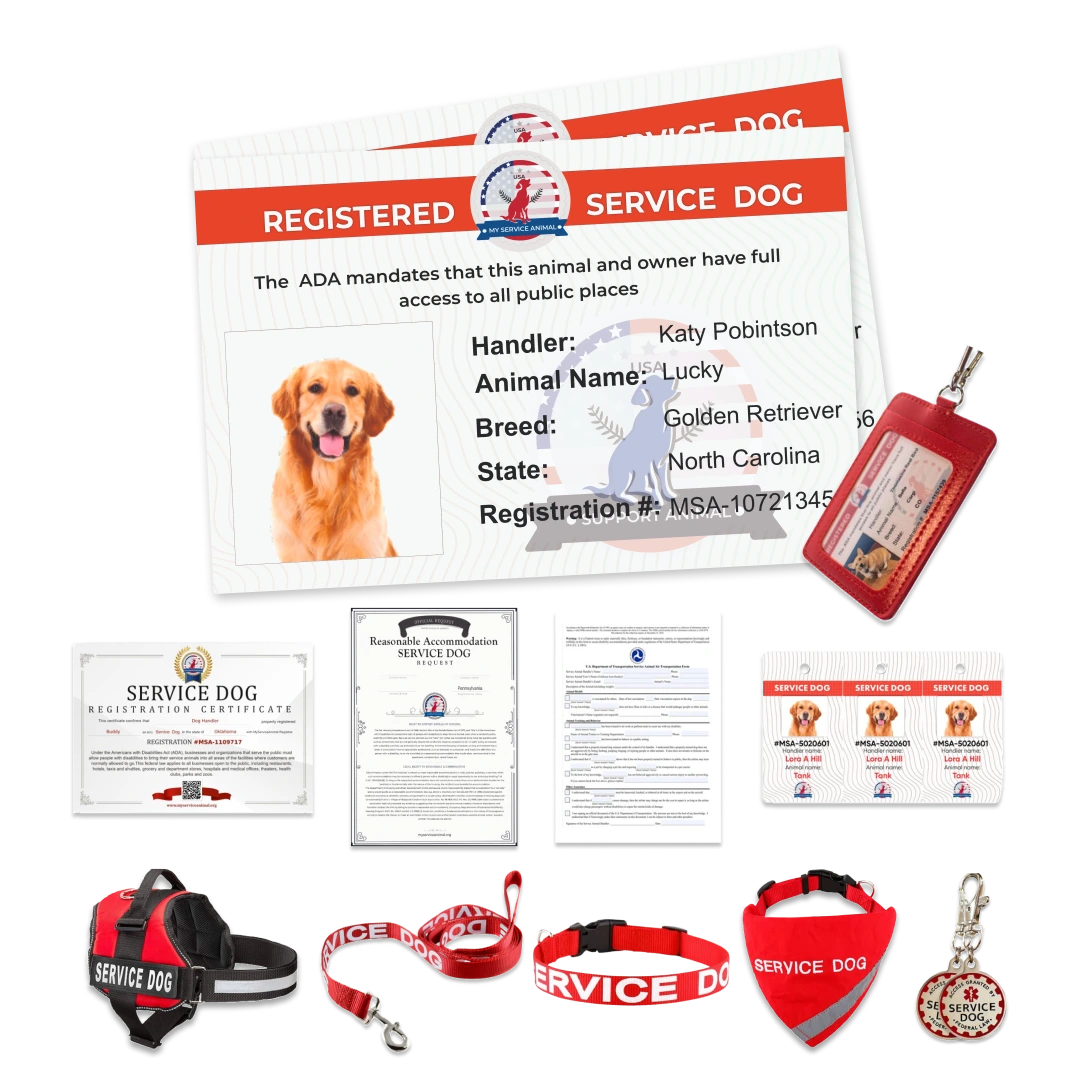
Service Dog Premium Bundle
Why Great Danes Are Exceptional Service Dogs
Great Danes possess a unique combination of physical strength, emotional intelligence, and unwavering loyalty. While they are famously known as gentle giants, their capacity for high-level, grueling service work is often underestimated. They help individuals feel instantly secure in crowded public spaces, and their towering stature offers immediate mechanical support for those who struggle with physical balance or chronic pain.
Gentle and Calm Temperament
The German Mastiff, or Great Dane, is globally recognized for its extreme patience and kindness. Their naturally calm disposition makes them perfectly suited for individuals facing severe mental illnesses, traumatic brain injuries, or unexpected anxiety attacks. Service animals with a steady, predictable temperament provide essential emotional anchoring during stressful situations.
Police officers, firefighters, and military veterans often find profound comfort in a Great Dane’s soft and unobtrusive approach. Handlers rely heavily on these dogs for daily assistance because their moods remain highly consistent, reducing the risk of adding chaos to a panic attack. A relaxed service dog actively makes mobility safer and eases deep emotional distress without overwhelming the handler.
A gentle disposition makes psychiatric service dogs more effective for those managing psychological disorders, allowing the handler to mirror the dog’s calm, stable energy rather than feeding into anxiety.
Large Size and Strength for Mobility Support
The gentle temperament of a Great Dane perfectly balances their immense physical power. These dogs offer unparalleled mobility support purely due to their massive size and structural strength. Veterans, first responders, and individuals dealing with traumatic brain injuries or inner ear damage find crucial stability in their everyday lives through this specific breed.
Their sheer height makes it incredibly easy for handlers with impaired vision, vertigo, or severe balance issues to hold onto a specialized mobility harness while walking. These dogs operate as a living, breathing third point of contact, stabilizing handlers who have trouble standing or walking independently.
These are Walker dogs for people who have a problem with balance, multiple sclerosis, Parkinson’s, and war injuries. We put a handle on top of them and with that, it is a third point of reference for somebody who is losing their balance.
Great Danes are explicitly trained to brace their bodies so a handler can safely regain their balance after a stumble. They also use their raw power to push automatic door buttons, open heavy commercial doors, or retrieve dropped items that smaller emotional support breeds simply cannot lift or reach.
| Service Dog Breed | Primary Physical Strengths | Best Suited For |
|---|---|---|
| Great Dane | Extreme height, heavy bracing capability, calm energy | Mobility support, Parkinson’s, severe PTSD, balance issues |
| Labrador Retriever | Retrieving items, high energy, guiding capabilities | Visual impairment, medical alerting, light retrieval |
| Golden Retriever | Emotional intelligence, gentle mouth retrieving | Psychiatric support, autism assistance, emotional anchoring |
High Trainability for Specialized Tasks
Great Danes absorb new skills efficiently due to their high canine intelligence and eagerness to please their handlers. Professional trainers can teach these dogs a massive array of specialized tasks in approximately one to one and a half years of rigorous, daily training. Because of this extensive schooling, they are heavily trusted to operate flawlessly in chaotic public environments, such as airports, grocery stores, and hospitals.
This long-term training makes them ideal service animals for first responders who require immediate intervention for mental health hurdles like severe depression, phobias, or sudden panic attacks. Expert breeders carefully select Great Danes for traits like patience and loyalty, guaranteeing the dogs can maintain strict focus during complex animal-assisted interventions.
Key Benefits for Veterans and First Responders
When deployed as service animals, Great Danes offer life-altering advantages to those who have served their communities and countries. Their daily presence actively mitigates the debilitating symptoms of service-related injuries, offering a bridge back to normal civilian life.
Assistance with Mobility and Balance
Mobility challenges are incredibly common among veterans who have survived explosions, shrapnel injuries, or severe occupational accidents. Great Dane service dogs are specially trained to assist with this exact type of physical trauma. Their large, sturdy frames provide a literal foundation for people who need constant physical support while walking up stairs or navigating uneven terrain.
These dogs are even trained to pull manual wheelchairs over short distances or assist their handler in navigating complex physical obstacles safely. The strength of a Great Dane helps a disabled veteran regain complete confidence in their physical movements, entirely removing the constant, paralyzing fear of falling in public.
Support for PTSD and Anxiety Management
Post-traumatic stress disorder deeply affects thousands of heroes, often manifesting in hypervigilance, paranoia, and severe social isolation. Great Danes are heavily utilized to manage these symptoms with highly specific psychiatric tasks. They are trained to recognize the physiological signs of a rising panic attack, such as heavy breathing, sweating, or a racing heart rate, and intervene before the handler loses control.
Furthermore, these dogs assist with grounding techniques that keep their handlers rooted in the present moment. By providing deep pressure therapy or simply resting their heavy heads on a handler’s lap, Great Danes make it significantly easier to cope with overwhelming emotional flashbacks. Their massive size also provides a physical barrier in crowds, ensuring no one approaches the handler too closely from behind.
Improved Independence and Daily Functionality
The combination of mobility support and anxiety management directly results in improved personal independence. A veteran who was previously afraid to leave their house due to balance issues or social anxiety can safely navigate a bustling grocery store with a Great Dane by their side.
Because the dog can retrieve dropped keys, fetch emergency medication, and open doors, the handler no longer needs to rely entirely on human caregivers, spouses, or nurses. This restoration of self-reliance dramatically improves the daily functionality and overall will to live for individuals recovering from severe, life-altering trauma.
Specific Tasks Great Dane Service Dogs Can Perform
Service dogs are defined by the specific, actionable tasks they perform to mitigate their handler’s specific disability. Great Danes excel in several highly specialized categories of work that smaller breeds cannot physically execute.
Provide Stability and Heavy Bracing
A Great Dane service dog acts as a living mobility aid. They are taught a vital command often known as “brace,” where they lock their joints, widen their stance, and tighten their muscles to act as a solid, immovable structure. A handler can lean heavily on the dog’s shoulders to stand up from a seated position on the floor, transition from a wheelchair to a bed, or prevent a dangerous fall when dizziness strikes.
Retrieve Heavy Items and Open Commercial Doors
Bending over can cause extreme dizziness, vertigo, or severe back pain for many injured first responders. Great Danes are tall enough to pick items off the floor and hand them directly to a handler in a wheelchair or standing position without the handler needing to lean down. Their heavy body weight and muscular build also allow them to pull open heavy fire doors or commercial storefront doors using specialized tug ropes attached to the handles.
Interrupt Night Terrors and Provide Deep Pressure Therapy
Night terrors are a devastating, exhausting symptom of trauma. Great Danes are frequently trained to sleep in the same room, or even in the same bed, as their handler, actively listening for the sounds of a nightmare, such as thrashing or shouting. The dog will gently nudge, lick, or apply pressure to the handler to wake them up safely, bringing them out of the traumatic dream state.
Additionally, they utilize Deep Pressure Therapy (DPT). During a panic attack, the Great Dane is commanded to lay its heavy body across the handler’s chest or lap. This physical weight stimulates the parasympathetic nervous system, providing a calming effect similar to a weighted blanket, but with the added benefit of a warm, steady heartbeat.
Navigating Legal Rights: The Americans with Disabilities Act
Understanding the legal framework surrounding service dogs is crucial for veterans and first responders stepping out into public with their Great Dane.
Public Access Rights
Under the Americans with Disabilities Act (ADA), a fully trained service dog is legally permitted to accompany its handler anywhere the general public is allowed. This includes restaurants, grocery stores, hotels, and hospitals. Business owners are legally only allowed to ask two specific questions: Is the dog a service animal required because of a disability? And what work or task has the dog been trained to perform?
Service Dogs vs. Emotional Support Dogs
It is vital to understand that a service dog is fundamentally different from an Emotional Support Animal (ESA). While an ESA provides comfort simply by existing, they do not have public access rights under the ADA. A Great Dane service dog, however, is a highly trained piece of medical equipment designed to perform specific tasks, granting them full federal protection.
How to Obtain a Great Dane Service Dog
Acquiring a fully trained Great Dane requires immense patience, dedication, and the right professional resources. Because these dogs require massive amounts of food, specialized medical care, and thousands of hours of training, they are highly sought after.
Professional Training Programs
Several non-profit organizations specialize in breeding and training Great Danes exclusively for veterans and first responders. Trainers at these facilities utilize science-based, positive reinforcement methods to mold puppies into confident, stable adult dogs. Organizations evaluate each dog’s specific behavioral strengths to perfectly match them with a handler who has compatible medical needs and lifestyle habits.
Our Great Danes are basically giant anchors for people with mobility issues, helping them navigate curbs and stairs safely. We focus heavily on veterans and first responders, giving them their independence back.
Adoption from Specialized Organizations
Charitable foundations actively work to place fully trained Great Danes with disabled veterans at little to no cost to the handler. These incredible organizations handle the immense financial burden of the one to two years of training required. Prospective handlers must apply, undergo rigorous interviews, and spend weeks training alongside the dog at a facility before graduating as a fully recognized service dog team.
If you or a loved one is a veteran or first responder struggling with PTSD or physical limitations, reaching out to an accredited service dog organization could be the life-changing first step toward regaining your freedom and peace of mind.