Securing housing when you have an assistance animal can be a stressful process. However, understanding emotional support animal Massachusetts laws can help you confidently navigate your housing search and protect your tenant rights. Under both federal and state regulations, individuals with mental health conditions or disabilities have specific legal protections that allow them to live with their emotional support animals, even in properties with strict pet bans.
This comprehensive guide explains your rights under the Fair Housing Act and Massachusetts state law, outlines the exact steps to obtain a legally valid ESA letter, and details the rights and responsibilities of both tenants and housing providers.
Understanding Emotional Support Animals in Massachusetts
Emotional Support Animals (ESAs) play a critical role in the treatment and management of mental health conditions. Unlike standard pets, ESAs provide therapeutic benefits to individuals suffering from anxiety, depression, post-traumatic stress disorder (PTSD), and other recognized psychological disabilities.
What Qualifies as an ESA?
In Massachusetts, any domesticated animal can qualify as an emotional support animal if a licensed healthcare professional determines that its presence alleviates one or more symptoms of a person’s disability. Dogs and cats are the most common ESAs, but birds, rabbits, and other small animals can also qualify.
Unlike service animals, emotional support animals do not require specialized training to perform specific tasks. Their primary function is to provide comfort, routine, and companionship. However, to be legally recognized in housing, the animal must be directly linked to your mental health condition through official documentation from a qualified medical or mental health provider.
The core distinction of an emotional support animal is not in its training, but in the prescribed therapeutic benefit it provides to a person with a documented psychological disability.
ESA vs. Service Animals: Key Legal Differences
It is vital to understand the difference between a service animal and an emotional support animal, as Massachusetts law treats them differently regarding public access and housing.
| Legal Category | Emotional Support Animal (ESA) | Service Animal |
|---|---|---|
| Primary Function | Provides therapeutic comfort and emotional support for mental health conditions. | Specially trained to perform specific tasks related to a physical or psychiatric disability. |
| Training Required | No specialized training is legally required. | Must undergo extensive training to perform specific disability-related tasks. |
| Public Access Rights | No legal right to access public spaces like restaurants, stores, or hotels. | Protected by the ADA to accompany handlers in almost all public spaces. |
| Housing Protections | Protected under the Fair Housing Act (FHA) and Massachusetts anti-discrimination laws. | Protected under the ADA, FHA, and state laws. |
| Documentation | Requires a valid ESA letter from a licensed healthcare professional. | No medical documentation required; staff can only ask two specific legal questions. |
Massachusetts ESA Housing Laws and Federal Protections
Tenants in Massachusetts are shielded by a combination of federal and state laws that prevent housing discrimination against individuals with disabilities.


Emotional Support Animal Premium Bundle
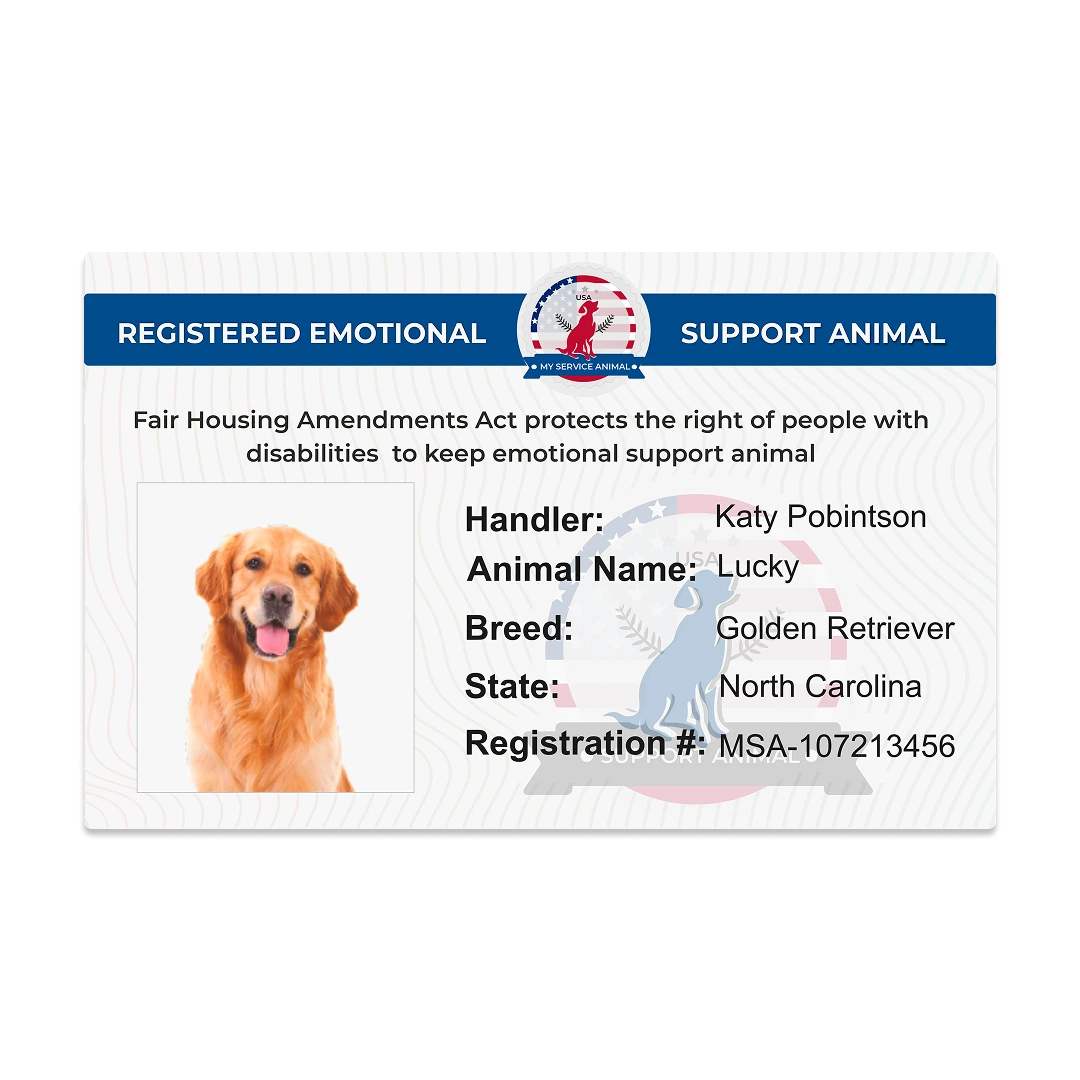
Emotional Support Animal Registration
Protections Under the Fair Housing Act (FHA)
The federal Fair Housing Act (FHA) mandates that housing providers must make reasonable accommodations for individuals with disabilities. This includes waiving no-pet policies and breed restrictions for legally recognized emotional support animals. Under the FHA, landlords are prohibited from charging pet rent, pet deposits, or standard pet fees for an ESA, because the law classifies them as assistance animals, not pets.
Massachusetts General Laws Chapter 151B
In addition to the FHA, Massachusetts General Laws Chapter 151B strictly prohibits discrimination in the leasing or selling of housing accommodations based on disability. The Massachusetts Commission Against Discrimination (MCAD) oversees the enforcement of these laws. If a Massachusetts landlord denies a legitimate ESA request without a valid legal exemption, the tenant has the right to file a formal discrimination complaint with the state.
The Reasonable Accommodation Process for Tenants
To legally live with your ESA in a non-pet-friendly building, you must submit a reasonable accommodation request to your landlord or property management company.
How to Request Permission for Your ESA
- Obtain a valid ESA letter from your active, licensed mental health professional or medical doctor.
- Write a formal, written request to your housing provider asking for a reasonable accommodation under the Fair Housing Act.
- Attach a copy of your ESA letter to your written request.
- Keep copies of all correspondence for your personal records in case of a dispute.
- Engage in an interactive dialogue with your landlord if they have valid questions regarding the accommodation.
ESA Letter Requirements in Massachusetts
Your ESA letter is the most crucial piece of evidence in your accommodation request. To be valid under Massachusetts and federal law, the letter must be written by a licensed healthcare professional (such as a psychiatrist, psychologist, licensed clinical social worker, or primary care physician) who is actively treating you.
The letter must be written on the professional’s official letterhead, include their license number and contact information, and explicitly state that you have a disability and require the animal to alleviate symptoms of that disability. Landlords are becoming increasingly strict about online ESA letters. If you use an online service, ensure you are paired with a Massachusetts-licensed therapist who conducts a legitimate evaluation, as automated certificates hold no legal weight.
Housing providers are legally entitled to verify the authenticity of an ESA letter and the license of the medical professional, but they cannot demand access to your confidential medical records or ask for a specific diagnosis.
Landlord Rights and Situations for Denial
While tenants have strong protections, landlords also have rights under emotional support animal Massachusetts laws. A housing provider is not required to accept an ESA if doing so causes an undue financial or administrative burden, or fundamentally alters the nature of their housing operations.
When Can an ESA Be Legally Denied?
- The animal poses a direct, documented threat to the health and safety of other residents or staff.
- The animal causes substantial physical damage to the property that cannot be reasonably mitigated.
- The tenant fails to provide proper, verifiable documentation from a licensed healthcare professional.
- The specific property falls under an FHA exemption (such as an owner-occupied building with four or fewer units, or a single-family home rented directly by the owner without a broker).
Rights and Responsibilities of ESA Owners
Having an emotional support animal is a privilege that comes with specific tenant responsibilities. While you are exempt from pet fees, you are still financially responsible for any damage your animal causes to the apartment or common areas.
Furthermore, the animal must be under your control at all times. If your ESA exhibits aggressive behavior, barks excessively to the point of disturbing neighbors, or creates severe hygiene issues, the landlord has the right to begin the eviction process or revoke the accommodation. Proper training, regular veterinary care, and responsible handling are essential to maintaining your housing rights.