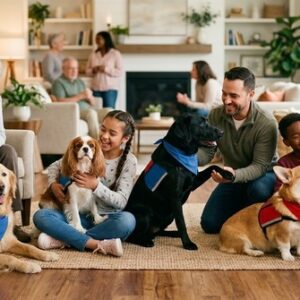
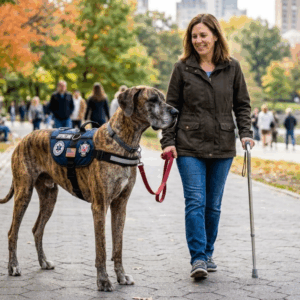
Many individuals living with post-traumatic stress disorder (PTSD) and severe anxiety require comprehensive support that extends beyond traditional therapy and medication. According to the Americans with Disabilities Act (ADA), psychiatric service dogs (PSDs) are highly trained working animals that perform specific, life-saving tasks to assist individuals with mental health disabilities. Finding the right canine partner is a profound, life-changing decision that requires careful consideration of an animal’s innate traits and capabilities.
Selecting the best service dog breeds for PTSD and anxiety involves looking far past physical appearance. It demands a rigorous evaluation of a breed’s temperament, trainability, emotional intelligence, and physical capacity to perform demanding medical tasks in highly stressful environments. This comprehensive guide explores the science behind psychiatric service work and explains why the Labrador Retriever, Golden Retriever, and German Shepherd consistently stand out as the elite choices for mental health and psychiatric support.
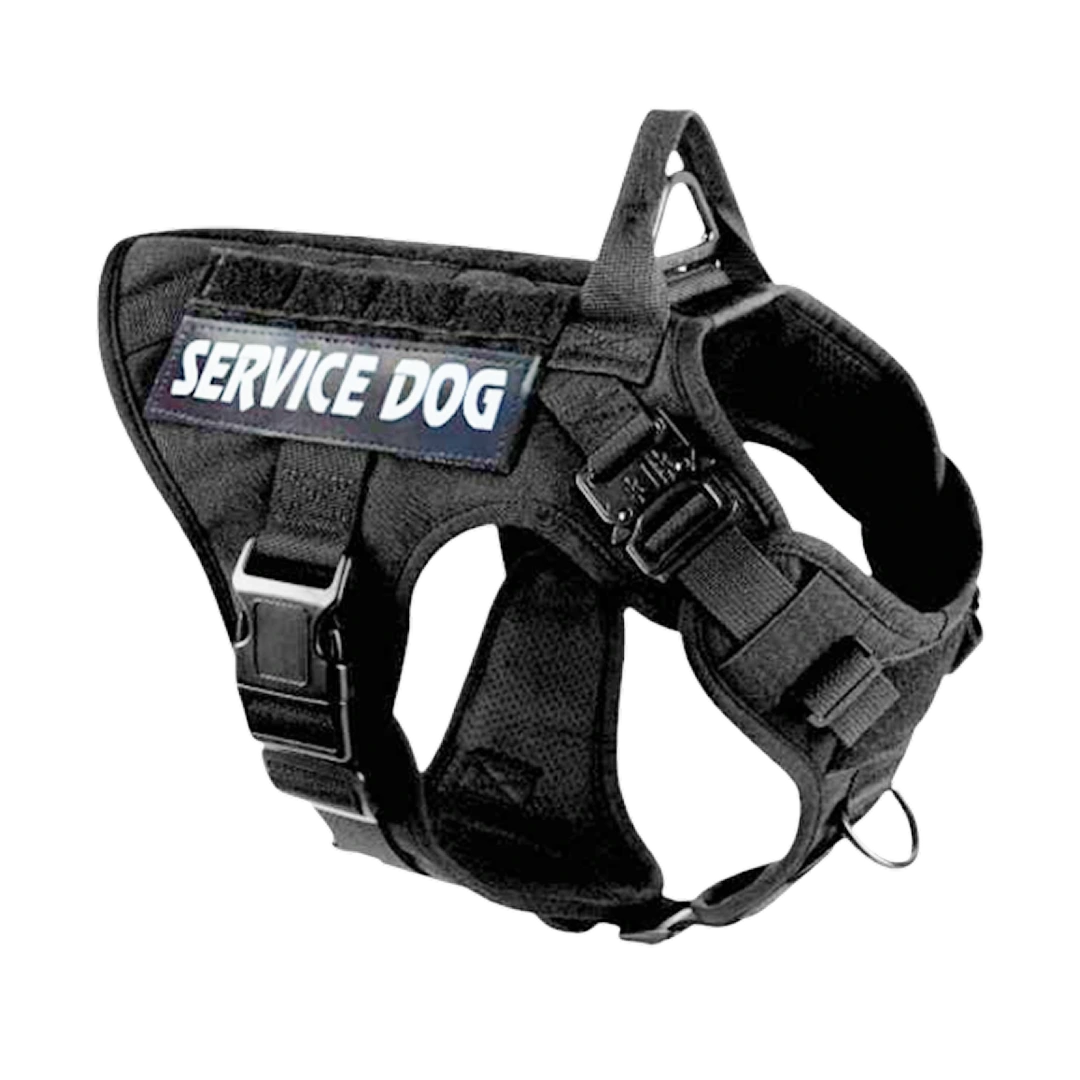
Tactical Service Dog Harness
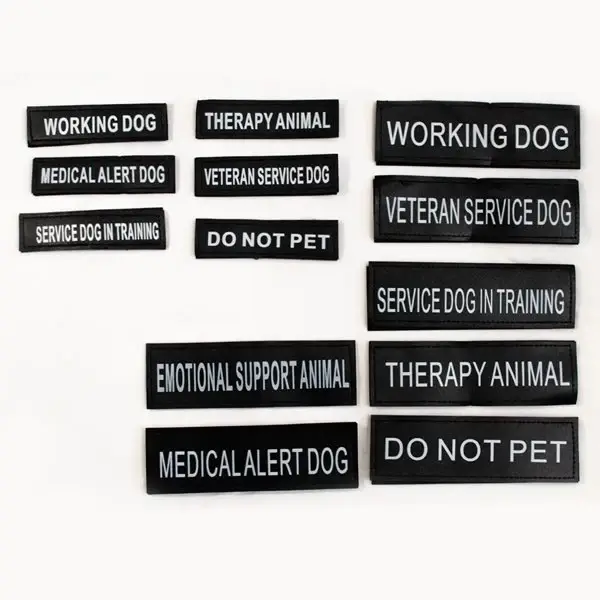
Vest Patches
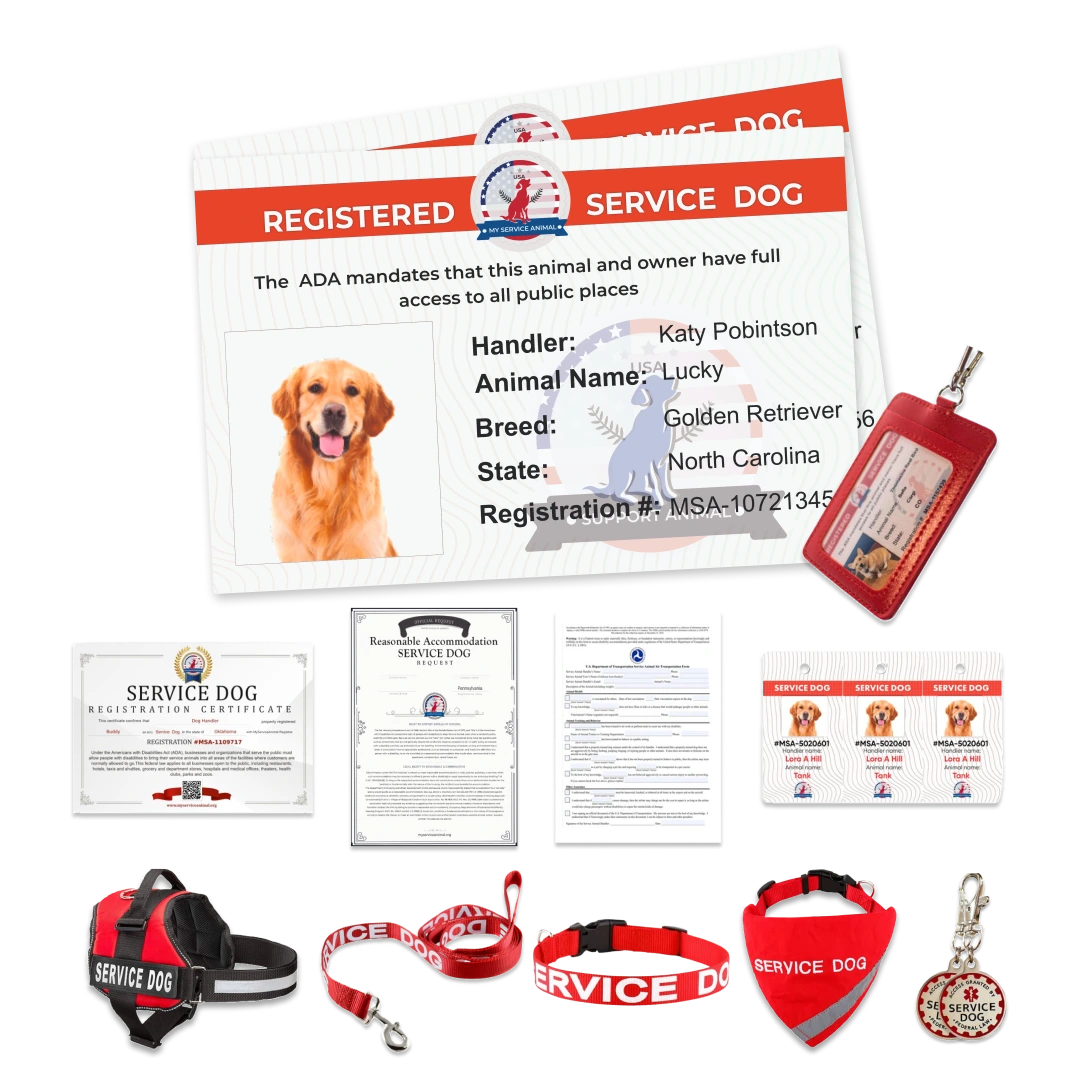
Service Dog Premium Bundle
Understanding the Role of a Psychiatric Service Dog
Before selecting a breed, it is crucial to understand what separates a fully trained psychiatric service dog from a standard emotional support animal (ESA) or therapy dog. While ESAs provide comfort simply through their presence, PSDs undergo thousands of hours of rigorous training to perform specific actions that mitigate the symptoms of a psychiatric disability.
These tasks are directly tied to the handler’s medical needs. For example, if a handler with PTSD experiences dissociative flashbacks, the dog is trained to recognize the early physical signs of distress—such as changes in breathing patterns or the scent of cortisol—and physically intervene to ground the handler back in reality. This requires a dog with exceptional intelligence, unwavering focus, and a natural desire to work closely with human partners.
Key Traits to Look for in a Service Dog Candidate
Not every dog, even within the top breeds, has the natural disposition required for psychiatric service work. The “washout” rate for service dogs is high because the job demands a unique, almost contradictory combination of psychological resilience and extreme sensitivity. Evaluators and professional trainers look for the following foundational traits.
Temperament and Environmental Calmness
A psychiatric service dog must possess an exceptionally calm, confident, and steady nature. Handlers experiencing severe panic attacks or agoraphobia rely heavily on their dogs to be their emotional anchor. Breeds that are easily startled, hyperactive, overly reactive to sudden noises, or prone to anxiety themselves cannot safely perform this vital role.
The ideal service dog remains entirely unfazed in chaotic, unpredictable environments. Whether navigating a crowded grocery store, walking through heavy urban traffic, or sitting quietly on a loud airplane, the dog must maintain total focus on its handler. This environmental stability allows the dog to reliably execute tasks like non-protective boundary control, where the dog uses its body to create a safe, physical buffer zone around the handler in crowded spaces without showing any signs of aggression.
Trainability and Problem-Solving Intelligence
Service dogs must learn complex, multi-step behaviors and execute them flawlessly upon a verbal command, a hand signal, or upon independently recognizing a specific medical trigger. High intelligence coupled with a strong eagerness to please (biddability) is a mandatory requirement.
Independent problem-solving skills are critical in real-world scenarios. For instance, if a handler is experiencing a debilitating anxiety attack and drops their emergency medication under a table, the dog must be smart enough to locate it, retrieve it gently without damaging the container, and deliver it directly to the handler’s hand. The best service dog breeds possess a high threshold for repetitive obedience training and genuinely thrive when given a meaningful job to do.
Size, Strength, and Physical Capabilities
The physical dimensions of a service dog directly dictate the types of tasks it can safely perform. Many handlers with PTSD and generalized anxiety disorder require Deep Pressure Therapy (DPT). During this task, the dog applies its physical weight and warmth to the handler’s chest, legs, or lap.
A service dog must be large enough to provide adequate, grounding pressure to adult handlers, but agile enough to tuck under tables at restaurants or navigate tight public transportation spaces. Furthermore, some handlers experience physical symptoms or mobility issues alongside their mental health conditions, requiring a dog sturdy enough to provide light forward-momentum pulling, balance assistance on stairs, or help rising from the floor after a medical episode.
The right psychiatric service dog acts as a biological extension of the handler’s nervous system. We look for dogs that possess a rare blend of environmental neutrality and intense handler focus. Without the proper physical size and cognitive endurance, even the sweetest dog cannot fulfill the grueling demands of ADA-recognized public access work.
The Top 3 Service Dog Breeds for PTSD and Anxiety
While mixed breeds and rescue dogs can occasionally complete service dog training, prominent organizations like K9s For Warriors and Assistance Dogs International consistently turn to three specific purebreds. This is due to their predictable genetics, generationally proven temperaments, and exceptional track records in psychiatric and medical alert roles.
1. Labrador Retriever: The Versatile Gold Standard
The Labrador Retriever is widely considered the undisputed gold standard within the service dog industry. Originally bred to work long hours retrieving waterfowl alongside hunters in harsh conditions, they have evolved into the most versatile, adaptable working dogs in the world. Their friendly, outgoing, and gentle disposition makes them incredibly attuned to human emotion.
Labradors possess a unique emotional intelligence that allows them to detect subtle biological shifts in their handler. When they sense an approaching panic attack—often before the handler is even consciously aware of it—they are trained to interrupt the negative behavioral loop. They might do this by firmly nudging the handler’s hands, placing their heavy head in the handler’s lap, or persistently licking their face to break a dissociative state.
Physically, their sturdy, athletic build makes them excellent candidates for Deep Pressure Therapy and light mobility support. From a training perspective, Labradors are famously food-motivated. This trait makes the extensive, repetitive obedience and task-training process significantly smoother and faster compared to independent or stubborn breeds. Their highly adaptable nature means they can live happily in a city apartment or a rural home, provided they receive adequate daily exercise.
2. Golden Retriever: The Empathetic Healer
Golden Retrievers share many of the same exceptional working qualities as Labradors but bring a slightly softer, more deeply sensitive approach to their service work. They are universally renowned for their profound empathy and ability to bond intensely with their handlers, making them ideal partners for individuals who struggle with the isolating, depressive effects of PTSD.
Golden Retrievers excel at tactile stimulation and emotional grounding. Their soft, longer coats and exceptionally gentle demeanor provide a soothing sensory experience during high-stress episodes. For veterans or trauma survivors who experience severe night terrors, a Golden Retriever can be explicitly trained to recognize thrashing or vocalizations during sleep. The dog can then turn on a touch-lamp, pull the heavy covers back, and provide immediate, comforting DPT to wake the handler safely and orient them to the present moment.
Their universally recognized friendly appearance also serves a vital secondary purpose. For individuals grappling with severe social anxiety or agoraphobia, the welcoming, non-threatening presence of a Golden Retriever can act as a crucial bridge to positive social interactions. The dog helps the handler navigate public spaces with greater confidence, reducing the hyper-vigilance associated with feeling judged or threatened by strangers.
3. German Shepherd: The Loyal Guardian
German Shepherds offer a distinctly different type of psychiatric support that is particularly beneficial for military veterans, first responders, and individuals whose PTSD stems from personal attacks, combat, or severe trauma. This herding breed is intensely loyal, highly observant, and possesses an unparalleled work ethic.
Hypervigilance—the exhausting state of constantly assessing the environment for hidden threats—is one of the most debilitating symptoms of PTSD. A German Shepherd can help alleviate this massive cognitive burden by performing specialized clearing tasks. The dog can be trained to enter a dark home or room before the handler, turn on the wall switches, and perform a systematic visual sweep to ensure the space is empty and safe.
Furthermore, they excel at “block and cover” commands. A German Shepherd can be instructed to stand horizontally behind the handler in a busy checkout line, creating a physical barrier that prevents strangers from approaching too closely from behind. While they require a highly experienced handler and rigorous, ongoing training due to their strong protective instincts, a properly trained German Shepherd provides an unmatched psychological safety net. They must be meticulously taught to observe, report, and block without ever reacting aggressively, strictly maintaining the peaceful public access standards required by ADA law.
For handlers paralyzed by hypervigilance, the German Shepherd is a game-changer. By taking over the exhausting job of constantly monitoring the perimeter, the dog allows the handler’s deeply traumatized nervous system to finally power down and rest.
Comparing the Top Breeds for Psychiatric Support
| Breed | Ideal Handler Profile & Best Suited Tasks | Key Psychological Strengths | Maintenance & Care Needs |
|---|---|---|---|
| Labrador Retriever | Needs versatile medical alerts, DPT, and mobility support. Excellent for first-time dog owners. | Highly food motivated, emotionally resilient, bounces back quickly from handler stress. | High daily exercise requirements, weight management monitoring, moderate brushing. |
| Golden Retriever | Needs intense emotional grounding, sensory comfort, and night-terror interruption. | Deeply empathetic, incredibly gentle, acts as a natural social bridge in public spaces. | Daily grooming required to prevent matting, moderate exercise, needs close emotional contact. |
| German Shepherd | Needs hypervigilance mitigation, room clearing, and physical boundary creation. | Intensely loyal, highly observant, exceptional spatial awareness and physical stamina. | Requires advanced handling skills, rigorous daily mental stimulation, and heavy shedding management. |