Brain racing, focus slipping, and you feel stuck? A trained service animal can help with attention deficit hyperactivity disorder (ADHD). I’ll walk you through who qualifies, how psychiatric service dogs help, and the steps to get one with your care team.
You’ll see what these dogs can do for mental health and daily life. If you’re curious about routines, anxiety relief, or staying on task, you’re in the right place.
Key Takeaways
- You need a formal ADHD diagnosis and documentation from a licensed mental health professional under Americans with Disabilities Act (ADA) rules.
- Service dogs support ADHD by doing trained tasks like medication reminders, deep pressure therapy, and guiding you out of sensory overload.
- There is no federal certification or government ID for psychiatric service dogs. What matters is reliable task work and calm behavior in public.
- Daily care, walks, and feeding create structure that can improve focus and lower anxiety for adults and children with ADHD.
- Some costs for evaluations may be eligible under HSA or FSA plans. Check your plan details before you pay.
Qualifications for Obtaining a Service Dog for ADHD
So here’s the thing. Getting a service dog for ADHD takes a few clear steps with your healthcare team. A mental health professional will assess your symptoms, daily limits, and safety needs before you move ahead with an assistance dog.
What are the medical requirements to qualify for an ADHD service dog?
You need a confirmed diagnosis of attention deficit hyperactivity disorder (ADHD) or a related psychiatric condition. A psychologist, psychiatrist, or other licensed mental health professional must make this diagnosis.
Your symptoms must limit major life activities. That can include learning, working, focusing, planning, or self-care. Under the ADA, that counts as a disability if it affects daily function in a big way.
The clinician’s note should describe how a service animal would reduce your symptoms. Examples include interrupting impulsive behavior, easing panic or anxiety attacks, or helping you through overload in public spaces. This applies to kids and adults with ADHD.
Psychiatric service dogs are recognized under the ADA for this kind of task work. If your family has more than one person with attention issues, that’s common. Once your paperwork is set, you can contact a group, such as MyServiceAnimal, to learn about next steps.
Quick disclaimer: This is general guidance, not medical or legal advice. Talk with your own clinician for personalized recommendations.
What specific tasks must an ADHD service dog be trained to perform?
These dogs learn targeted tasks that support daily life. Tasks should link directly to your symptoms and needs.
- Bring medication or prompt you at set times with a nudge or paw tap.
- Provide deep pressure therapy by lying across your legs or lap to calm anxiety or panic signs.
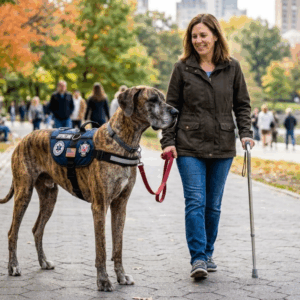
- Create space in crowds by standing between you and others in busy places like hospitals, mental health facilities, or schools.
- Interrupt hyperfocus by nudging when you get stuck on one thing for too long.
- Alert caregivers if a child wanders and help track the path using scent work, when trained for it.
- Guide you away from bright, loud spots during sensory overload and help you ground with touch.
- Promote healthy movement with steady walks and short play sessions to burn excess energy.
- Offer trained calming contact during severe anxiety, using touch cues or pressure, as part of a task plan.
These tasks support attention, reduce impulsivity, and steady emotions. Small, reliable actions add up to real change across a busy day.
Benefits of a Service Dog for ADHD
Think of a steady teammate who helps you reset your pace. That is what a trained dog can feel like for many people with ADHD.
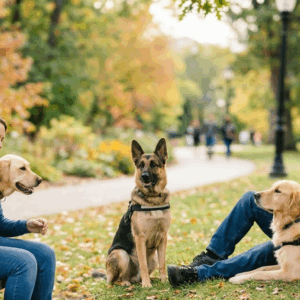
Some breeds, like the German Shepherd, enjoy structured work with kids and adults. Therapy dogs visit care facilities and schools for comfort, but service dogs have a different legal status because they perform specific tasks.
How can a service dog help improve focus and establish routines?
Care tasks build structure without you forcing it. Morning walks, feeding on schedule, and brushing become anchors that keep your day moving. A friend once told me, the dog’s bowl becomes your clock, and it stuck with me.
These dogs also act like a quiet study buddy. Their calm presence cuts distractions so homework and chores get finished. For time-sensitive tasks, gentle nudges help you take medication, pack a bag, or start bedtime on time.
Regular walks turn movement into a habit. Fresh air helps settle restless energy, and many handlers say focus lasts longer after short activity bursts.
In what ways do service dogs reduce anxiety and provide emotional support?
Deep pressure therapy helps calm the nervous system. A dog may press against your legs or lie across your lap during a panic attack. That steady weight feels like a warm, safe anchor when your mind is racing.
In crowded spaces, the dog’s presence can lower stress and help you feel less alone. Confidence grows when you know your partner is trained to help in tough moments. This matters for adults with ADHD and for kids who struggle with social stress.
Psychiatric service dogs are protected in public spaces under the Americans with Disabilities Act. That access helps you bring needed support into classrooms, clinics, and stores.
How to Get a Service Dog for ADHD
You work with your health practitioner to confirm need, then with training pros to shape tasks for ADHD. The process includes evaluation, training, and practice in public places so your dog can help you safely day to day.
How do professional training and certification for ADHD service dogs work?
Professional trainers focus on calm public behavior and task skills. Common tasks include medication prompts, deep pressure therapy, and focus cues like gentle nudges during study time.
Any stable, people-friendly breed can do this work if the dog enjoys learning and stays steady under stress. Trainers proof skills in stores, sidewalks, and transit so surprise noises do not derail the dog.
There is no official government certification in the United States. What matters is that the dog performs trained tasks for your disability and behaves safely in public. Many teams refresh skills over time to keep performance solid.
What healthcare documentation is needed to obtain a service dog for ADHD?
You will need a letter from a licensed mental health professional. It should outline your ADHD diagnosis, how symptoms limit daily life, and how a dog’s trained tasks will help.
Training records are useful too. Landlords or airlines sometimes ask for proof that the dog is a service animal and performs tasks related to your disability. Keep copies ready in case someone asks for reasonable documentation.
If cost is a concern, check if your Health Savings Account or Flexible Spending Account can cover parts of the evaluation process. Plans vary, so review your benefits and save receipts.
Tasks Performed by ADHD Service Dogs
These dogs do more than guide. They keep you on track, help regulate your body, and support you in noisy, high-pressure moments.
How do service dogs provide deep pressure therapy and task reminders?
Deep pressure therapy uses a dog’s body weight to calm your system. The dog may lean against you or lie across your lap. Many people say it feels like a stable, living weighted blanket that breathes beside you.
For reminders, dogs use trained cues. They nudge your hand, fetch a pill bottle, or sit and stare at you until you move. Simple actions like these keep routines rolling when your mind is busy.
Those steady prompts are gold for daily life. Small, well-timed nudges reduce missed meds and help you switch tasks with less stress.
How do service dogs assist during sensory overload or overstimulation?
Many dogs spot early signs like pacing, fidgeting, or a change in your voice. Then they act. You might feel a paw on your leg or a lean against your side. That cue helps you pause and breathe.
In loud spaces, the dog can create space around you or guide you to a quiet corner. A short step outside can reset your senses. I have watched this work in school cafeterias and busy malls, and it is impressive.
The goal is simple. Make the world feel smaller and safer so you can recover faster.
Conclusion
Getting a service dog for ADHD can be life changing. With the right training and support from a mental health professional, you gain a skilled partner who helps you stick to routines, calm anxiety, and handle sensory overload. Psychiatric service dogs do real task work that fits your needs, and that is the key.
Any steady, well-trained dog can shine in this role, not just one breed. If daily life feels messy or loud, it might be time to ask your clinician about a service animal. Take it step by step with your care team. Less stress, more structure, and a wagging tail are closer than you think.
Note: This article is for general education. For medical or legal guidance, talk with your own licensed provider and review ADA resources.