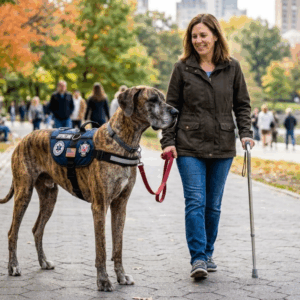
Ever see a dog in a vest at the store and wonder if it is really a service animal or just a pet in gear? A real service dog is trained to do specific tasks for a person with a disability. Under the Americans with Disabilities Act, that training matters. This guide shows you how to tell real from fake, how behavior plays a role, and why it affects access for everyone. I think you will spot the signs fast, and you will feel more confident about what you are seeing.
“As a service dog handler, nothing frustrates me more than seeing untrained pets in vests. It makes business owners suspicious of all of us and creates access barriers that shouldn’t exist.” — Jennifer Martinez, Service Dog Handler, 8 years
Key Takeaways
- Real vests use tough materials, clear patches, and secure buckles. Fake vests cut corners with thin fabric, weak stitching, and confusing labels.
- Trained service dogs stay calm, focused, and polite in public. Pets in fake vests may bark, pull the leash, or jump on people.
- Fake vests hurt people with disabilities by creating doubt and making access harder for real teams.
- Some states fine or charge people who misrepresent pets as service animals. ADA rules protect trained service dogs, not pets or emotional support animals.
- Knowing the signs helps protect handlers and stops misuse that harms trust in the system.
Key Differences Between Real and Fake Service Dog Vests
A quality vest is more than a costume. It helps signal a working service dog, whether that is a german shepherd, a pit bull, or a small mixed breed. It also gives the handler safe control in busy places.
Poor copies can look official at first glance. A quick touch of the material, a peek at the hardware, or a look at the dog’s behavior usually tells the real story.
What is the purpose and function of a real service dog vest?
The vest makes a working dog easy to spot and less likely to be disturbed. Labels like “Do Not Pet,” “Medical Alert Dog,” or “In Training” set clear boundaries. A service animal is a dog trained to do tasks for a disability, like guiding a blind handler or alerting to a panic attack. An emotional support animal offers comfort but does not perform trained tasks.
“A professional vest is a communication tool. It tells the public this is a working animal, and it gives my dog a clear signal that we’re in work mode, not play mode.” — David Chen, Professional Service Dog Trainer, 12 years experience
Good vests add control and comfort. Expect strong handles, sturdy buckles, reflective trim for low light, and patch panels that show the dog’s role, such as psychiatric service dog. That clarity helps the public give space and helps the dog focus.
Fit matters too. A balanced vest spreads pressure across the chest, does not rub, and lets the canine move naturally. If you plan to Buy Real Service Dog vest online, check for clear identification patches, breathable padding, and hardware that will not pop open under stress.
How does the quality and durability differ between real and fake vests?
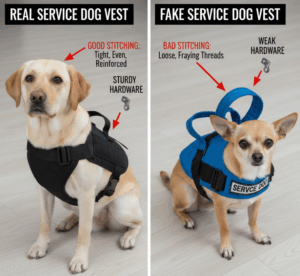
Real working vests use strong nylon or mesh, reinforced stitching, and durable hardware. Wider chest plates and padded handles give control without pain. Multiple adjustment points help the vest sit steady on different body shapes. Many add reflective tape and patch panels that hold up to daily use and weather.
Fake vests often use thin cloth and loose seams that fray. Plastic clips can snap. Straps twist or slip because they lack padding or secure sliders. Labels may look “official,” but the gear does not fit well and breaks fast. That is risky for both dog and handler.
“A good vest will hold up through rainstorms, crowded buses—and even zoomies in the backyard.”
Real vs Fake Service Dog Vest: Quality Comparison
| Feature | Real Service Dog Vest | Fake Service Dog Vest |
|---|---|---|
| Material | Heavy-duty nylon, breathable mesh, weather-resistant | Thin fabric, poor breathability, tears easily |
| Stitching | Reinforced, even, double-stitched at stress points | Loose threads, uneven seams, frays quickly |
| Hardware | Metal buckles, sturdy D-rings, heavy-duty clips | Plastic clips that snap, weak attachment points |
| Padding | Comfortable chest plate, padded straps and handle | Little to no padding, rubs and causes discomfort |
| Patches | Clear, professional, securely attached with hook-and-loop | Peeling, misspelled, confusing or misleading labels |
| Reflective Trim | High-grade reflective tape, visible in low light | Weak or absent reflective materials |
| Fit & Adjustment | Multiple adjustment points, stays secure, proper sizing | Slides, twists, poor sizing options |
| Durability | Lasts years with daily use, weather-resistant | Falls apart quickly, fades, deteriorates fast |
How can the dog’s behavior indicate if the vest is real or fake?
Behavior tells you more than any patch. A trained service dog stays close to the handler, ignores strangers, and responds to cues right away. You will not see begging, leash pulling, or jumping on staff. Tasks can be subtle, like a nudge before a seizure or a block to create space during anxiety.
“You can spot a real team in seconds. The dog isn’t looking around at everything—it’s focused on its handler. There’s this calm, professional energy that’s unmistakable once you know what to look for.” — Rachel Thompson, Business Owner and ADA Compliance Trainer
Pets in fake vests often show distraction. Barking at people, sniffing shelves, or having bathroom accidents indoors are big red flags. The best clue is teamwork. The handler and dog move like a unit, without shouting or chaos.
How to Spot a Fake Service Dog Vest
Some fakes are obvious, like peeling patches or crooked webbing. Others hide behind slick listings and stock photos. A quick checklist helps you sort sturdy gear from props, plus you will spot dogs that have not had obedience training.
What behaviors and training should you observe to identify a fake vest?
A vest is not proof. Watch the team.
- Calm under pressure: real teams handle crowds, noise, and lines without panic. Fake teams may whine, bark, or freeze.
- Loose-leash skills: trained dogs do not drag or zigzag. Leash jerking and towing are warning signs.
- Handler focus: service dogs watch their person and respond fast. Distracted dogs lock onto food, kids, or other pets.
- Public manners: no jumping, lunging, or growling. Aggression does not mix with true service work.
- House-trained: real teams do not eliminate indoors. Accidents in stores or cafes point to poor training.
- Reliable cues: sits, stays, and heels happen on the first ask, without a pocket full of treats.
- Team control: handlers guide quietly and correct quickly. If you see shouting or chaos, that is a red flag.
Next up, gear tells its own story. Cheap parts and tricky labels can expose a fake vest fast, and yes, that includes sites selling “ESA letters” with flimsy kits.
How can you recognize poor materials or misleading labels on fake vests?
Look close. Quality stands out, and so do shortcuts.
- Thin fabric feels scratchy and wears out fast. Durable vests from trusted makers, like those discussed in Ruffwear or Julius-K9, last longer.
- Messy seams and loose threads signal weak build. Tight, even stitching is a good sign.
- Unpadded straps can rub and slip. Padded, adjustable straps with breathable mesh are better for all-day wear.
- Flimsy plastic buckles can pop under load. Sturdy hardware should feel solid in your hand.
- Cheap patches peel or smudge, sometimes with spelling errors. Quality vests use hook-and-loop panels so patches stay put and swap cleanly.
- Colors that fade after a wash point to poor dye. Good materials hold bright color under sun and rain.
- Weak reflective strips barely light up at night. High-grade tape shines under headlights or street lights.
- Bad fit, like sliding at the shoulders or pinching at the belly, means the cut is wrong or the sizing is off.
- Misleading patches may say “Service Dog” but provide no clear info. Some even misuse names of groups like “Assistance Dogs International“.
Trained Service Dog Behavior Checklist
| Behavior Category | Real Service Dog | Fake/Untrained Dog |
|---|---|---|
| Public Demeanor | Calm, focused, ignores distractions | Excitable, easily distracted, reactive |
| Leash Behavior | Loose leash, walks beside handler | Pulls, zigzags, drags handler |
| Handler Attention | Watches handler, responds immediately | Ignores handler, focuses on environment |
| Social Interactions | Ignores strangers and other animals | Seeks attention, jumps, sniffs people |
| Vocalization | Quiet, no unnecessary barking | Barks, whines, makes noise |
| House Training | Never eliminates indoors | May have accidents in public spaces |
| Command Response | Obeys on first cue, no treats needed | Requires multiple commands, needs bribes |
| Overall Control | Handler guides quietly, team moves as unit | Handler struggles, shouting, chaotic |
Why Identifying Fake Service Dog Vests Matters
Spotting fakes protects access for people who rely on trained dogs every day. It also keeps businesses and the public safer. One unruly pet can ruin trust for many well-trained teams.
How do fake vests impact legitimate service dog users?
After dealing with a few bad actors, staff in stores or airports may start doubting everyone in a vest. That means more questions and more stress for legit handlers. Some even get refused entry, which goes against ADA access rules for service animals.
“I’ve been denied access three times this year because staff assumed my dog was fake. Each time, I had to explain the law while other customers stared. It’s exhausting and humiliating, and it’s all because people abuse the system.” — Marcus Johnson, Diabetic Alert Dog Handler
There is a safety risk too. A disruptive pet can distract a medical alert dog, trigger anxiety for a handler with PTSD, or crowd a guide dog at a doorway. Over time, this erodes trust in training programs and makes simple errands feel like a battle.
What are the legal and ethical issues with fake service dog vests?
Misrepresenting a pet as a service animal can break state laws. The Americans with Disabilities Act protects trained service dogs that perform tasks. It does not cover emotional support animals in public places. Some states issue fines for misrepresentation, and repeat offenses can bring tougher penalties.
Ethically, it harms people who count on task-trained dogs for epilepsy alerts, mobility help, or psychiatric support. It confuses staff, pressures businesses, and invites tighter rules that affect everyone. This article is general information, not legal advice. If you have legal questions, talk with a qualified attorney or check official ADA guidance.
Conclusion
Real gear plus trained behavior is the combo you are looking for. A proper service dog vest fits well, uses strong parts, and shows clear labels. The dog moves with the handler, calm and focused, even in crowds or loud places. That protects access under the Americans with Disabilities Act and keeps the team safe.
Thinking about a purchase? If you plan to get real service dog vest, check materials, fit, and hardware, and skip any seller pushing fake registries. A steady service dog leash, reflective details, and honest patches help people give space. Spotting the difference supports every handler who depends on a true working partner, not a pet in a costume.