How To Avoid Pet Fees At Apartments
Pet fees are one of those rental costs that quietly drain your housing budget month after month. Many landlords charge between $25 and $75 per pet monthly, and knowing how to avoid pet fees at apartments can save you over $900 a year on top of your regular rent.
What most renters miss is that these fees are often negotiable. Unlike base rent, pet fees rarely come with hard legal minimums, which means a prepared renter has real leverage.
This guide covers the most effective strategies available to you. You’ll learn how to use your legal rights, structure smarter proposals, and present yourself as the kind of responsible pet owner landlords want to keep long-term.
Key Takeaways
- Pet fees typically run $25 to $75 monthly per pet, but the right preparation and negotiation can reduce or eliminate that cost.
- A valid ESA letter from a licensed mental health professional provides legal protection under the Fair Housing Act, though some states now require a 30-day client-provider relationship before a letter can be issued.
- Offering a refundable pet deposit instead of monthly pet rent saves you money over time, since you get the full amount back if your pet causes no damage.
- Pet liability insurance costing as little as $13 to $20 per month gives landlords a compelling reason to waive pet fees entirely.
- A strong pet resume, especially one that includes verifiable certifications like the AKC Canine Good Citizen credential, significantly strengthens your position during lease negotiations.
Use an Emotional Support Animal (ESA) Letter
An ESA letter from a licensed professional gives you legal protection under the Fair Housing Act. This document tells your landlord that your emotional support animal qualifies for housing rights that pet fees cannot override.
Obtain a valid ESA letter from a licensed professional
Getting a valid emotional support animal letter from a licensed mental health professional is one of the strongest tools available to renters. This letter protects your rights under federal fair housing laws and, in most cases, exempts you from paying pet rent or facing breed restrictions.
Here is exactly what that process should look like:
- Contact a licensed mental health professional who can evaluate your need for an emotional support animal and provide proper documentation.
- Verify your provider holds a current license in your state. According to 2026 legal guidelines tracked by US Service Animals, five states (California, Arkansas, Iowa, Louisiana, and Montana) legally require at least a 30-day therapeutic relationship before a provider can issue an ESA letter. Websites promising 24-hour letter approvals are legally invalid in these states, and submitting one could get your application rejected on the spot.
- Request a letter that clearly states your mental health condition requires an emotional support animal for therapeutic support. Confirm it includes your provider’s license number, contact information, and signature to establish legitimacy with housing providers.
- Make sure the letter classifies your pet as an assistance animal rather than a service animal. These carry different legal protections under federal law, and the distinction matters.
- Get an ESA ID Card for the public recognizerd. Remember, only the professional letter carries legal weight.
- Present your landlord with the ESA letter before signing your lease to establish your fair housing rights from the start.

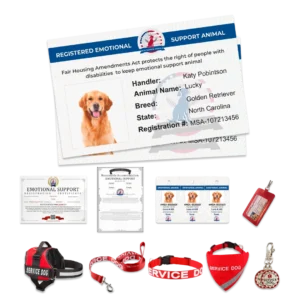
Emotional Support Animal Premium Bundle


Once your documentation is secure, you are ready to negotiate directly with your landlord about eliminating pet fees altogether.
Negotiate with Your Landlord
Negotiating directly with your landlord is often more effective than most renters expect. With the right preparation, you can propose alternatives to monthly pet rent that work for both sides.
Offer a refundable pet deposit instead of monthly pet rent
According to a 2025 rental market analysis by RentCafe, the average U.S. monthly pet rent is $36, while the average refundable pet deposit is about $300. That math makes a strong negotiating point: paying a one-time $300 deposit instead of $36 per month saves you more than $130 in the first year alone, and the gap grows with every year you stay.
A refundable pet deposit also works well for landlords. It gives them financial protection against damage without creating ongoing administrative work. Property managers at places like Draper and Kramer or Burnham Pointe commonly accept refundable deposits as part of their pet screening process.
When you make this offer, propose a clear written pet agreement. Spell out what types of damage would be charged against the deposit, and agree on move-out conditions for a full refund.
- Offer a deposit amount equal to one or two months of the pet rent you’d otherwise pay.
- Specify in the agreement which types of damage apply to the deposit.
- Request move-in and move-out photos to protect yourself at the end of the lease.
- Get all pet policies confirmed in writing before signing anything.
This strategy works best when you commit to a longer stay. If you leave with no damage, the full deposit comes back to you. That is a very different deal from non-refundable pet fees, which landlords keep no matter how well you care for the unit.
Combining this proposal with pet liability insurance and proof of obedience training makes your offer much harder to turn down.
Provide a pet resume with references and certifications
A pet resume gives landlords concrete proof that your animal is well-behaved. It shifts the conversation from “will your pet cause problems?” to “here is the evidence that it won’t.”
Format it like a standard job application so landlords take it seriously. Include the following:
- A clear, recent photo of your pet so landlords recognize your animal immediately.
- Vaccination records and proof of spaying or neutering to show responsible care.
- Training certificates from obedience classes. As recommended by the American Kennel Club, the Canine Good Citizen (CGC) program is a nationally recognized certification that proves your dog has mastered basic obedience and safe public behavior. A CGC certificate carries real weight with landlords because it is verifiable.
- Landlord references from previous rental situations where you kept a pet without incident.
- Contact information for your veterinarian, who can confirm your pet’s health and behavior history.
- Documentation of any pet liability insurance coverage you carry for renting with a pet.
Renters in cities like Chicago, Dallas, and St. Louis, MO have used this approach to negotiate better pet terms. Properties like Wrigleyville Lofts and Crest at Las Colinas are examples of community-focused rentals where a professional presentation like this can make a real difference.
Search for Pet-Friendly Rentals
Finding the right rental starts with targeting the right landlords. Sites like Apartment List and Facebook are solid places to find pet-friendly listings, especially from private landlords in cities like St. Louis, MO and Irving, TX who have more flexibility with pet policies than large management companies do.
Focus on private landlords or smaller rental properties
Private landlords run smaller rental properties with far less bureaucracy than large corporate management firms. They make their own decisions and are not locked into strict, company-wide pet policies.
A private landlord in St. Louis, MO or Irving, TX might approve your pet when a large company would say no. Smaller residential communities like Hubbard221, Eleven Thirty, or Moda at the Hill tend to be more open to individual conversations about pet terms.
Direct communication matters here. When you talk face to face or through online advertising platforms, you build personal rapport. That relationship can be the deciding factor between paying full pet fees and negotiating them away entirely.
- Search Apartment List, Facebook, and local rental boards for privately posted listings.
- Look for individually owned units in smaller buildings or private homes.
- Reach out directly to the property owner rather than going through a leasing office.
- Mention your pet early in the conversation so there are no surprises later.
Private landlords also appreciate honesty. Being upfront about your pet’s breed, size, and behavior history builds trust faster than any strategy.
Your effort to find the right landlord pays off in lower costs and fewer restrictions on your pet.
Offer Pet Liability Insurance
Pet liability insurance is one of the most underused negotiation tools renters have. It demonstrates financial responsibility and directly addresses your landlord’s biggest concern: unexpected damage or injury costs.
You can get a renters insurance policy that includes pet liability coverage for a very reasonable monthly cost. Most plans run between $10 and $30 per month.
Why the Numbers Make This a Strong Argument
Based on data from the Insurance Information Institute and Insurify, the average dog bite liability claim exceeded $69,000 in 2024. A standard renters insurance policy with $100,000 in liability coverage costs just $13 to $20 per month for most renters.
That contrast is one of the most persuasive points you can bring into a negotiation. You are offering your landlord significant financial protection for the cost of a couple of coffees a week.
| Coverage Detail | What It Means for Your Landlord |
|---|---|
| $100,000 liability coverage | Covers the average dog bite claim exceeding $69,000 |
| Cost to you: $13 to $20 per month | Low cost for you, major risk reduction for the landlord |
| Property damage coverage | Covers repair costs if your pet damages the apartment |
| Guest injury coverage | Covers medical bills if your pet injures a visitor |
An Important Caveat for Certain Breeds
A 2026 industry review by Kin Insurance notes that many standard renters insurance policies explicitly exclude high-risk breeds from their liability coverage. Pit Bulls, Rottweilers, and Doberman Pinschers are commonly listed as excluded breeds.
If your pet falls into one of these categories, a standard policy will not cover you. You will need a standalone pet liability policy or an umbrella policy to get the protection your lease actually requires.
Discuss your coverage limits with your landlord during negotiations. Many landlords waive pet fees entirely when renters hand them solid insurance documentation. Your pet resume combined with liability insurance creates a compelling case that is hard to ignore.
Leverage Long-Term Lease Agreements
Landlords value stability above almost everything else. A long-term lease means fewer vacancies, less turnover, and predictable rental income. You can use that to your advantage.
Proposing a two-year or three-year lease shows your landlord that you plan to stay. That commitment gives them confidence your pet is a long-term resident in a stable unit, not a short-term risk they have to manage.
- Offer a two or three-year lease term in exchange for reduced or waived pet fees.
- Pair the long lease with a larger one-time refundable security deposit instead of monthly pet rent.
- Back it up with your pet resume, vaccination records, and training certificates.
- Include proof of renters insurance to address any remaining liability concerns.
Document all pet policies in writing before you sign. Your pet agreement should spell out deposit terms, damage expectations, and the exact conditions for a full refund.
This combination, a long lease paired with a strong pet profile, makes you stand out as the kind of renter a landlord genuinely wants to keep.
Be Aware of Scams and Legal Rights
The ESA space has a real fraud problem, and the legal landscape is shifting fast. Knowing your rights protects you. Knowing the scams protects you even more.
The Problem with Fake ESA Letters
Many websites sell ESA letters for a flat fee with no real evaluation. These letters hold no legal weight with landlords or in court.
Federal fair housing law only protects renters with genuine assistance animals who have documented, real therapeutic needs. Fraudulent letters expose you to eviction and serious legal trouble under landlord-tenant laws.
According to the Animal Legal & Historical Center, the U.S. Department of Housing and Urban Development (HUD) formally withdrew its previous ESA evaluation guidance in September 2025. That federal withdrawal gives landlords significantly more power to scrutinize ESA requests and reject generic letters from online “ESA mills.” If your letter does not come from a legitimate, ongoing therapeutic relationship, a landlord now has stronger legal footing to deny your request outright.
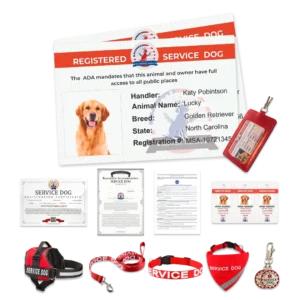
Service Dog Premium Bundle
Know the Difference: ESAs vs. Service Animals
Service animals and emotional support animals receive different protections under federal law. This distinction matters for how you present your situation to a landlord.
A valid ESA letter, issued after a proper consultation with a licensed mental health professional, classifies your animal as an assistance animal. This exempts you from pet rent and deposits in most cases, even when the lease mentions pet restrictions. Landlords can request proof of your provider’s credentials, so keep that documentation ready.
- Only work with licensed mental health providers who conduct real, documented evaluations.
- In California, Arkansas, Iowa, Louisiana, and Montana, a 30-day provider relationship is legally required before a valid letter can be issued.
- Avoid any service that promises to register ESA online or deliver a letter within 24 hours without a consultation.
- Keep detailed records of all communications with your landlord regarding ESA requests.
Your legal rights as a renter are real and worth protecting. But they only hold up when your documentation is genuinely legitimate.
Conclusion
You now have a clear set of tools to cut pet fees from your rental costs. Start by gathering your pet’s documentation, including vaccination records, training certificates, and verifiable certifications like the AKC Canine Good Citizen credential.
From there, approach your landlord with a concrete proposal. Offer a refundable deposit instead of monthly pet rent, back it up with liability insurance, and consider a longer lease to strengthen your position.
Take action today, and your pet may move into your new rental apartment without those extra monthly charges eating into your housing budget.




References
- 1.
- 2.
- 3.
- 4.
The content on this website is for informational purposes only and does not constitute professional medical advice, diagnosis, treatment, or legal counsel.
U.S handlers trust MyServiceAnimal

FAQ
Yes, providing a detailed pet resumé that includes vaccination records and obedience certificates like the AKC Canine Good Citizen can often persuade landlords to waive monthly fees. Property managers appreciate the extra reassurance that your animal is well-behaved and poses a low financial risk to their unit.
Yes, carrying a renter’s insurance policy with standard liability coverage protects against property damage and gives you strong leverage to negotiate down expensive pet deposits.
Yes, specific complexes like Moda at the Hill in St. Louis and Chicago properties such as Eleven Thirty and Hubbard221 feature highly flexible pet policies. Researching these pet-friendly buildings before signing a lease helps you find lower upfront costs and better amenities for your animal.
Yes, using your browser to filter search results on major real estate platforms is the fastest way to locate buildings with no hidden animal charges. You should also check the accounts centre on various meta products to find local community groups sharing fee-free rental leads, but always review a site’s cookies policy to see how your housing search data is tracked.