Emotional Support Animal Utah Laws: Your Guide to Housing Rights
Utah residents who rely on emotional support animals face a shifting legal environment in 2026. A May 2026 HUD enforcement memo changed how the federal government handles ESA-related housing complaints — and the ripple effects are already hitting landlord-tenant disputes from Salt Lake City to St. George. This guide breaks down every law, protection, and enforcement resource that applies to ESA owners in Utah right now, so you know exactly where you stand.
Whether you’re renting your first apartment, living in university housing, or dealing with a landlord who doesn’t understand the rules, this page covers the federal and state ESA laws that protect you — and the ones that don’t.
May 2026 HUD Update: What Changed for ESA Owners in Utah
On May 22, 2026, the U.S. Department of Housing and Urban Development (HUD) released an enforcement memorandum that sent shockwaves through the ESA community. Here’s what happened and what it actually means for you.
⚠️ May 2026 HUD Enforcement Shift: HUD permanently rescinded its previous guidance documents (FHEO-2013-01 and FHEO-2020-01) and announced that HUD’s Office of Fair Housing and Equal Opportunity (FHEO) will now only find “reasonable cause” in animal-related accommodation complaints when the animal has been individually trained to perform disability-related work or tasks. This effectively aligns HUD’s enforcement posture with the ADA’s definition of service animals.
That sounds alarming. But before you panic, here’s the part most articles are getting wrong: the Fair Housing Act itself has not been amended. Not a single word of 42 U.S.C. §§ 3601–3619 changed. What changed is how HUD prioritizes its enforcement resources. Federal courts have not ruled that ESAs are excluded from FHA protections.
This distinction matters in Utah specifically because the Utah Fair Housing Act (Utah Code Title 57, Chapter 21) provides state-level protections. The Utah Antidiscrimination and Labor Division (UALD) may continue to investigate ESA-related housing complaints under state law regardless of what HUD’s enforcement memo says.
The prior administrative action traces back to September 17, 2025, when HUD first administratively withdrew the 2013 and 2020 guidance. The May 2026 memo made that withdrawal permanent and formalized the new enforcement stance.
The practical takeaway: if you have a legitimate ESA and proper documentation from a licensed mental health professional, your housing protections still have strong legal footing — especially through state-level enforcement and federal courts. But the days of casual ESA letters are over. Landlords are emboldened, and your documentation needs to be airtight.
What Is an Emotional Support Animal Under Utah Law?
An emotional support animal (ESA) is an animal that provides therapeutic comfort to a person with a diagnosed mental health disability through companionship and presence. Unlike service animals, ESAs don’t require specialized training to perform specific tasks.
ESAs can be dogs, cats, rabbits, birds, or other animals — they’re not limited to any single species. The key requirement is that a licensed mental health professional has determined the animal is necessary to help alleviate symptoms of your disability. Common qualifying conditions include anxiety disorders, depression, PTSD, bipolar disorder, and phobias.
Under housing law, ESAs are categorized as “assistance animals” — the same umbrella term that covers trained service animals. This classification is what triggers fair housing protections. But outside of housing? ESAs have far fewer legal rights than service animals.
ESA vs. Service Animal vs. Therapy Animal in Utah
These three categories often get confused. The differences determine where your animal is legally allowed, what documentation you need, and which laws apply. Here’s the full breakdown:
| Feature | Emotional Support Animal | Service Animal | Therapy Animal |
|---|---|---|---|
| Legal definition | Animal that provides comfort through presence to a person with a mental health disability | Dog (or miniature horse) individually trained to perform specific disability-related tasks | Animal trained to provide comfort to others in therapeutic settings (hospitals, schools) |
| Training required | No task training required | Yes — must be individually trained to perform disability-related work or tasks | Basic obedience and temperament training required by certifying organization |
| Housing rights (FHA) | Yes — reasonable accommodation in housing | Yes — reasonable accommodation in housing | No |
| Public access rights (ADA) | No | Yes — full public access to stores, restaurants, businesses | No — only with facility permission |
| Air travel (ACAA) | No — not protected since January 2021 | Yes — trained psychiatric service dogs are covered | No |
| Governing law | Fair Housing Act (42 U.S.C. § 3604); Utah Code Title 57, Chapter 21 | ADA (42 U.S.C. §§ 12101–12213); Fair Housing Act | No specific federal law; governed by individual facility policies |
| Documentation needed | Letter from a licensed mental health professional | No documentation required for public access (handler can be asked two questions) | Certification from a therapy animal organization |
| Species | Not limited — dogs, cats, rabbits, birds, others | Dogs and miniature horses only (ADA requirements) | Varies by organization |
ESA Housing Rights in Utah: What the Law Says

Your right to live with an emotional support animal in Utah comes from two overlapping sources: federal law and Utah state law. Understanding both gives you the strongest possible position when dealing with a landlord or property manager.
The Federal Fair Housing Act (FHA)
The Fair Housing Act (42 U.S.C. §§ 3601–3619) prohibits discrimination in housing based on disability. Section 3604(f)(3)(B) requires housing providers to make reasonable accommodations in rules, policies, practices, or services when those accommodations are necessary for a person with a disability to have equal opportunity to use and enjoy their home.
An ESA qualifies as a reasonable accommodation. That means your landlord must waive “no pets” policies, breed restrictions, weight limits, and pet fees for a legitimate emotional support animal — even if the lease explicitly bans animals.
The Utah Fair Housing Act (Utah Code Title 57, Chapter 21)
Utah’s own Fair Housing Act mirrors and sometimes strengthens federal protections. Utah Code § 57-21-5 makes it unlawful for housing providers to refuse reasonable accommodations for tenants with disabilities.
This state-level protection is especially relevant after the May 2026 HUD memo. Even if HUD deprioritizes ESA enforcement at the federal level, the UALD can still investigate complaints under Utah Code Title 57, Chapter 21. For Utah renters, this state layer is now your most reliable enforcement pathway.
If you’re still researching how these protections work in practice, our guide to renting an apartment with an ESA walks through the process step by step.
Registering your emotional support animal helps you keep organized records and shows landlords you take your documentation seriously.
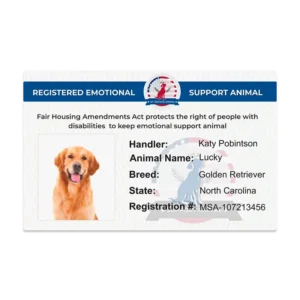
 Resolves 80% of housing disputes instantly
Emotional Support Animal Registration
 Instant Digital ID
 Free Shipping
 5-Min Process


What Landlords Must, May, and Cannot Do
Utah landlords are bound by specific legal obligations when a tenant submits an ESA accommodation request. Here’s a clear breakdown, which is also covered in our article on whether a landlord can deny an ESA:
| Landlord Action | Legal? | Details |
|---|---|---|
| Waive “no pets” policy for ESAs | Required | Must allow ESAs even if lease bans all animals |
| Charge pet rent or pet deposit | No | ESAs are not pets; pet fees don’t apply. See how to avoid pet fees |
| Request documentation from a licensed provider | Yes | Permitted only if the disability or disability-related need is not readily apparent |
| Ask for the specific disability diagnosis | No | Landlords can confirm a disability exists, but cannot ask what it is |
| Demand full medical records | No | Only the ESA letter is required — no additional medical history |
| Verify the ESA letter’s authenticity | Yes | Can contact the provider to confirm the letter is legitimate |
| Impose breed, weight, or size restrictions | No | Assistance animals are exempt from species, breed, and weight rules |
| Deny for direct threat to safety | Yes | Only if the specific animal poses a documented safety risk — not based on breed |
| Charge for actual property damage | Yes | Landlords can charge for documented damage caused by the ESA, but not preemptive deposits |
| Engage in interactive process | Required | Must have a good-faith dialogue with the tenant about the accommodation request |
| Require ESA registration or certification | No | No legal registry exists; landlords cannot require registration documents |
| Retaliate against tenant for requesting accommodation | No | Eviction or rent increases in response to an ESA request violate the FHA |
How to Get an ESA Letter in Utah
An ESA letter is the foundation of your housing protections. Without one, you have no legal basis for requesting an accommodation. Here’s exactly what the process looks like in Utah.
First, you need to establish a relationship with a licensed mental health professional (LMHP). In Utah, qualifying professionals include:
- Licensed Clinical Social Worker (LCSW)
- Licensed Professional Counselor (LPC)
- Licensed Marriage and Family Therapist (LMFT)
- Psychologist (PhD or PsyD)
- Psychiatrist (MD or DO)
- Licensed physician or primary care provider
The professional will evaluate whether you have a qualifying mental health condition — such as generalized anxiety, major depressive disorder, PTSD, obsessive-compulsive disorder, or panic disorder — and determine whether an emotional support animal would alleviate symptoms of that condition.
What a Valid ESA Letter Must Include
A legitimate ESA letter is a clinical document. It should contain:
- Full name, title, and license number of the LMHP
- The state where the LMHP is licensed (must be Utah or hold valid cross-state authorization)
- LMHP’s contact information (phone, address, email)
- A statement that you are under their care for a mental health condition
- A statement that the ESA is necessary to alleviate one or more symptoms of your disability
- The date of issuance
- The LMHP’s signature
Most landlords and property management companies accept letters that are less than one year old. Getting your letter renewed annually keeps your documentation current and defensible.
Red Flags: How to Spot a Fraudulent ESA Letter Service
Not every online service offering ESA letters is legitimate. In fact, some are outright scams that can leave you with a worthless document — and potentially in legal trouble under Utah’s fraud statute. Watch out for:
- Instant approval without any meaningful clinical evaluation
- No established therapeutic relationship with the provider
- Online-only “certification” with no real provider interaction
- Generic template letters that aren’t personalized to your situation
- Letters signed by providers who aren’t licensed in Utah
- Services that bundle letters with “registration” products claiming legal standing
🔔 Know This: There is NO official government ESA registry — not in Utah, and not at the federal level. Websites that sell ESA registration certificates, ID badges, or registry listings are selling products with zero legal value. A registration certificate is not a substitute for a valid ESA letter from a licensed mental health professional. That said, many ESA owners choose to register and carry certificates simply for convenience and quick identification — just understand the legal difference.
Utah ESA Fraud Law: Penalties for Misrepresentation (Utah Code § 26B-6-805)
Utah takes ESA fraud seriously. Under Utah Code § 26B-6-805 (previously codified as § 76-9-306 before Utah’s 2023 recodification), misrepresenting an animal as a service or support animal is a class C misdemeanor.
Specifically, it’s illegal to:
- Intentionally and knowingly falsely represent to another person that an animal is a service animal or a support animal
- Knowingly misrepresent a material fact to a healthcare provider to obtain ESA documentation
- Use an animal to gain housing or other treatment reserved for individuals with a disability when you don’t have a disability
Penalties include up to $750 in fines and up to 90 days in jail. Mandatory state surcharges can push the total financial penalty even higher. Beyond criminal liability, fraudulent ESA claims hurt legitimate ESA owners by giving landlords justification to scrutinize every request more aggressively.
No Pet Fees, No Pet Rent: Understanding Your Financial Protections
One of the most tangible benefits of having a legitimate ESA in Utah is the financial protection. Under the FHA, an emotional support animal is not a pet. That classification means landlords cannot charge:
- Pet deposits
- Monthly pet rent
- One-time pet fees
- Any additional charges specifically tied to having an animal
However, you are still responsible for any actual property damage your ESA causes. If your dog scratches up hardwood floors or your cat destroys window blinds, the landlord can deduct repair costs from your security deposit or bill you directly — just like any other lease-related damage.
The distinction is this: landlords can charge for damage after it happens, but they can’t charge preemptive pet deposits or fees before any damage occurs. For more details, read our full guide on how to avoid pet fees at apartments.
ESA Housing at Utah Colleges and Universities
If you’re a college student in Utah, your ESA rights in campus housing work differently than in private rentals. Universities are still covered by the FHA for their residential housing, but each school runs its own accommodation process. Here’s what the Big Three require.
University of Utah
The Center for Disability & Access (CDA) handles ESA accommodation requests. Submit your request at least three weeks before the semester starts or before your animal’s arrival. ESAs are permitted in university-provided housing only — they’re not allowed in classrooms, libraries, or other campus facilities.
Brigham Young University (BYU)
BYU’s University Accessibility Center (UAC) evaluates ESA requests. BYU has stricter documentation standards than most schools: your ESA letter must be current (within six months), and it must come from a provider who has personal professional knowledge of your needs. BYU generally does not accept documentation from online ESA certification websites. ESAs are restricted to your assigned housing unit.
Utah State University (USU)
Contact the Disability Resource Center (DRC) before moving in. The DRC coordinates with University Housing and Residence Life to evaluate your accommodation request. Early communication is key — don’t wait until move-in day.
💡 Tip for Students: Start the accommodation process early. Most Utah universities want at least 2–3 weeks of lead time. Have your ESA letter ready, keep documentation from your LMHP updated, and maintain a genuine therapeutic relationship with your provider. This is even more relevant after the May 2026 HUD shift — schools are likely to scrutinize requests more carefully.
When Can a Utah Landlord Legally Deny an ESA?
Landlords do have some legitimate grounds for denial. An ESA request isn’t an automatic approval — the law allows refusal in specific, narrow circumstances:
- Direct threat: The specific animal (not the breed) poses a documented safety risk to other residents that can’t be reduced through other accommodations
- Substantial property damage: The animal would cause physical damage to the property that can’t be mitigated
- Undue burden: The accommodation would impose an undue financial or administrative burden on the housing provider
- Fundamental alteration: The accommodation would fundamentally change the nature of the housing provider’s operations
- Invalid documentation: The tenant can’t provide legitimate documentation from a licensed mental health professional
What a landlord cannot do is deny based on breed, species, size, or weight alone. They also can’t deny simply because other tenants are uncomfortable or because their insurance policy disfavors certain breeds.
The Mrs. Murphy Exemption for Small Landlords
There’s one major exemption that catches many renters off guard. Under both federal law and Utah Code § 57-21-3, the Fair Housing Act does not apply to:
- Owner-occupied buildings with four or fewer dwelling units
- Where the owner does not use a real estate broker or agent to rent units
- Where no discriminatory advertising is used
This is called the “Mrs. Murphy exemption.” If your landlord lives in the same small building, they may not be legally required to accommodate your ESA. However, this exemption does not override the prohibition on discriminatory advertising, the Civil Rights Act of 1866 (racial discrimination), or state and local laws that may be stricter.
ESA Air Travel: No Longer Protected on Flights
If you’re planning to fly out of Salt Lake City International or any other Utah airport with your ESA, you need to know: emotional support animals are no longer protected on flights.
On January 11, 2021, the U.S. Department of Transportation finalized a rule revising the Air Carrier Access Act (ACAA). Airlines are no longer required to accommodate emotional support animals in the cabin. Only trained psychiatric service dogs — animals that perform specific disability-related tasks — qualify for ACAA protections.
Most major airlines now treat ESAs as regular pets, subject to carrier fees (usually $50–$150 each way) and cabin size restrictions. If your animal provides emotional support but isn’t trained to perform specific tasks, plan to pay the airline’s standard pet fare or explore alternative travel arrangements.
What to Do If Your Utah Landlord Denies Your ESA Request

A wrongful denial is stressful, but you have clear options. Here’s a step-by-step approach, reviewed by Daniel Butler:
- Document everything in writing. Send your ESA request and letter via email or certified mail so you have a paper trail. Save all correspondence.
- Educate your landlord. Many denials happen because the landlord doesn’t understand the law. Politely share information about the FHA and Utah Code § 57-21-5.
- Request a written explanation for the denial. If they refuse in writing, you’ll have evidence for a complaint.
- File a complaint with one of the enforcement agencies below.
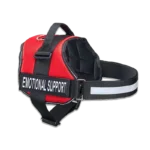
If you’re considering options for documentation and gear, having your ESA properly identified with a certificate and vest can help prevent misunderstandings with landlords and property staff.
Filing a Complaint with UALD
The Utah Antidiscrimination and Labor Division (UALD) is your first stop for state-level complaints. After the May 2026 HUD shift, the UALD is arguably the strongest enforcement path for ESA housing complaints in Utah.
- Phone: (801) 530-6801 or toll-free (800) 222-1238
- Email: [email protected]
- Address: 160 East 300 South, 3rd Floor, Salt Lake City, UT 84111
- Mailing Address: P.O. Box 146630, Salt Lake City, UT 84114-6630
- Hours: Monday–Friday, 8:00 a.m.–5:00 p.m.
- Filing deadline: 180 days from the date of the discriminatory act
To file: download the Fair Housing Intake Questionnaire from the UALD website, complete it with the details of the discriminatory act, sign it, and submit via email, fax ((801) 530-7609), or mail.
Filing a Federal Complaint with HUD
You can also file at the federal level through the HUD online complaint portal. Utah falls under HUD Region VIII (Denver Regional Office).
- Regional phone: (303) 672-5437
- Toll-free: (800) 877-7353
- National hotline: 1-800-669-9777
- Address: 1670 Broadway, 25th Floor, Denver, CO 80202-4801
- Filing deadline: One year from the date of the discriminatory act
Keep in mind: after the May 2026 enforcement memo, HUD is prioritizing cases involving trained animals. Filing with both UALD and HUD simultaneously gives you the broadest coverage.
Free Legal Help: Disability Law Center of Utah
The Disability Law Center of Utah (DLC) is the state’s designated Protection and Advocacy agency. They provide free legal advocacy and information on housing rights.
- Phone: (800) 662-9080
- Fax: (801) 363-1437
- Address: 960 South Main Street, Salt Lake City, UT 84101
The DLC can help you understand your rights, prepare documentation, and — in some cases — represent you in enforcement proceedings. If your landlord is digging in, the DLC should be one of your first calls.
| Agency | Phone | Deadline | How to File |
|---|---|---|---|
| Utah Antidiscrimination and Labor Division (UALD) | (801) 530-6801 / (800) 222-1238 | 180 days | Download intake form from website; submit via email ([email protected]), fax, or mail |
| HUD Region VIII (Denver) | (303) 672-5437 / (800) 877-7353 | 1 year | Online complaint portal or phone |
| HUD National Hotline | 1-800-669-9777 | 1 year | Phone intake; can direct to regional office or online form |
| Disability Law Center of Utah (DLC) | (800) 662-9080 | N/A — advocacy org | Call for free legal advocacy and assistance |
References and Sources
- Utah Fair Housing Act — Utah Code Title 57, Chapter 21
- Utah Code § 26B-6-805 — Misrepresentation of a Service or Support Animal
- 42 U.S.C. §§ 3601–3619 — Fair Housing Act
- HUD Assistance Animals Guidance
- ADA Service Animal Requirements (2010)
- Utah Antidiscrimination and Labor Division (UALD) — Fair Housing
- Disability Law Center of Utah
- University of Utah — Center for Disability & Access
- BYU University Accessibility Center
- Utah State University — Disability Resource Center
References
- 1.
- 2.
-
3.
Fair Housing Rights for People with Disabilities.
- 4.
- 5.
The content on this website is for informational purposes only and does not constitute professional medical advice, diagnosis, treatment, or legal counsel.
Still Unsure If You Qualify?
Skip the confusion. Take a 3-minute assessment to see what your animal legally needs.
U.S handlers trust MyServiceAnimal

FAQ
Under the Fair Housing Act and Utah Code Title 57, Chapter 21, housing providers must allow ESAs as a reasonable accommodation for tenants with a valid letter from a licensed mental health professional. Landlords must waive no-pet policies, breed restrictions, and pet fees for legitimate ESAs — even if the lease bans animals.
No. Under the Fair Housing Act, an ESA is not a pet. Landlords cannot charge pet rent, pet deposits, or pet fees. However, you are still liable for any actual property damage your animal causes — the landlord just can’t charge preventive deposits.
Yes. Under Utah Code § 26B-6-805, knowingly misrepresenting an animal as a service or support animal is a class C misdemeanor, punishable by up to $750 in fines and 90 days in jail. This includes lying to a healthcare provider to get ESA documentation.
Not exactly. HUD changed its enforcement policy — not the law itself. The Fair Housing Act still protects reasonable accommodations for people with disabilities. Utah’s Antidiscrimination and Labor Division (UALD) may continue investigating ESA complaints under state law. But HUD’s enforcement resources now focus primarily on trained animals.
Document everything in writing. Educate your landlord about the Fair Housing Act. Then file a complaint with the Utah Antidiscrimination and Labor Division (UALD) at (801) 530-6801 or HUD at 1-800-669-9777. The Disability Law Center of Utah at (800) 662-9080 provides free legal advocacy.
No. ESAs are protected only in housing under the Fair Housing Act. They do not have ADA public access rights. Stores, restaurants, and businesses can legally deny entry to emotional support animals — only trained service animals have full public access.
Not as an ESA. Since January 2021, airlines are no longer required to accommodate emotional support animals under the Air Carrier Access Act (ACAA). Only trained psychiatric service dogs are covered for air travel. Most airlines now treat ESAs as regular pets with fees of $50–$150 each way.
ESAs are not limited to dogs. Cats, rabbits, birds, and other animals can qualify as emotional support animals, as long as they are manageable and can be safely kept in the residence. Exotic or potentially dangerous animals may be reasonably denied by a landlord.
Yes. Universities like the University of Utah, BYU, and Utah State University all require students to request ESA accommodations through their disability services office before bringing an animal to campus housing. Apply at least 2–3 weeks before your move-in date.