
HUD Assistance Animal Guidance: What Changed, What Didn’t & What It Means For You
Effective September 17, 2025, the U.S. Department of Housing and Urban Development withdrew both of its major assistance animal guidance documents, and in May 2026 its fair housing office announced a new, narrower enforcement approach. The Fair Housing Act still requires housing providers to consider reasonable accommodations for people with disabilities, but the detailed federal playbook that housing providers and tenants relied on for over a decade is gone. Here is what actually changed, what stayed the same, and what you should do now.
Key Takeaways
-
HUD withdrew its assistance animal guidance (FHEO-2013-01 and FHEO-2020-01) effective September 17, 2025. The withdrawal was published in the Federal Register on April 6, 2026 (document 2026-06624).
-
On May 22, 2026, HUD’s Office of Fair Housing and Equal Opportunity (FHEO) issued an enforcement memo: in animal-related accommodation complaints, FHEO will find reasonable cause only where the animal is trained to provide disability-related assistance. Private lawsuits under the Fair Housing Act are not affected.
-
The Fair Housing Act itself did not change. The statute, HUD’s regulation at 24 C.F.R. 100.204, and federal court decisions remain in force. Disability is the most common basis of housing discrimination complaints: 17,645 of 32,321 complaints in 2024 (54.59%), according to the National Fair Housing Alliance.
-
ADA service animal rules did not change. Under the Americans with Disabilities Act, only dogs individually trained to perform specific tasks qualify as service animals.
-
State and local fair housing laws may provide broader protections for assistance animals than current federal enforcement. Renters and housing providers should check both federal and state requirements before acting on any accommodation request.
What is HUD “assistance animal guidance” and why was it withdrawn?
HUD assistance animal guidance refers to the notices the Department of Housing and Urban Development used to explain how the federal Fair Housing Act applies to animals in housing. These covered trained service animals, psychiatric service dogs, and emotional support animals that help people with disabilities use and enjoy their homes.
HUD’s two key documents were FHEO-2013-01, “Service Animals and Assistance Animals for People with Disabilities in Housing and HUD-funded Programs” (issued April 25, 2013), and FHEO-2020-01, “Assessing a Person’s Request to Have an Animal as a Reasonable Accommodation Under the Fair Housing Act” (issued January 28, 2020). The 2020 notice superseded the 2013 notice. Before 2025, landlords often relied on the 2020 notice to decide ESA requests, determine what documentation to accept, and figure out whether pet fees applied.
The withdrawal took effect September 17, 2025, and was published in the Federal Register on April 6, 2026 (document 2026-06624, signed by Craig W. Trainor, Assistant Secretary for Fair Housing and Equal Opportunity). The notice says FHEO withdrew guidance documents that failed one or more of three criteria: whether the guidance is required by statute, whether its interpretation is consistent with the statute or regulation, and whether it decreases compliance burdens.
“These documents have been removed from active use and should not be relied upon as authoritative.”
Federal Register, Notification of Withdrawal of Fair Housing and Equal Opportunity Guidance Documents
Importantly, HUD did not change the text of the Fair Housing Act when it withdrew the guidance. It removed its own interpretive notices, which had never had the force of law but were widely used to resolve fair housing complaints. The underlying federal law and its obligations remain.
How does the Fair Housing Act protect assistance animals in housing?
The Fair Housing Act (42 U.S.C. 3601 through 3619) prohibits housing discrimination because of disability. The U.S. Department of Housing and Urban Development enforces the Act, and individuals can also sue in court. A core protection is the requirement for reasonable accommodations.
Under 42 U.S.C. 3604(f)(3)(B), discrimination includes a refusal to make reasonable accommodations in rules, policies, practices, or services when needed so that a person with a disability has equal opportunity to use and enjoy a dwelling. HUD’s regulation at 24 C.F.R. 100.204 gives the classic example: waiving a no-pets policy for a blind tenant’s guide dog.
Under the withdrawn guidance, HUD used “assistance animals” as a broad term covering trained service animals and untrained emotional support animals (ESAs), and stated that assistance animals are not pets. That position no longer has HUD’s backing. Whether a no-pets rule, pet fee, or breed or weight restriction must be waived for a particular animal now depends on the statute, court decisions and state law, applied case by case. A housing provider may still deny an accommodation that would impose an undue burden or where the specific animal poses a direct threat or would cause substantial physical damage.
ADA rules about service animals in public spaces, including the two-question limit and task-training requirement, do not control what happens in housing. The ADA and the Fair Housing Act are separate legal frameworks.

Service animal vs. emotional support animal vs. “assistance animal” under fair housing
These three terms overlap but mean different things depending on which law applies.
Under the ADA (the Americans with Disabilities Act), a service animal is a dog individually trained to do work or perform tasks for a person with a disability. Miniature horses have a separate, limited provision. Dogs whose sole function is comfort or emotional support are not ADA service animals. A guide dog that leads a blind person or a psychiatric service dog trained to perform specific tasks, like interrupting self-harm, both qualify. In public places covered by the ADA, staff may ask only two questions: whether the dog is required because of a disability and what work or task it has been trained to perform.
Under the Fair Housing Act, HUD’s withdrawn guidance used “assistance animals” to include task-trained service dogs, psychiatric service dogs, and untrained emotional support animals that help with symptoms of conditions like PTSD, major depression, or anxiety disorders. You can read more about this category in our guide to service animals vs. emotional support animals.
The key difference: ADA service animal rules are narrow and dog-focused. Fair housing protections are broader and can apply to other species when there is a disability-related need. HUD’s May 2026 enforcement memo moves federal enforcement closer to the ADA: it uses the ADA’s training requirement, but unlike the ADA it can apply to species other than dogs, provided the animal is trained to perform a disability-related service.
What did HUD’s 2013 and 2020 assistance animal notices originally say?
Understanding what these documents contained helps explain why their withdrawal matters.
The 2013 FHEO notice (FHEO-2013-01):
-
Defined assistance animals broadly, trained or untrained, including emotional support animals
-
Took the position that assistance animals should generally be admitted to dwellings and common areas without pet restrictions or pet fees as a reasonable accommodation
-
Explained that the ADA’s narrower service animal definition did not limit the Fair Housing Act’s reasonable accommodation duty
The 2020 FHEO notice (FHEO-2020-01) superseded the 2013 version:
-
Recommended a set of step-by-step best practices for evaluating a request to have an animal as a reasonable accommodation
-
Distinguished between service animals and other assistance animals (sometimes called support animals)
-
Described animals “commonly kept in the household” and set a higher bar for unique types of animals and for requests involving more than one animal
-
Stated that documentation from websites selling certificates or registrations to anyone who pays a fee is not, by itself, sufficient to establish a disability-related need
-
Described the type of documentation a housing provider could ask for, and identified a note from a health care professional with personal knowledge of the individual as reliable
-
Stated that housing providers may not charge a fee or deposit for assistance animals
Many property managers, condo boards, and tenants used these HUD documents as their primary playbook. When HUD released the 2020 notice, its own fact sheet said that complaints about denials of reasonable accommodations and disability access made up almost 60% of all Fair Housing Act complaints, and that animal-related accommodation complaints were among the most common it received. HUD’s May 2026 memo puts complaints about untrained ESAs at over 20% of FHEO’s fair housing complaints.
What has not changed after HUD withdrew its assistance animal guidance?
If you have a disability and need an assistance animal, the core legal protections still exist.
The Fair Housing Act’s text did not change. This includes:
-
42 U.S.C. 3604(f)(3)(B), which makes a refusal to provide reasonable accommodations for people with disabilities a form of discrimination
-
42 U.S.C. 3604(f)(9), which allows denial when a specific individual’s tenancy would pose a direct threat to the health or safety of others or result in substantial physical damage to the property of others
-
Section 504 of the Rehabilitation Act, which applies to federally funded housing (the May 2026 memo expressly does not address Section 504 or ADA complaints)
HUD’s existing regulation at 24 C.F.R. 100.204 (reasonable accommodations) remains in force. It does not spell out detailed assistance animal steps the way the 2013 and 2020 notices did, but it still requires housing providers to make reasonable accommodations when necessary.
Disabled people still have the right to make a reasonable accommodation request for an assistance animal. Housing providers still have a duty to consider those requests. Fair housing complaints can still be filed with HUD or state and local agencies, and the Fair Housing Act lets a complainant file a civil action in federal or state court within two years. Courts continue to interpret the statute using their own case law, which does not depend on the withdrawn notices.
“Nothing in this enforcement guidance affects the rights of parties to seek redress through a private action in court.”
U.S. Department of Housing and Urban Development, FHEO, Enforcement Guidance: Assessing Requests for the Use of an Animal as a Reasonable Accommodation (May 22, 2026)

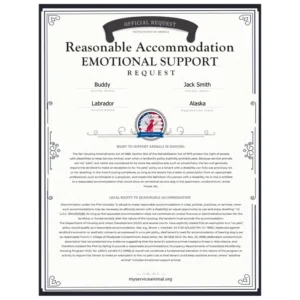
 Ready-to-Submit Landlord Document
ESA Reasonable Accommodation Request
 Waives "Pet" Fees & Deposits
 Same-Day Digital PDF Delivery
 5-Min Process


What is now less clear: breed limits, fees, ESA letters, and verification
This is where the withdrawal creates real-world confusion. Here are the areas most affected.
Training and federal enforcement. This is the biggest change. On May 22, 2026, FHEO said it will use the training component of the ADA’s service animal definition when it assesses animal-related accommodation complaints. Requests to waive pet policies for animals trained to perform disability-related tasks are treated as presumptively reasonable; requests for untrained ESAs are not. This is a statement of HUD’s enforcement priorities, not a change to the statute. Untrained ESAs can still be protected through private lawsuits and under many state and local laws.
“FHEO will find reasonable cause and recommend charges only for those cases involving animals trained to provide disability-related assistance.”
U.S. Department of Housing and Urban Development, FHEO, Enforcement Guidance: Assessing Requests for the Use of an Animal as a Reasonable Accommodation (May 22, 2026)
Breed, size, and weight restrictions. The withdrawn guidance discouraged blanket breed or weight bans for assistance animals. Without it, disputes over breed and weight rules lean more heavily on the direct threat analysis under 42 U.S.C. 3604(f)(9), court decisions and state law. Blanket bans applied to assistance animals remain legally risky, especially for trained service animals.
Pet fees and deposits. The withdrawn 2020 notice said housing providers may not charge fees or deposits for assistance animals. That statement is no longer HUD guidance. In Henderson v. Five Properties LLC (E.D. La., July 16, 2025), a federal court found HUD’s notice “unpersuasive” and held that waiving a generally applicable $400 animal fee was not required on those facts. Whether a landlord can charge a pet deposit or fee for an assistance animal now depends on court interpretations and, often, state statutes. See our guide on whether landlords can charge pet deposits for ESAs.
ESA letters and documentation. Letters from a licensed health care professional are still the basic tool for documenting a disability-related need. But HUD’s 2020 limits on what landlords may request are no longer active. HUD had long described certificates sold online without a personal medical relationship as not meaningful, and a letter from a treating provider remains the most credible evidence. Some states add their own documentation rules, such as California’s 30-day client-provider relationship requirement under Health and Safety Code 122318.
How should tenants make accommodation requests for assistance animals now?
If you are a renter with a service dog, psychiatric service dog, or emotional support animal, here is how to protect yourself.
-
Put your accommodation request in writing, even though the law does not require a specific form. Mention the Fair Housing Act by name. State that you have a disability and explain that the animal helps you use and enjoy your dwelling. If your animal is trained to perform disability-related tasks, say so and describe the tasks, since that now matters for HUD enforcement. Our guide to writing a reasonable accommodation request walks through the structure. If you want a ready-made document to organize your request, a housing accommodation request template can help; it is a documentation tool, not a guarantee that a landlord will approve.
-
For non-obvious disabilities (including many psychiatric, neurological, or chronic conditions), plan to provide documentation from a licensed health care professional. The letter should describe your disability-related need in functional terms without sharing full medical records or a specific diagnosis.
-
If a disability and the need for the animal are obvious, such as a blind tenant with a guide dog, additional documentation is generally unnecessary.
-
Know that there is no official U.S. government registry for assistance animals. ID cards, vests, or online registrations are optional identification tools only and do not create legal rights.
-
Keep copies of all correspondence, your accommodation request, and your housing provider’s responses. You may need these records if you file a fair housing complaint or consult a disability rights attorney later.

How should housing providers handle assistance animal accommodation requests?
Landlords, property managers, and HOA boards benefit from clear, consistent procedures. These reduce fair housing risk and help avoid discrimination claims, including private lawsuits and state agency complaints that HUD’s enforcement memo does not limit.
-
Adopt a written accommodation policy. It should cover who receives requests, what information is requested, and how quickly the provider responds. Consistent fair housing training for staff is essential.
-
When disability and need are obvious (for example, a blind tenant with a guide dog), do not demand medical records. Grant the request unless there is objective evidence of a direct threat or undue burden.
-
For non-obvious disabilities, you may request reliable information confirming that the person has a disability and that the animal helps with a disability-related need. Do not ask for diagnoses, full medical records, or a medical examination.
-
Give more weight to documentation from licensed professionals with personal knowledge of the tenant than to generic online ESA certificates. Keep all medical information confidential.
-
Evaluate each request individually and respond within a reasonable time. Requests for more than one animal should be assessed animal by animal. Engage in a good faith dialogue with the tenant rather than issuing a blanket denial, and check your state’s law before denying a request for an untrained ESA.
What is the “direct threat” rule and how does it apply to assistance animals?
The Fair Housing Act does not require housing providers to accept a tenancy that would pose a direct threat to the health or safety of others or cause substantial physical damage to the property of others. This exception comes from 42 U.S.C. 3604(f)(9).
Housing providers may deny a request for an assistance animal if the specific animal poses a direct threat to health or safety. But “direct threat” should be based on objective evidence about the specific animal’s behavior or history, not on stereotypes about a breed or species.
Factors to consider:
-
The severity and likelihood of potential harm
-
Whether the behavior is recent or historical
-
Whether risk-mitigation steps (extra training, muzzling in common areas, behavior agreements) could reduce the concern
Example: A dog with a documented biting incident in the building may justify denial after individual review. But a landlord trying to ban all dogs over 50 pounds without evidence of danger from a particular animal is on shaky legal ground, especially for a trained service animal.
The direct threat exception is narrow. It does not give housing providers free rein to deny all assistance animals of a certain type or size.
Growing role of state laws, local rules, and fair housing training
With less detailed HUD guidance in place, state and local fair housing laws now carry more practical weight than ever.
Many states have their own fair housing laws, enforced independently of federal law, that may protect assistance animals more broadly than HUD’s current enforcement policy. Some states regulate emotional support animal documentation more specifically. For example, California requires a 30-day client-provider relationship and a clinical evaluation before a provider can issue emotional support dog documentation. Our ESA laws by state guide summarizes state rules.
Fair housing training for property management staff is critical. Training should cover recognizing accommodation requests, handling disability information, and avoiding discriminatory questions or retaliation. State agencies often offer free or low-cost fair housing training resources.
HUD’s May 22, 2026 memo also says the Department intends to engage in notice-and-comment rulemaking on animal-related reasonable accommodations, aiming to harmonize its regulations with the ADA “to the maximum extent possible.” No proposed rule had been identified when this article was checked in October 2026. Organizations should periodically review their policies with counsel or local fair housing groups, because new regulations could shift the landscape again.
Practical tips for disabled people and landlords dealing with assistance animals
For tenants:
-
Gather supporting documentation from a licensed health care professional before you apply for housing or submit a request
-
Understand the difference between service animals and ESAs. Know what legal protections apply to your situation under federal law and your state’s own fair housing laws
-
Be prepared to explain how the animal helps you with everyday activities (sleeping, leaving the home, managing panic attacks) in functional terms, not diagnostic ones
-
Make clear written requests. Do not rely solely on verbal conversations
For landlords and property managers:
-
Use consistent forms for every reasonable accommodation request
-
Acknowledge requests promptly and in writing
-
Avoid questions about diagnoses, medications, or disability status beyond what is needed
-
Document reasons when denying an accommodation under the Fair Housing Act
For both sides:
-
Use a collaborative process to solve issues like property damage concerns, allergies in neighboring units, or noise complaints, instead of jumping to eviction or legal threats
-
Reach out to local fair housing organizations, legal aid programs, or disability rights groups for help. Consider consulting an attorney for case-specific questions, especially given the current uncertainty
-
Remember that the benefit an assistance animal provides can be documented without invasive medical disclosure


References
-
U.S. Department of Housing and Urban Development. Notification of Withdrawal of Fair Housing and Equal Opportunity Guidance Documents (91 FR 17291). Federal Register, 2026. federalregister.gov
-
U.S. Department of Housing and Urban Development, Office of Fair Housing and Equal Opportunity. Enforcement Guidance: Assessing Requests for the Use of an Animal as a Reasonable Accommodation Under the Fair Housing Act (memorandum, May 22, 2026; copy hosted by the National Apartment Association). 2026. naahq.org
-
U.S. Department of Housing and Urban Development. Fact Sheet on HUD’s Assistance Animals Notice (FHEO-2020-01, archived copy). 2020. mcgarvey.house.gov
-
Legal Information Institute. 42 U.S. Code 3604, Discrimination in the sale or rental of housing. Cornell Law School. law.cornell.edu
-
Legal Information Institute. 24 CFR 100.204, Reasonable accommodations. Cornell Law School. law.cornell.edu
-
U.S. Department of Justice, Civil Rights Division. ADA Requirements: Service Animals. ADA.gov. ada.gov
-
National Fair Housing Alliance. 2025 Fair Housing Trends Report. NFHA, 2025. nationalfairhousing.org
Disclaimer: This article is for informational purposes only and does not constitute legal advice.
The content on this website is for informational purposes only and does not constitute professional medical advice, diagnosis, treatment, or legal counsel.
Still Unsure If You Qualify?
Skip the confusion. Take a 3-minute assessment to see what your animal legally needs.
U.S handlers trust MyServiceAnimal

FAQ
No. The Fair Housing Act remains federal law, and courts can still find that denying a properly supported ESA request is discrimination. What changed is that HUD’s detailed guidance is gone and, since May 2026, HUD’s fair housing office will find reasonable cause only in cases involving trained animals. Tenants with untrained ESAs can still file private lawsuits and rely on state and local law. Submit written requests with supporting documentation from a licensed health care professional.
Not necessarily. The withdrawn HUD guidance said fees and deposits could not be charged for assistance animals. After September 17, 2025, the question falls more directly to courts and state law. At least one federal court (Henderson v. Five Properties, 2025) declined to require waiver of a generally applicable animal fee on the facts before it, while other courts and some state laws treat such fees as a barrier. Check your local law or seek legal advice.
No. There is no official U.S. government registry for assistance animals. HUD has described certificates sold without a personal medical relationship as not meaningful. Housing providers and courts focus on evidence from a licensed health care professional who knows the person, not on online registrations, ID cards, or vests.
Federal law still calls for an individualized assessment under the direct threat and substantial damage standard. Blanket bans on certain breeds or weight limits remain legally risky when applied to assistance animals, particularly trained service animals. With less HUD guidance, more of these disputes will be resolved by state agencies or courts rather than federal enforcement.
Check the website of your state’s civil rights or fair housing agency. Search for “fair housing assistance animals” plus your state name. If you cannot find clear answers, contact a local fair housing group or a disability rights attorney who handles housing cases.