JetBlue Pet Policy & Service Animal Rules (2026 Guide)
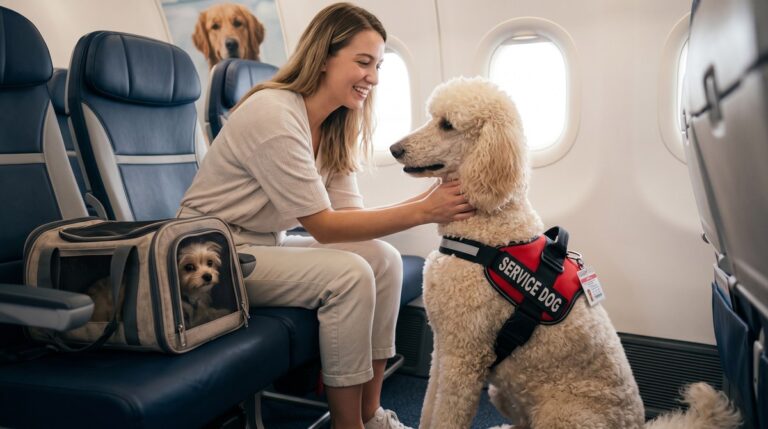
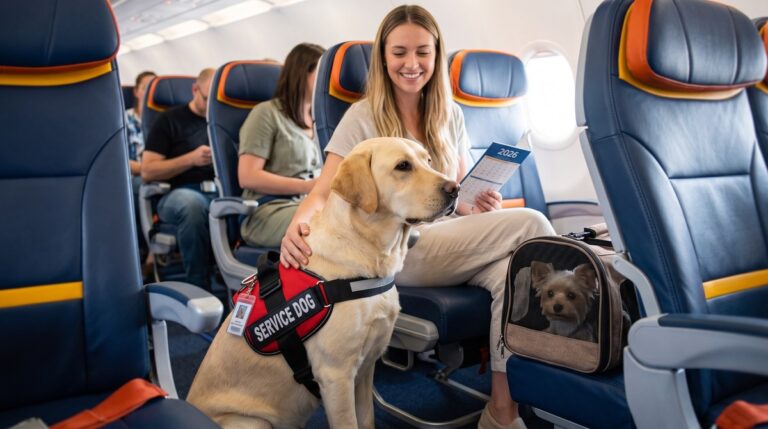
JetBlue Airways allows small dogs and cats to fly in the cabin, but the airline has no cargo pet service and does not transport pets as checked baggage. Trained service dogs, including psychiatric service dogs, travel under separate DOT rules, without pet fees or carrier requirements. Emotional support animals are treated as pets under current U.S. rules and must follow standard pet travel rules.
Policies checked October 2026 on JetBlue’s Traveling with Pets page, its pet help page and its Contract of Carriage (April 17, 2026 revision). Fees and rules change, so confirm with JetBlue before you book.
Key Takeaways
-
JetBlue permits only small dogs and cats in the cabin. The pet must ride in an approved carrier no larger than 17″ L x 12.5″ W x 8.5″ H that fits under the seat in front of you. JetBlue’s pet fee is $150 each way. JetBlue’s current pages do not publish a separate weight limit; the pet simply has to fit comfortably in the carrier.
-
Trained service dogs fly under U.S. DOT rules. JetBlue can require the DOT Service Animal Air Transportation Form before departure. Psychiatric service dogs qualify as service animals. ESA dogs do not qualify as ADA service animals and must fly under the pet policy.
-
JetBlue does not carry pets to or from the United Kingdom and the European Union, and it does not transport live animals or pets to Barbados or Trinidad and Tobago. The CDC sets separate rules for dogs entering the United States, including service animals.
-
Only six pets are allowed per JetBlue flight. Book early and confirm your pet’s space right away.
-
This article is for general informational purposes only and is not legal advice.
Is JetBlue Airways Pet Friendly for Traveling With Pets?
JetBlue is pet friendly for customers with small dogs and cats that can travel in the cabin. Medium and large dogs cannot fly on JetBlue as pets because the airline does not offer cargo or checked baggage options for pets. If your dog is too large for an under-seat carrier, you will need to consider another airline or an alternative way to travel.
JetBlue does not publish a numeric weight limit on its current pet pages. What counts is the carrier: your pet must fit in an approved carrier of the maximum size and be able to stand up and move around inside it.
On the number of pets, JetBlue’s own documents differ. The pet pages say a traveler may bring up to two pets, each in its own carrier, with a second seat and a second pet fee for the second pet. The Contract of Carriage says a passenger may not transport more than one pet per flight. Contact JetBlue to confirm before booking a second pet.
“Maximum of six pets may travel in-cabin on any flight.”
JetBlue Airways, Contract of Carriage
Add your pet to the reservation as soon as you purchase your ticket. Unaccompanied minors cannot travel with pets on JetBlue.
This site focuses on service animals and ESAs, but understanding the standard pet policy matters if your dog or cat is simply a pet and not a trained service animal.
What Is JetBlue’s In-Cabin Pet Policy?
This section covers rules for standard pet travel, not service animals. Here is what you need to know about eligibility, fees, size limits, seating, and conduct in the cabin.
Allowed species: Only small domesticated dogs and cats in carriers. Birds, rabbits, reptiles, and other species are not permitted as pets in the cabin.
Pet fee: JetBlue charges a pet fee of $150 each way, per its Traveling with Pets page. You can add it in the Extras section during booking or later in Manage Trips, and you can also pay it with TrueBlue points before check-in.
Size and carrier limits:
|
Requirement |
Details |
|---|---|
|
Weight |
No numeric limit published; pet must fit comfortably in the carrier |
|
Maximum carrier dimensions |
17″ L x 12.5″ W x 8.5″ H |
|
Pets per carrier |
One pet per carrier |
|
Pets per customer |
Up to two on the pet pages (second seat and fee required); one per flight in the Contract of Carriage |
|
Pets per flight |
Six total in-cabin pets |
Seating: Pets are not permitted in JetBlue’s premium Mint class. Customers traveling with pets cannot sit in an emergency exit row, a bulkhead seat, or any seat restricted for under-seat stowage. JetBlue recommends a window or aisle seat.
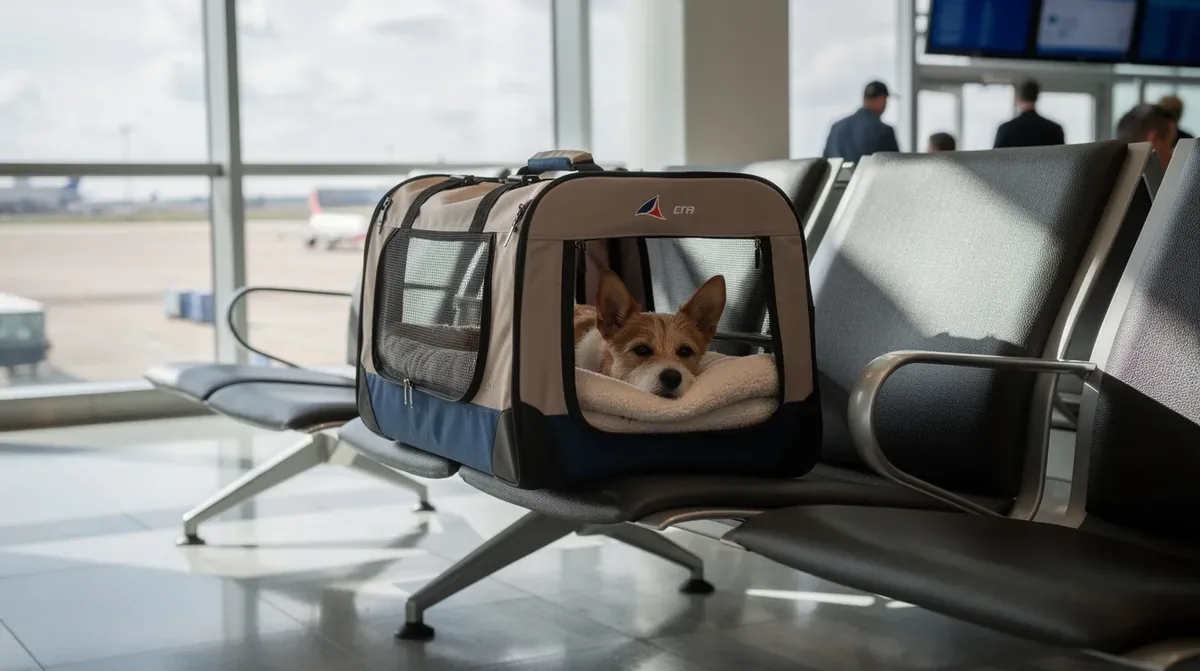
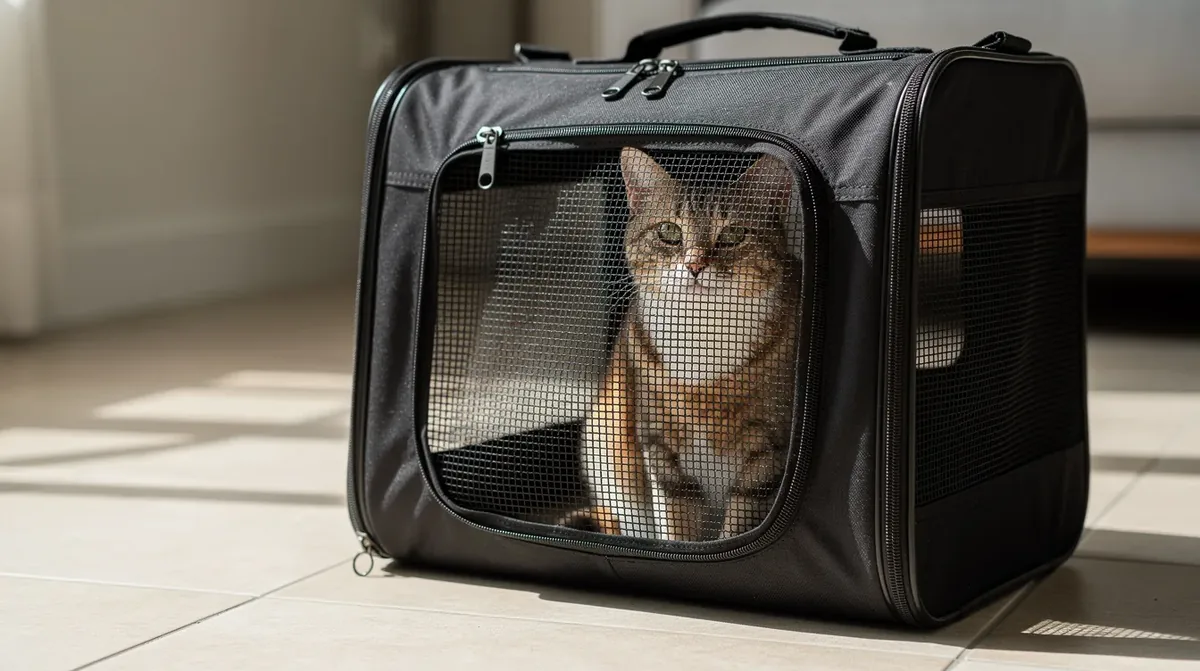
In-flight rules: Pets must remain inside their zipped carrier at the airport and on the plane. The carrier stays under the seat in front of you during taxi, takeoff, and landing. If you have purchased an extra seat, the carrier may be placed on that seat during the flight.
JetBlue Pet Carriers and Pet Strollers: What’s Allowed on Board?
JetBlue has specific rules for pet carriers and separate rules for pet strollers. Strollers used as task equipment for service animals are handled differently than strollers brought for regular pets.
Carrier size and features:
-
Dimensions must not exceed 17 L x 12.5 W x 8.5 H inches. Larger carriers will not be accepted.
-
Carriers must be leak proof, well ventilated, and secure enough that the pet cannot escape.
-
The pet must be able to stand, lie down, and turn around so it fits comfortably inside.
“Carriers cannot exceed 17″ L x 12.5″ W x 8.5″ H (43.18 cm L x 31.75 cm W x 21.59 cm H)”
JetBlue Airways, Traveling with Pets (help)
Your pet and its approved carrier count as your personal item. Check JetBlue’s baggage rules for what else your fare allows you to bring.
Soft sided carriers generally work best because under-seat space height varies by aircraft type. Flexible sides help the carrier compress slightly without crushing your pet. Hard sided carriers are allowed if they meet the size requirements but offer less flexibility.
Pet strollers brought for regular pets count as carry-on items and are subject to carry-on size restrictions. In contrast, JetBlue treats a pet stroller used by a service dog as an assistive device that is not subject to carry-on restrictions. An FAA approved pet carrier is not the same thing as a stroller, so check JetBlue’s rules for each piece of equipment.
Label your carrier and stroller with your name and contact information.
How Do JetBlue’s Rules Differ for Service Animals vs. Pets?
Under the ADA, a service animal is a dog individually trained to do work or perform tasks for a person with a disability. Comfort or emotional support alone does not qualify a dog as a service animal. Staff may ask only two questions: whether the dog is required because of a disability and what task it is trained to perform.
Since January 11, 2021, U.S. DOT rules require airlines like JetBlue to recognize trained service dogs, including psychiatric service dogs, as service animals, and allow airlines to treat emotional support animals as regular pets, subject to pet fees and carrier rules.
“Only two Service Animals will be accepted per traveling Qualified Individual with a Disability”
JetBlue Airways, Contract of Carriage
Service dogs do not have to ride in carriers. They may sit in the handler’s foot space, as long as they do not block aisles or areas that must stay clear for an emergency evacuation, and they may not occupy a seat. A JetBlue crewmember may ask the two questions but cannot demand ID cards, vests, certification, or ask about your diagnosis. JetBlue’s Contract of Carriage also says animals in training will not be transported.
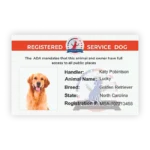
There is no official U.S. government registry for service animals. Registration cards, vests, and ID products are optional identification tools. They do not create legal rights, as our guide to real vs fake service dog ID cards explains.
Emotional support animals, therapy dogs, and standard pets must fly under JetBlue’s pet travel policy, pay pet fees, and follow carrier and seating rules.

 Prevents airport boarding delays and access issues
Service Dog Air Travel Form
 Accepted by Airlines
 Meets Federal DOT Rules


DOT Service Animal Air Transportation Form & High-Risk Rabies Countries
The U.S. Department of Transportation publishes a specific form for service dogs on flights. The form itself warns that knowingly making materially false statements on it is a federal crime under 18 U.S.C. Section 1001.
The DOT Service Animal Air Transportation Form collects information about the handler, the dog’s training and behavior, health, and rabies vaccination. The handler signs it. Under JetBlue’s Contract of Carriage, if your reservation was made more than 48 hours before departure, you must give 48 hours’ advance notice by submitting the form; this matches the limits in 14 CFR 382.75, which also bars advance submission requirements for last-minute bookings. Keep a printed or electronic copy with you. If you want help preparing the paperwork, our DOT form service organizes the documents, but JetBlue still makes its own decision.
High risk rabies countries: The CDC sets the rules for dogs entering the U.S., and requirements depend on where the dog has been in the months before arrival. Some handlers may need documents prepared weeks or months in advance, so start with CDC’s Bringing a Dog into the U.S. page.
Check the CDC and JetBlue sites before booking, because routes and required documentation change frequently.
Step-by-Step: Booking and Checking In With a Pet on JetBlue
Here is a practical walkthrough to help reduce stress when traveling with a pet or service animal on a JetBlue flight.
-
Check route eligibility. JetBlue’s Contract of Carriage bars pets on travel to and from the United Kingdom and the European Union, and bars live animals and pets on travel to Barbados and Trinidad and Tobago. Puerto Rico and the U.S. Virgin Islands require vaccination documentation for pets.
-
Add your pet to the reservation. Add the pet in the Extras section while booking on jetblue.com or in the JetBlue app, or contact JetBlue. Use Manage Trips if you need to add the pet after your initial booking. Pets are not accepted on interline or codeshare bookings.
-
Secure your spot early. Flights allow a maximum of six pets in the cabin. Booking early is the best way to secure a place for your pet.
-
Visit the vet. Confirm your pet is healthy for flying. Gather vaccine records (especially rabies) and any vaccination documentation for your destination. International health certificates or USDA endorsements may be needed for trips abroad.
-
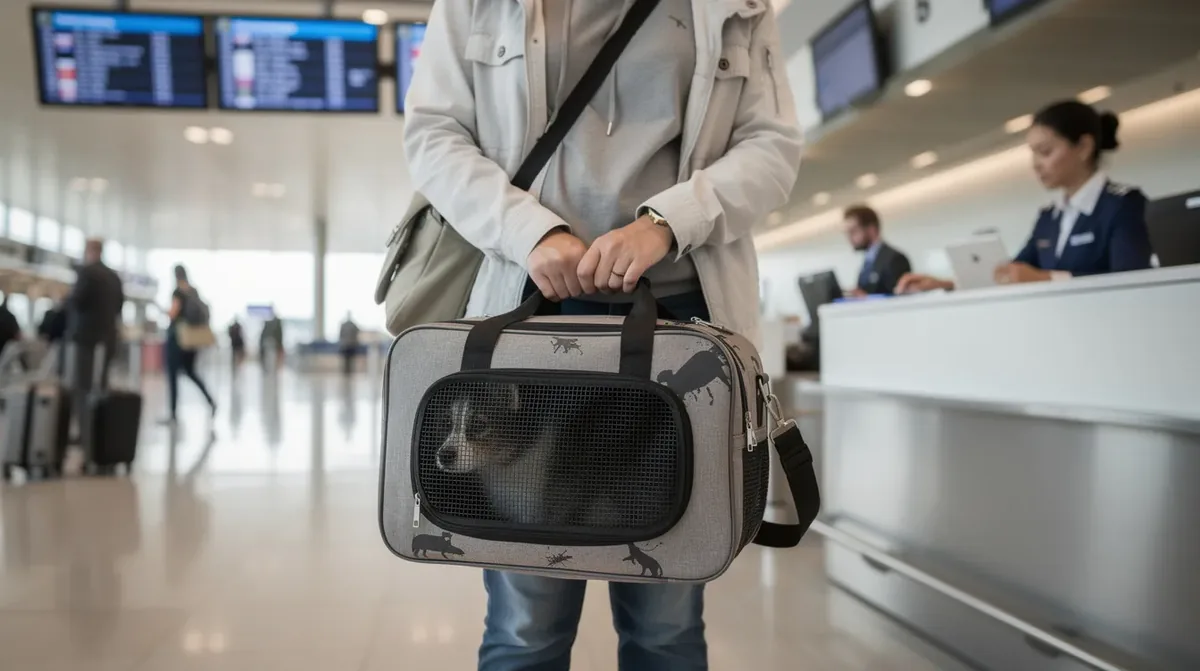
Check in. JetBlue lets you check in 24 hours before your flight online, in the JetBlue app, or at an airport kiosk. Keep your pet in its zipped carrier at the airport.
-
Go through security. Remove your pet from the carrier. Carry or walk the dog or cat through the metal detector. The empty carrier goes through the x ray machine. The animal is never put through the scanner.
Tips for a Smooth Journey & Reducing Motion Sickness in Pets
Air travel can be stressful for animals, but preparation makes a real difference in comfort and safety.
-
Crate train early. Start several weeks before the trip. Feed meals in the carrier, take short car rides, and gradually increase the time your pet spends inside so the carrier feels safe and familiar.
-
Address motion sickness. Talk to your veterinarian about anti-nausea medication or supplements. Feed a light meal several hours before departure. Avoid large meals right before boarding.
-
Pack a travel kit. Include absorbent pads, wipes, an extra leash, a collapsible bowl, a small water supply (for after security), and copies of vet records.
-
Pick the right flight and seat. Avoid tight connections, and pick a window or aisle seat with under-seat stowage, as JetBlue recommends.
-
Skip sedatives. Sedatives can impair breathing at altitude and are usually discouraged. Calming strategies like familiar blankets, pheromone sprays, or calming music tend to work better. Discuss any medication with your vet.
-
Service dog handlers: Practice working tasks in busy, airport-like environments ahead of time so your trained service dog performs reliably under stress. Our guide on how to fly with a service dog covers the airport steps in more detail.
Route Restrictions, High-Risk Destinations & When JetBlue Isn’t an Option
JetBlue pet travel is not available on all routes. Some destinations treat incoming pets or service animals as high risk because of rabies or agriculture regulations.
According to JetBlue’s Contract of Carriage, pets are not permitted on travel to and from the United Kingdom and the European Union, while service animals are permitted there as required by applicable laws. Because of local government requirements, JetBlue does not transport live animals or pets to Barbados or Trinidad and Tobago. Always check local law and JetBlue’s pages.
For travel involving countries the CDC considers high risk for dog rabies, advance planning can take weeks or months, so review the CDC requirements as soon as you book.
If your dog is too large for the carrier, JetBlue cannot accommodate it as a pet since there is no pet cargo service. You may need to look at other U.S. airlines that still offer limited checked or cargo options, or consider driving.
Cross-check JetBlue’s pet policy page, CDC dog import rules, USDA APHIS pet travel resources, and the destination country’s official site before buying non-refundable tickets.
Legal Basics: Service Animals, ESAs, and Air Travel Rights
This section covers high-level U.S. legal rules that affect how JetBlue treats service animals, emotional support animals, and pets.
ADA definition: A service animal is a dog individually trained to perform specific tasks for a person with a disability. This includes psychiatric tasks such as interrupting panic attacks, guiding disoriented handlers, or reminding about medication, as described in our psychiatric service dog guide. Dogs whose sole function is comfort or emotional support are not ADA service animals.
Air travel (DOT): Since January 11, 2021, airlines may treat ESAs as pets. ESAs now travel under pet rules, pay pet fees, and must fit in carriers. Airlines may require the DOT Service Animal Air Transportation Form for service dogs but may not demand “certification” or registration documents. There is no official federal registry.
Housing (Fair Housing Act): Under 42 U.S.C. 3604(f)(3)(B), housing providers must consider reasonable accommodations for assistance animals, including ESAs. This housing protection does not apply to airplanes.
If you face a dispute with JetBlue about your service dog’s access, ask to speak with the airline’s complaints resolution official. State and foreign laws can add extra requirements.
References
-
JetBlue Airways. Traveling with Pets. JetBlue, 2026. jetblue.com
-
JetBlue Airways. Traveling with Pets (help center). JetBlue, 2026. jetblue.com
-
JetBlue Airways. Contract of Carriage, revision dated April 17, 2026. JetBlue, 2026. cms.jetblue.com
-
U.S. Department of Transportation. 14 CFR 382.75: Documentation for service animals. Legal Information Institute, Cornell Law School. law.cornell.edu
-
U.S. Department of Justice. ADA Requirements: Service Animals. ADA.gov. ada.gov
-
Centers for Disease Control and Prevention. Bringing a Dog into the U.S. CDC. cdc.gov
-
USDA APHIS. Pet Travel. USDA. aphis.usda.gov
Confirm all fees, carrier dimensions, and route rules directly with JetBlue before your trip. This content is for general information only and is not legal or veterinary advice.
The content on this website is for informational purposes only and does not constitute professional medical advice, diagnosis, treatment, or legal counsel.
Still Unsure If You Qualify?
Skip the confusion. Take a 3-minute assessment to see what your animal legally needs.
U.S handlers trust MyServiceAnimal

FAQ
Yes. JetBlue allows you to purchase an extra seat for your pet. The pet fee still applies, the carrier must meet size rules, and the carrier must go under the seat during taxi, takeoff, and landing. During the flight, it can be placed on the purchased seat. The pet must remain inside the carrier.
Yes. Psychiatric service dogs are recognized as service animals under the ADA and DOT rules when trained to perform specific tasks. JetBlue accepts service animals at no charge, and it can require you to complete the DOT Service Animal Air Transportation Form. The dog must behave and remain under control at all times.
Pet strollers for regular pets go through TSA security screening like other carry-on items and count toward JetBlue’s carry-on limits. A stroller used by a service dog is treated as an assistive device and is not subject to the carry-on restrictions.
JetBlue’s pet help page does not list breed bans for in-cabin pets; size and the carrier are what matter. However, vets consider flat-faced breeds higher risk for breathing problems during air travel. Get vet clearance, choose short flights, and pick carriers with excellent ventilation for a safer trip.
You can pay the pet fee with TrueBlue points any time before check-in in Manage Trips or in the JetBlue app. Older JetPaws bonus-point offers are not described on JetBlue’s current pet pages, so check current TrueBlue program rules before counting on any perk.